
White Flowering Azalea Bushes for Brilliant Spring Blooms
Crisp white blooms for spring elegance, with options from classic to reblooming
White-flowering azaleas have a way of making a landscape look instantly “designed.” The blooms read bright and intentional from the street, and the color plays nicely with everything—brick, stone, dark mulch, and bold evergreens—so they’re easy to fit into real-world foundation plantings. Most azaleas bloom in spring (timing varies by zone and variety), and this collection gives you choices that range from traditional spring stars to select reblooming types that can repeat color later in the season when they’re sited well. The evergreen foliage on many varieties keeps structure in place after the flowers fade, which is exactly what you want from a hardworking shrub: a clean silhouette, a dependable green backbone, and a bloom show that looks like you did something big without needing high-maintenance fuss.
The “secret” to azalea success is wonderfully straightforward: give them acidic, organic-rich, well-drained soil and avoid wet feet, then place them in bright filtered light or morning sun with afternoon shade for the best balance of blooms and plant health. Prune right after flowering so you don’t remove developing buds, and use mature width to guide spacing—closer for a hedge effect, wider for a natural mounded look. One practical caution: azaleas (Rhododendron spp.) are toxic to dogs and cats if chewed, so it’s smart to site them where pets don’t browse and to dispose of prunings promptly. That’s where the We Grow Together Promise matters—clear guidance, good expectations, and support you can trust.
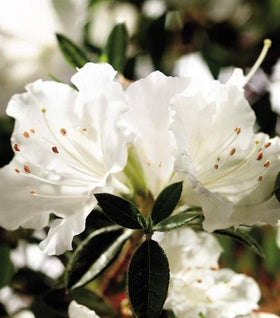

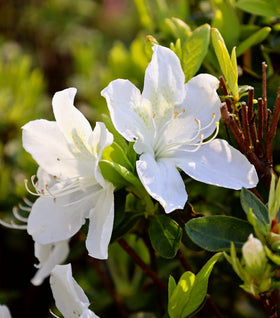
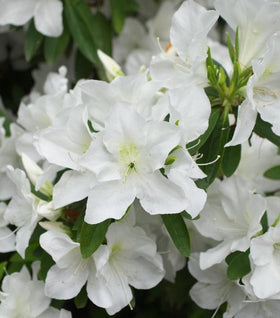
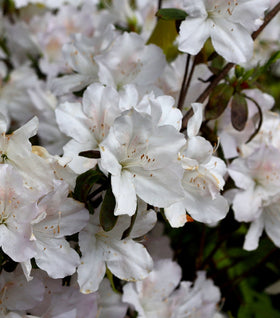
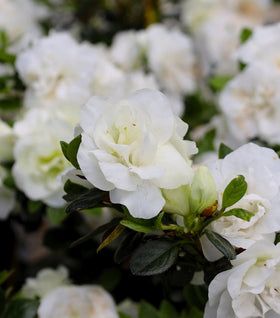
Make your entry feel bright, clean, and timeless.
White azaleas are curb-appeal specialists: they brighten shady edges, pop against dark foliage, and make foundation beds look crisp and finished. In spring, the flowers also tend to hold longer in filtered sun than in harsh full sun, which is a big reason they’re so effective near porches, under high-canopy trees, and along east-facing fronts. If you’re trying to “lift” a landscape without adding visual clutter, white blooms do it beautifully—especially when repeated in groups rather than scattered as one-offs.
This collection is also practical for design planning because it includes multiple forms and sizes—compact growers for smaller beds and containers, as well as more substantial shrubs that can anchor corners or create a low-flowering screen. For example, classic evergreen types like ‘Delaware Valley White’ are often sized to sit comfortably in foundation lines (roughly 4–5 ft, depending on conditions), while reblooming selections can add extra color cycles when light is strong. That range makes it easier to match plant scale to the space you actually have.
White azaleas also shine in mixed plantings because they don’t fight with neighboring color. Pair them with blue-green conifers, burgundy foliage shrubs, or spring bulbs for a layered look that still feels calm. In woodland-style beds, they’re especially good at “bridging” between shade perennials and taller shrubs—giving you a bright mid-layer that keeps the scene from feeling too heavy.
And yes—containers can work well with the right setup. Choose a large pot, use an acidic, well-drained mix, keep moisture steady (containers dry faster), and place the pot where it gets morning sun and afternoon protection. This is a great way to pull spring color right up to patios and entry steps, and it also helps avoid the drainage issues that can happen in heavy soils at ground level.
Know the look, the size, and the bloom window.
Most white azaleas deliver their main show in spring, with bloom time shifting earlier in warmer zones and later in cooler ones—often somewhere between late winter/early spring and late spring, depending on variety and weather. If you want to stretch the season, mix early-, mid-, and late-blooming azaleas, and consider adding a reblooming white selection to bring flowers back later in the growing season.
Mature size varies by cultivar and type, which is why picking the “right size first” is the easiest way to keep maintenance low. Many landscape evergreens fall into the moderate shrub range, while others remain genuinely compact for tight beds and edging. Use mature width as your planning number, and you’ll avoid the most common azalea regret: a beautiful plant that outgrows its spot and forces heavy pruning.
Growth rate is typically steady to moderate—not a race, which is a feature, not a flaw. In the landscape, that means azaleas build dense branching over time, hold shape well, and look lush without demanding constant trimming. Site conditions drive this more than anything else: good drainage, acidic soil, and reduced stress produce fuller plants and better bloom performance.
Seasonal interest isn’t only about flowers. Many white azaleas are evergreen, so they keep structure year-round, and the foliage acts as a clean backdrop for perennials and bulbs. In brighter shade, that evergreen texture can be the difference between a bed that looks “empty” after spring and one that still feels finished and intentional.
Plant them where they bloom hard and stay healthy.
Light placement is your bloom dial. Most azaleas do best in light to moderate shade, with morning sun and afternoon shade offering a sweet spot: enough light for flowers, but not so much stress that foliage suffers. Deep shade can reduce flowering and lead to weaker growth, while full sun can increase stress and make lace bug issues more likely—so aim for bright, protected light whenever possible.
Soil is the other major success factor. Azaleas prefer acidic soil (commonly cited in the 4.5–6.0 range) that’s organic-rich and well-drained, and they’re shallow-rooted plants that can be damaged by excessive soil moisture. If your site stays wet after rain, raise the bed or improve drainage first—this single step prevents many long-term decline problems.
For spacing, use mature width as your guide, then decide whether you want a touching hedge or a more natural look. A practical landscape range for many azaleas is about 3–5 feet apart, with tighter spacing forming a formal hedge and wider spacing keeping individual mounds distinct. This spacing also supports airflow, which helps reduce disease and pest pressure over time.
Get easy care with the right timing.
Watering is simple: keep new plantings evenly moist (not soggy) while they establish, then shift to deep watering during dry spells. Mulch helps conserve moisture and protects shallow roots, but avoid piling mulch against stems. The goal is consistency—azaleas dislike both drought stress and waterlogged soil, so drainage and a steady watering rhythm matter more than frequent feeding.
Pruning is about timing to protect next year’s flowers. Azaleas set buds after blooming, so prune in late spring or early summer shortly after flowering (or as soon after bloom as possible) to shape plants without sacrificing the next bloom cycle. If you need to reduce size significantly, post-bloom is still the best window—do it early enough to allow recovery before bud set.