
Solidago Plants (Goldenrod)
Late-season golden blooms that light up beds and feed pollinators.
Solidago (goldenrod) is how you keep the garden looking alive when summer starts to fade. Those bright yellow plumes arrive mid-to-late summer and often persist into fall, sometimes right up to frost, bringing a fresh burst of color when many perennials are winding down. It’s also one of the best “energy plants” you can add to a landscape: goldenrod flowers support bees, butterflies, and beneficial insects, and many types set seed that birds will use later. If you’ve ever wanted your border to stay cheerful through late season and feel like it’s doing meaningful work for wildlife, this is a powerhouse choice.
What makes Solidago feel so trustworthy is how straightforward it is: give it sun, reasonable soil, and space to breathe, and it tends to be a low-drama performer. Some species and forms can spread aggressively in ideal conditions, so the “right pick” is usually about matching habit to your goals—tidy clumps for controlled borders, faster spreaders for filling bigger spaces. And while most gardeners think of goldenrod as a landscape plant, it can be a smart cut-flower ingredient too, especially for late-season arrangements that need bright filler and texture. You’re backed by the We Grow Together Promise, so you can plant with confidence and fine-tune your garden as it matures.

Late-season color that keeps going.
Goldenrod is a clutch late-season performer because its bloom window typically lands from mid-to-late summer into fall, often continuing until the first frost, depending on the species and cultivar. That timing makes it ideal for extending curb appeal past peak summer, especially in sunny borders that can look tired in August. Plant it in repeating groups, and it reads like a designer move: a bright, cohesive “golden thread” that ties the whole bed together as the season turns.
Solidago also shines in mixed plantings because it plays well with bigger shapes. Its upright stems and clustered flowers add height and movement without feeling bulky, so it layers beautifully behind edging plants and in front of shrubs and ornamental grasses. In larger beds, it can function as a seasonal backbone, giving you dependable late color even when earlier bloomers have finished.
If you’re planning a lower-maintenance landscape, Solidago can be a strong fit because many types tolerate average soils and don’t require high fertility. The key is giving plants enough room and sun so they stay sturdy and bloom well; crowded or shaded conditions can reduce performance and invite more foliar issues.
Golden plumes and pollinator power.
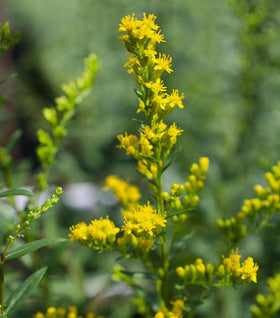
Solidago is best known for its bright yellow flower clusters, which appear as plumes, sprays, or wands depending on the species. Those blooms aren’t just pretty; they’re a major nectar and pollen resource late in the season, supporting a wide range of pollinators and beneficial insects when other flowers are scarce. It’s one of the easiest ways to make a garden feel busy and vibrant in late summer and fall.
Mature size varies widely across the genus, but many garden selections fall within a practical range of 2.5–3.5 feet tall and 2.5–3 feet wide, forming clumps that expand over time. That makes Solidago easy to place mid-border where it can be seen, while still fitting into homeowner-scale beds.
Growth rate is generally steady, but it’s important to know that some species can spread rapidly under ideal conditions. If you want a controlled border, favor forms described as clump-forming or managed by division; if you want coverage in a larger area, a more vigorous spreader can be a feature, just plan boundaries from the start.
Sunny spots, big performance.
Most Solidago perform best in full sun (6+ hours), though some selections tolerate partial shade. Sun drives sturdier stems and heavier flowering, while too much shade can lead to looser growth and fewer blooms, especially in late season when you’re counting on that show.
Soil flexibility is one of goldenrod’s selling points: many types handle average garden soils, and some are noted for adapting well even to clay as long as drainage is reasonable. Aim for well-drained soil with consistent moisture during establishment, then expect many plants to be somewhat drought-tolerant once established.
For spacing, a good planning range for many garden forms is about 18–30 inches, with bigger growers given more room for airflow and mature spread. That breathing space helps reduce humidity around foliage and keeps plants cleaner, especially in regions where late-season moisture can encourage leaf spots, rust, or powdery mildew.
Simple care for reliable fall blooms.
Goldenrod care is refreshingly simple: water regularly during the first season to establish roots, then taper to occasional deep watering during extended dry spells (site dependent). Avoid over-fertilizing; lush, overly rich growth can reduce sturdiness and rarely improves flowering in this type of perennial.
Pruning and rejuvenation are easy wins. Many gardeners cut goldenrod back in late winter to early spring before new growth begins, and mature clumps can be divided in early spring to control size and refresh vigor. This keeps plants blooming strongly and helps maintain the footprint you planned for in the border.
Pests and diseases are typically manageable, but it’s smart to know the usual suspects: rust, powdery mildew, and leaf spot can occur, and root rot is more likely in poorly drained soils. Give plants sun, airflow, and drainage first; those three choices prevent most problems before they start.