
Red Flowering Hydrangeas for Bold, Rich Summer Color
Rich red blooms that deepen the landscape from summer into fall.
Red hydrangeas are a power move in the landscape: they add warmth, drama, and a “designed” focal point that reads from the curb. This collection centers on red-flowering hydrangea shrubs—often bigleaf (mophead/lacecap) selections bred for strong pink-to-red tones, as well as varieties whose color deepens as the season progresses. Use them to anchor foundation beds, frame an entry, or create a bold ribbon of color along a walk—then let the lush foliage keep the planting looking full even between bloom flushes.
The easiest way to feel confident with red hydrangeas is to remember two truths: light and timing. Many bigleaf types prefer morning sun with afternoon shade for best leaf quality and bloom performance, and pruning depends on whether the plant blooms on old wood (prune right after flowering) or new wood (prune in late winter/early spring). Red and pink tones can also be influenced by soil chemistry—bigleaf and mountain hydrangeas tend to go bluer in more acidic, aluminum-available soils, and pink/redder in more neutral-to-alkaline conditions—so a soil test is the smart first step before chasing color. The We Grow Together Promise means you get clear guidance, not guesswork.
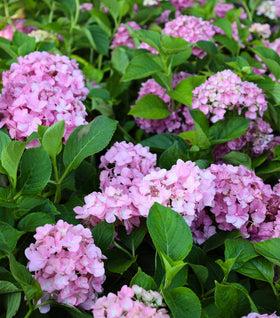

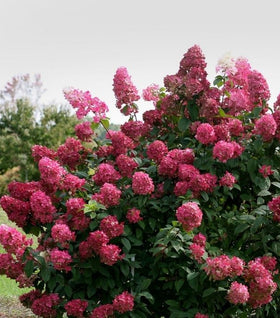

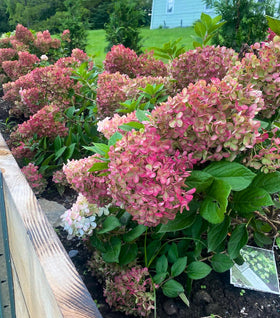

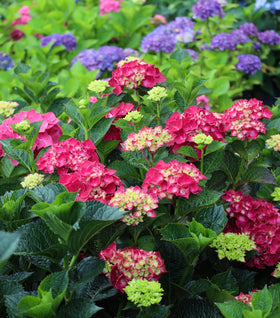

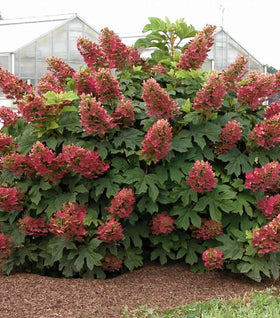

Make a bold statement with red blooms.
Red hydrangea shrubs create instant “wow” because the flower heads are substantial and the color is naturally attention-grabbing. In a front-yard bed, one shrub can be a centerpiece; a small mass can turn a plain foundation line into something that feels intentional and high-end. If you want color that looks rich (not neon), red hydrangeas are an easy way to get that deep, saturated finish.
Design-wise, red is incredibly useful because it pairs well with both classic and modern landscapes. Set red blooms against evergreens for contrast, mix them with white flowers for a crisp look, or let them play with ornamental grasses and silvery foliage for a softer, more layered effect. Because hydrangeas carry strong green foliage all season, they also do the “shrub job” of making beds look full—then the blooms step in as the headline.
Red hydrangeas can be planted in-ground or grown in large containers, where you can maintain consistent moisture. Containers are perfect near patios and porches where you’ll enjoy the color up close, but they dry faster than garden beds—so steady watering and a well-drained potting mix are what keep container shrubs looking lush through hot stretches.
Know the bloom style and the mature size.
Many red-flowering options live in the bigleaf hydrangea world, where you’ll see classic mophead blooms (big, rounded clusters) and lacecap blooms (a flatter form with fertile centers). These shrubs typically bloom in summer, and some modern remontant/reblooming varieties can add a second wave later in the season, especially when growing conditions stay steady.
Mature size is the planning detail that saves you years of maintenance. A common footprint for bigleaf hydrangeas is in the 3–6 foot range, and they fill out into a rounded shrub that wants room to breathe. If you give them space from the start, they’ll branch better, bloom more evenly, and stay easier to water and prune without turning into a crowded tangle.
Color is part genetics and part soil chemistry—especially for bigleaf and mountain hydrangeas. When soil is more acidic and aluminum is available, many of these hydrangeas skew bluer; when soil is more neutral-to-alkaline (or aluminum is less available), flowers tend to lean pink/redder. If your goal is a truer red tone, choose varieties known for strong red coloration and use soil testing to guide any pH adjustments rather than guessing.
Place them for the best color and performance.
Start with light: many bigleaf hydrangeas do best with morning sun and afternoon shade, especially in warmer regions where intense late-day sun can stress leaves. That “sun early, shade later” pattern helps shrubs hold foliage quality and bloom better through summer heat. If your site is sunnier all day, pick tougher types suited to that exposure—or provide relief with nearby trees or structures.
Spacing is your built-in disease prevention and your shortcut for long-term maintenance. For many bigleaf shrubs, plan around the mature width and give roughly 3–6 feet between plants (adjusting by variety and how tight you want the mass). That airflow helps leaves dry faster after rain or irrigation, which can reduce common issues like leaf spot and powdery mildew pressure.
If you’re aiming for the richest red/pink tones in color-variable hydrangeas, soil pH and aluminum availability matter. Multiple horticulture references explain that bluer blooms require both acidic conditions and available aluminum; when either factor is absent, blooms shift toward pink/red. The practical move is simple: test your soil first, then adjust slowly and thoughtfully—because color change is gradual and over-correcting can create plant stress.
Prune simply and keep blooms coming.
Pruning success depends on identifying whether your shrub blooms on old or new wood. Bigleaf and mountain hydrangeas commonly set buds on older stems, so pruning is best done right after flowering—Clemson specifically warns against pruning after about August 1 because it can remove next year’s buds. Panicle and smooth hydrangeas bloom on new growth and can be pruned in late winter or early spring before new growth begins.
Watering and soil are the everyday keys: hydrangeas prefer well-drained soil with consistent moisture, especially during establishment and hot weather. Mulch helps even out moisture swings and keeps roots cooler, and watering at the base (instead of constantly wetting leaves) supports healthier foliage in humid or rainy seasons