
Purple Hydrangeas
Royal-color blooms that cool the landscape and elevate curb appeal fast.
Purple hydrangeas are the “make it feel finished” shrub—big blooms, lush foliage, and that rare color that reads both calm and dramatic at once. Purple works like a designer’s secret weapon: it looks sophisticated against brick and stone, pops next to evergreens, and plays beautifully with whites, pinks, and soft blues in mixed borders. This collection focuses on purple-flowering hydrangea shrubs that bring that rich, jewel-toned look to foundation beds, entry plantings, and patio containers—anywhere you want a focal point that doesn’t require a complicated plant palette to look intentional.
Here’s the fun (and the science): on many bigleaf and mountain hydrangeas, purple is often the “in-between” color that shows up when soil chemistry and aluminum availability aren’t pushing blooms strongly blue or strongly pink—so you may see violet, lavender, or multi-toned clusters depending on your site. Extensions and hydrangea care guides commonly explain that more acidic soils (with available aluminum) favor blue, more alkaline soils favor pink, and mid-range conditions can produce mixed or purple tones—so a soil test is the smart first step before you try to “steer” color. And once you match the right hydrangea type to the right pruning window, these shrubs become refreshingly straightforward to grow. The We Grow Together Promise means you’ll always have clear timing and confident care steps.
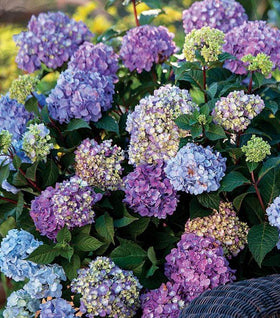
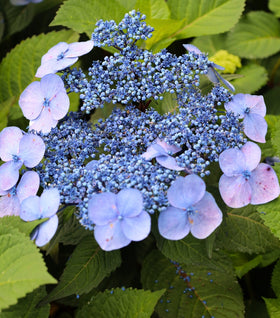
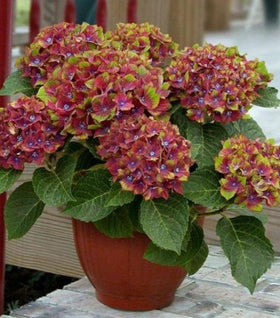


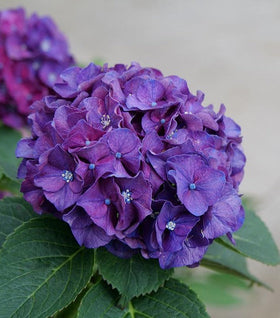
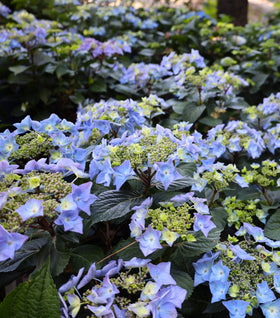
Create a rich, upscale look with purple blooms.
Purple hydrangea shrubs deliver instant “designer color” because the bloom heads are large enough to read from the curb, yet the tone is refined—more jewel box than neon. Use one as a focal point near an entry, or repeat a few shrubs along a foundation line to create that clean, professional rhythm homeowners and landscapers love. When the flowers are up, they carry the bed; when the blooms fade, the foliage still gives you a full, finished shrub silhouette.
They’re also incredibly flexible in style. Want a classic cottage feel? Pair purple blooms with whites and soft pinks for an airy, romantic bed. Prefer modern and bold? Set purple against dark-leaved shrubs or evergreens so the blooms look almost luminous. And because hydrangeas are commonly used for foundation plantings, borders, mass plantings, and containers, you can design with the same color story across the whole property—from the front bed to the patio.
For containers, purple hydrangeas can be a showpiece—just plan for steady moisture and good drainage. Hydrangeas like lots of water, but multiple extension resources warn that roots sitting in water (especially in slow-draining conditions) can cause problems, so the goal is “evenly moist,” not constantly soggy. A roomy container, mulch on top of the soil, and deep watering when needed will keep the plant looking lush through summer heat.
Understand the color, the growth rate, and the mature size.
Purple hydrangeas are most often associated with bigleaf (and closely related) hydrangeas, where flower color can shift with soil chemistry—sometimes giving you blue-purple blends, violet edges, or multi-toned clusters on the same plant. Horticulture references commonly describe purple as appearing in transitional conditions where aluminum is only somewhat available to the plant, which is why the same variety can look different from one yard to the next. If you want the most predictable results, start with varieties selected for purple tones—then use soil testing to fine-tune.
Mature size is where smart shopping pays off. Hydrangeas vary widely by species and variety, but many common landscape hydrangeas land in the “multi-foot shrub” range, and Clemson notes that hydrangea height and spread can vary broadly by variety. Planning around mature width (not the pot size) keeps shrubs healthier, easier to prune, and easier to place with good airflow—especially important if you’re planting multiple shrubs in a row.
Growth rate is best described as steady and responsive: hydrangeas fill in faster when they get consistent moisture, organic-rich soil, and appropriate light. If a plant is crowding its neighbors quickly, that’s usually a sign it’s happy—so it’s also your cue to maintain spacing and do light shaping at the correct seasonal window, rather than forcing frequent cuts that can reduce flowering on old-wood bloomers.
Plant for stronger blooms and healthier foliage.
Start with light, because it’s the easiest lever for success. Many bigleaf-type hydrangeas are recommended for partial shade—often morning sun with afternoon shade—especially in warmer climates where hot, exposed sites can stress leaves. If you can give bright morning light and relief later in the day, you’ll typically see better-looking foliage and more consistent flowering.
Spacing is your built-in disease prevention plan. For many shrub-form hydrangeas, aim for roughly 3–6 feet between plants (adjust based on mature width and the effect you want), so air can move through the canopy and leaves dry faster after rain or irrigation. OSU specifically notes that improving air circulation through thinning and good spacing can help reduce powdery mildew and other issues, which is exactly why “room to breathe” matters.
If your goal is to keep blooms in the purple family (rather than drifting blue or pink), soil testing is your best friend. N.C. State Extension guidance explains that blue is encouraged when soil is acidic (around the mid–5s) and aluminum is available, while pink is more likely when pH rises and aluminum becomes less available; many hydrangea guides also describe purple/mixed tones appearing in the middle ranges. That means you can often “nudge” color over time—but the right first step is always to test, then adjust gradually.
Keep care simple and prune at the right time.
Pruning success comes down to knowing what blooms on old wood versus new wood. Clemson’s pruning guidance for bigleaf hydrangeas emphasizes pruning after flowering and avoiding pruning after about August 1 to reduce the chance of removing next season’s buds. If you’re growing panicle hydrangeas in the mix, N.C. State notes they bloom on new growth and can be pruned in late winter or spring—very different timing, very different rules.
Watering and soil are the everyday keys: aim for moist, well-drained soil rich in organic matter, and water deeply during heat or drought rather than doing constant light sprinkling. Clemson calls out high water needs (especially in heat) along with the importance of moist, well-drained soil, and OSU Extension notes that overwatering in slow-draining soil can be a problem—so consistency plus drainage is the sweet spot.