
Pink Flowering Azaleas
Soft-to-bold pink blooms that brighten beds, borders, and foundations
Pink flowering azaleas are the quickest way I know to make a landscape feel welcoming. That “pink cloud” effect in spring is instant curb appeal, and the shrubs themselves do the unglamorous work the rest of the year—filling space, softening hard edges, and keeping beds from looking bare. This collection is especially useful because “pink” isn’t just one look: you’ll find everything from pale blush to saturated fuchsia, plus bloom forms that range from airy singles to fuller doubles. Many gardeners also love them for the life they bring to the yard—azaleas can support pollinator activity, and the shrubs are commonly used to dress up foundation plantings and create fuller, more finished lines around patios and walkways.
The best part is that azaleas aren’t complicated when you give them what they naturally want: bright filtered light or morning sun with afternoon shade, plus acidic, organic-rich soil that drains well. If you’ve ever had one struggle, it’s usually not “bad luck”—it’s too much heat stress, soil that stays wet, or a pH that’s out of range. Some reblooming groups can also give you encore color beyond spring (often repeating in summer and fall) when light and care are right, which is a huge win if you want long-season impact. And one important caution for pet households: azaleas are toxic if chewed, so place them thoughtfully and clean up prunings. The We Grow Together Promise means you get straightforward guidance and confident plant choices from the start.


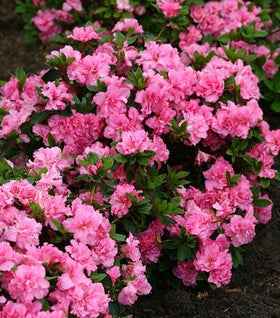


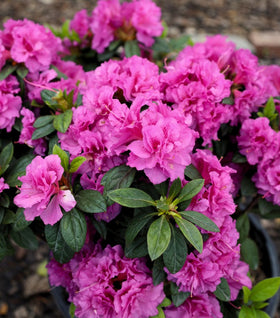
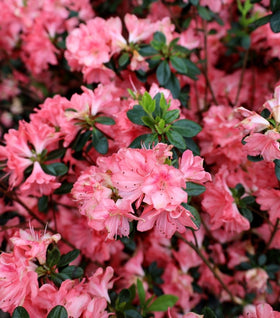

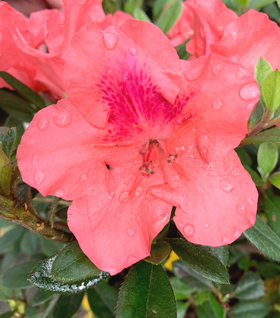
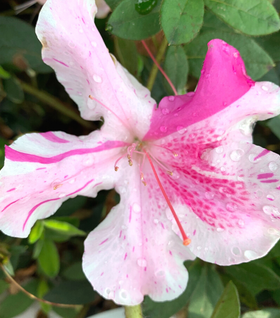
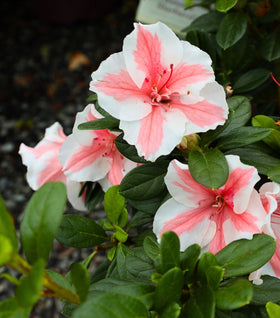
Turn pink blooms into instant curb appeal.
Pink azaleas shine where you want a warm welcome—front entries, walkway curves, mailbox beds, and those foundation zones that need color without chaos. The shrubs naturally read “lush,” so even a simple planting plan (three, five, or seven of the same variety) looks intentional and professionally designed when bloom time hits. They also perform beautifully as the flowering mid-layer in mixed borders, bridging the gap between low perennials and taller evergreens.
Because azaleas are typically container-grown and widely used in residential landscapes, they’re an easy upgrade for homeowners and a dependable staple for installers. Plant them as a soft, flowering edge in front of larger shrubs, or repeat them along a fence line to disguise “hard” views with living color. Many selections keep a dense habit that helps conceal thin foundation areas and patchy bed transitions—exactly the kind of visual problem-solver that makes a yard look more finished.
If you’re planning for pollinator interest, pink azaleas can contribute nectar and seasonal activity in the landscape—one more reason they feel so lively when they’re in bloom. And if fragrance is part of your goal, some azalea groups are known for aromatic flowers, which makes them extra rewarding near patios and paths where people actually pass by.
Containers can also be a smart way to feature pink azaleas right at the porch or patio—especially if your in-ground soil is heavy or slow-draining. A large pot with an acid-friendly mix lets you control moisture and placement (morning light, afternoon protection), which can translate into cleaner foliage and better bloom performance in warm spells.
Choose the color tone, bloom style, and plant size you want.
The bloom window is typically spring, but timing can vary widely by cultivar and climate—some bloom earlier, others later, and certain reblooming groups can repeat flowers beyond spring when conditions are favorable. If you want the longest season of pink, mix early-to-late spring bloomers with at least one reblooming selection so you’re not putting all your color on a single calendar moment.
Mature size is one of the biggest “make it easy later” decisions. Many evergreen landscape azaleas grow in the broad neighborhood of roughly 2–6 feet tall and wide, depending on cultivar, while reblooming groups commonly sit in a compact-to-medium range that’s easier to fit into foundations and tighter beds. Picking a variety that matches your space upfront is what keeps pruning optional instead of required.
Growth rate is generally steady rather than fast, which is good news for long-term shape. In practical terms, healthy azaleas thicken into dense shrubs over time—especially when they’re not stressed by poor drainage or harsh exposure. That dense branching is why they hold their form well and why mass plantings look so rich once plants knit together.
Even outside bloom, many pink azaleas keep the bed looking “done” thanks to evergreen foliage and a naturally mounded structure. That year-round presence is what makes them such strong foundation shrubs: spring flowers for impact, and dependable green texture afterward to keep the landscape from feeling empty.
Place them in the sweet spot for blooms.
Light matters more than people think. Most azaleas perform best in light to moderate shade—especially morning sun with afternoon shade—because they need enough light to set buds, but too much heat and glare can stress plants. Full sun can also increase lace bug pressure, so filtered light is a simple, practical way to protect foliage and keep plants looking healthy.
Soil is the other non-negotiable: azaleas want acidic conditions (often cited around pH 4.5–6.0) and excellent drainage with plenty of organic matter. They do not tolerate wet feet; planting in low spots, near downspouts, or anywhere water puddles is a common path to root-rot decline. If drainage is questionable, raise the bed and amend broadly rather than making a “bathtub” planting hole.
Spacing should follow the mature width and your design goal. As a practical range, many landscape plantings are spaced around 3–5 feet apart, tighter for a hedge that touches and wider for distinct mounds with better airflow. If you’re mixing shrubs, spacing can be calculated from mature spreads (so plants meet naturally at maturity instead of colliding early).
Keep care easy and confidence high.
Planting success is mostly about establishment care. Water deeply when the soil begins to dry, and aim to moisten the root zone rather than doing frequent shallow watering—especially for newly planted shrubs with shallow roots. Avoid overhead watering when possible to reduce disease issues, and keep mulch in a 2–3 inch layer (pulled back from stems) to buffer moisture and temperature.
Fertilizing should be purposeful, not automatic. Soil testing is the smartest guide, and many recommendations point to feeding after flowering if needed, then avoiding late-season fertilizing that can interfere with bud set and winter readiness. In other words: feed to correct a need, not to “force” performance, and let healthy soil and consistent moisture do most of the heavy lifting.
Pruning is all about timing. The safest general window is right after flowering, because many spring-blooming azaleas set next year’s buds during summer; pruning too late can reduce blooms. If you need to open plants for airflow, thinning cuts are often preferred over shearing, and it’s wise to avoid pruning after early July in many climates to protect next season’s flower buds.