
Nandina Shrubs
Four-season color and easy structure for borders, foundations, and low hedges.
Nandina is a classic “looks good when nothing else is happening” shrub—clean evergreen to semi-evergreen texture, fresh new growth color, and those red winter tones that make beds look intentional all year. In late spring, many types can produce small white flowers, and some set ornamental berries that persist into winter, so you get a steady progression of interest without chasing bloom schedules. It also handles a wide range of light—full sun to part shade, with many references noting tolerance of heavier shade—making it a reliable problem-solver for mixed-light yards. Here’s the responsible, confidence-building way to plant it: in parts of the Southeast, nandina is considered invasive, and fruiting types can spread—so it’s smart to favor low- to no-fruiting cultivars like Firepower, Obsession, and Lemon-Lime where possible.
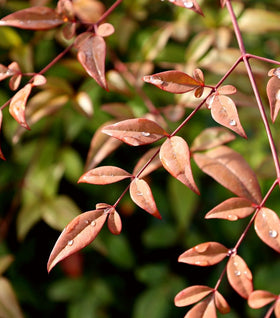
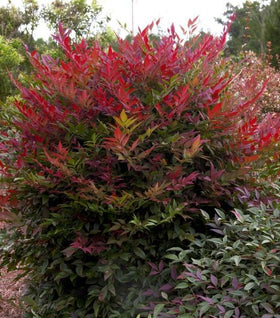
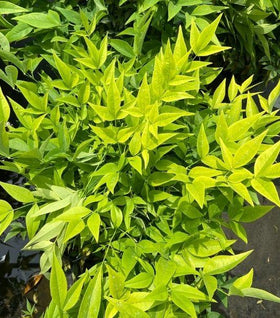

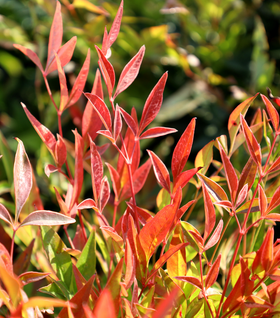
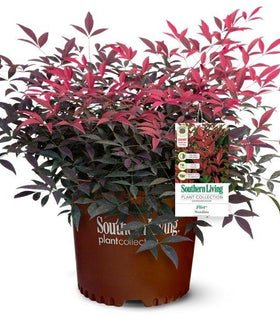
Four-season color that stays tidy.
Nandina earns its spot because it brings structure first: upright canes, fine texture, and an evergreen-to-semi-evergreen presence that makes foundations and borders look finished in every season. Many commonly grown forms fall into a manageable shrub size range (roughly 3–8 feet tall for the species, with smaller dwarf cultivars available), which makes it easy to use as a mid-layer anchor without swallowing the bed.
This collection is especially useful for “gap solving.” Use compact types to tighten up corners, mass medium forms for a clean, low-hedge feel, or repeat plants along a foundation line to create continuity that reads as intentional from the street. Because nandina tolerates full sun to part shade, it can also help unify beds that shift from brighter edges to filtered light under trees.
If you’re planting for easy curb appeal, nandina’s seasonal color cycle does the work: fresh growth tones, steady green structure, and, on many selections, stronger red coloration in cooler weather. That means you get a “designed look” without relying on flowers to carry the whole year.
Evergreen texture with winter-red flair.
Nandina’s look is all about fine texture and layered color. Many selections are grown primarily for foliage performance, especially the winter color shift, while the species and some cultivars add spring flowers and showy berries that can persist into winter. This variety of “looks” is why nandina can work as anything from a crisp foundation shrub to a soft, naturalistic mass in the back of a border.
Bloom timing is typically late spring into early summer, depending on selection and region (Missouri Botanical Garden lists June for the species), with small white flowers; fruit display is usually fall into winter when berries are present. If you prefer a lower-risk planting from an invasiveness and wildlife standpoint, prioritize low- to no-fruiting cultivars that are specifically documented as producing little fruit or not flowering/fruiting in certain evaluations.
Growth rate is usually steady, and the shrub responds well to selective cane management, so you can keep it full without constant shearing. The practical takeaway: choose the mature size class you want, then use light, strategic pruning to maintain a fresh, balanced clump rather than forcing a tight “boxy” shape.
Sun or shade, with smart spacing.
Most nandina perform well from full sun to part shade, with many references also noting tolerance of heavier shade (often with less color intensity compared to brighter light). If your goal is the boldest foliage color, give it more sun; if your site is hot and exposed, part shade can reduce stress while still delivering strong texture and form.
For spacing, plan around mature width: the species is commonly listed around 2–4 feet wide, while dwarf cultivars cluster closer to 2–3 feet (depending on selection). A practical rule is to space compact forms about 2–3 feet apart for a continuous low-mass effect, and larger forms at 3–5 feet apart when you want individual shrubs to hold their shape with airflow.
Placement can do double duty: line a walkway edge for year-round structure, mass in front of taller evergreens for contrast, or use as a soft screen in mixed shrub borders. If you’re in a region where nandina is flagged as invasive, treat placement as containment: avoid planting near natural areas and favor low- to no-fruiting options.
Easy care with important cautions.
Water consistently during establishment, then shift to a lighter hand once roots are set—nandina is often described as tolerant of drought once established (site dependent), but it performs best with a stable moisture pattern rather than big swings. Good drainage matters: avoid chronically wet sites that can stress roots and reduce long-term vigor.
Pruning is simple and confidence-building when you do it at the right time. Many practical pruning guides recommend pruning nandina in late winter to early spring, using selective cane removal to keep plants from becoming overly thick and to refresh color and form. Because flowers and fruit are associated with new growth, pruning choices also affect how much flowering/fruiting you’ll see; use that intentionally.