
Mountain Laurel Shrubs
Evergreen structure with show-stopping spring clusters for shade-friendly landscapes.
Mountain laurel is one of those shrubs that makes a landscape feel established, with glossy evergreen leaves year-round, then dense clusters of intricate blooms that appear in late spring. If you’ve ever wanted the look of a woodland garden with a “front-yard polished” finish, this is a signature plant: it brings structure in winter and a true floral moment when spring shifts toward summer. Most mountain laurel performs best in part shade (or filtered sun), with acidic, well-drained soil, think “moist but never soggy.”
The key to confidence is simple timing and placement. Mountain laurel sets next year’s flower buds on older wood, so any shaping is best done right after flowering, along with removing spent flower clusters. Give it room for airflow and avoid wet feet to reduce disease pressure, and it tends to be a long-lived evergreen anchor rather than a fussy plant.
Evergreen impact for shade-forward beds.
Mountain laurel earns its keep before it ever blooms because the foliage is thick, glossy, and evergreen, exactly what shaded foundations and woodland edges need to look “finished” in every season. It’s especially effective where you want a broadleaf evergreen that feels more refined than a hedge, with a natural, shrub-form silhouette that layers beautifully under taller trees.
This collection is a smart solution for landscapes that run acidic (or can be made acidic) and for beds where rhododendron-like conditions already exist, with filtered light, organic matter, consistent moisture, and well-drained soil. When those pieces align, mountain laurel becomes a set-and-enjoy anchor that supports a more naturalistic, layered design without looking wild or unmanaged.
For maximum visual payoff, plant mountain laurel where you’ll see it in bloom—near an entry walk, along a path, or as a focal point in a shade border—then repeat it in small groups to create that “intentional drift” look. The plant’s evergreen mass gives you year-round structure, while the spring bloom creates a seasonal highlight you can count on.
Bloom clusters that stop people mid-walk.
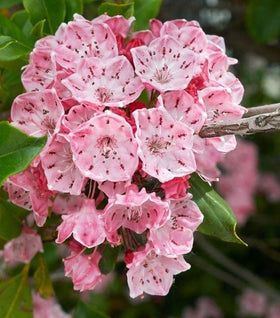
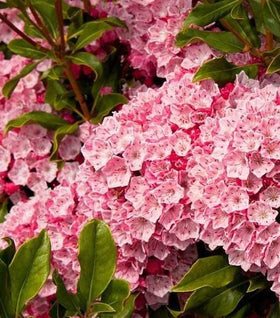
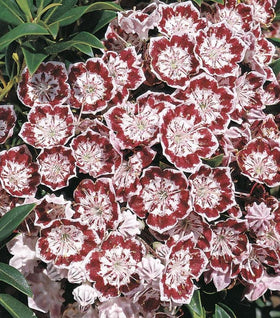
Mountain laurel is prized for its late-spring bloom, with showy clusters that can range from white to pink, depending on selection. The flowers have that unmistakable “origami” look, detailed, architectural, and dense enough to read from the street, so you get a spring moment that feels premium rather than fleeting.
Mature size varies by cultivar, but mountain laurel is commonly treated as a medium-to-large evergreen shrub, often landing roughly in the 3–10 foot range at maturity depending on selection and conditions. That size range makes it versatile: use compact forms for foundations and larger forms for screens, back-of-border structure, or woodland edges where you want a broad evergreen presence.
Growth rate is typically slow to moderate, a feature of long-term landscapes; you’re not fighting constant size explosions, and the plant improves with age as it builds a stronger, fuller framework. The best-looking specimens usually come from “right plant, right place” rather than heavy pruning.
Part shade placement that keeps foliage lush.
Mountain laurel generally prefers part shade to filtered sun, especially in hotter exposures where intense afternoon sun can stress foliage. If you can give it morning sun with afternoon shade (or dappled light under high canopy), you’ll usually get the best balance of bloom and evergreen density.
Soil conditions matter more than almost anything: aim for acidic, organically rich soil that drains well. Avoid sites that stay wet, because root and crown issues are much more likely when the plant sits in waterlogged soil. If your native soil is heavy, a slight berm or raised planting area can dramatically improve long-term success.
For spacing, plan around mature width and airflow; mountain laurel appreciates breathing room, and good circulation helps reduce foliar problems like leaf spot. A practical approach is to space plants, so their mature canopies won’t be jammed together, especially in humid climates.
Easy care that protects next year’s flowers.
Pruning timing is the make-or-break detail: mountain laurel blooms on old wood, so prune and shape right after flowering, and remove spent flower clusters soon after bloom. That approach keeps the shrub tidy while protecting next year’s buds, which form on existing growth.
Pest and disease watch-outs are manageable when you plant smart. Leaf spot diseases are documented on mountain laurel, and lace bug feeding can cause stippled, stressed-looking foliage, both issues are more likely when plants are under stress or crowded. Prioritize airflow, avoid overhead watering when possible, and keep plants vigorous with proper siting.