
Bee Balm
Big summer blooms that bring pollinators and energy into the garden
Bee balm (Monarda) is one of those “plant it and watch the garden come alive” perennials—bold summer flowers, a full, cottage-garden look, and the kind of pollinator pull that makes your beds feel like they’re humming with purpose.
The key to loving bee balm is setting it up for success: give it sun, moisture that’s consistent (not soggy), and enough breathing room to keep foliage healthier—because powdery mildew can be a common issue when plants are crowded, or air circulation is poor. We back your success with the We Grow Together Promise.


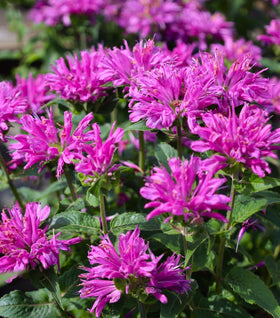

Fill your beds with summer color and pollinator traffic.
Bee balm is famous for turning an ordinary border into a destination—its flowers are well known for attracting bees, butterflies, and hummingbirds, which is why it’s a staple in pollinator gardens and native-style plantings.
It also reads beautifully in real landscapes: mass it for a bold mid-border “color band,” tuck it into mixed beds for a natural, layered look, or use it in larger sweeps for that meadow-garden feel without losing structure.
And it’s not just pretty, many Monarda types handle typical home-garden conditions well, including soils with some clay, as long as drainage is reasonable and you don’t let plants bake bone-dry during peak summer.
Know the bloom season, size, and growth habit before you plant.
Bee balm is a summer bloomer, commonly grown for strong color in the heart of the season, when spring flowers have faded, and you want beds to feel vibrant again.
Mature size varies by species and cultivar, but many garden bee balms are often in the “mid-border” range, roughly 2–4 feet tall, so they pair naturally with other summer perennials and ornamental grasses.
Growth habit matters: some Monarda spread by rhizomes and can expand into larger colonies over time, which is wonderful for filling space, but worth planning for near paths, tight edging, or small foundation beds.
Choose full sun and give it room for healthier foliage.
For best flowering and stronger plants, bee balm performs best in full sun (at least 6 hours of direct light), and plants grown in partial shade tend to flower less and may be more susceptible to powdery mildew.
Soil-wise, aim for moist but well-drained conditions; bee balm is often noted as a good performer with consistent moisture and can tolerate clay soils, especially when it’s not left stressed by drought.
Spacing is your simplest “insurance policy” against mildew: extension guidance commonly recommends spacing bee balm 2-2½ feet apart, and dividing clumps every 2–3 years to prevent overcrowding.
Keep care easy with deadheading, division, and a mildew plan.
Water regularly while plants establish and during dry stretches—bee balm appreciates steady moisture, and reducing stress helps plants stay more vigorous through the bloom season.
Deadheading (removing spent blooms) can help extend the show and keep the planting looking crisp, especially in prominent beds where you want that “always in bloom” impression.
Powdery mildew is the headline caution: it’s a common problem on bee balm, and cultural fixes are the first line of defense—sun, airflow, correct spacing, dividing, avoiding overhead watering, and removing infected debris at season’s end.