
Mahonia Shrubs
Evergreen texture and winter blooms for shade, structure, and four-season interest.
Mahonia is the shade-garden upgrade that keeps working long after the flowers fade. These evergreen shrubs bring bold, architectural foliage (sometimes holly-like and spiny, sometimes soft and ferny, depending on the selection), and many types shine in the quiet season with bright yellow flowers in late fall through winter or late winter into spring. If your landscape has those tricky “under the canopy” spots where grass won’t grow, and most shrubs look flat. Mahonia adds real depth: texture, year-round green, and a seasonal bloom moment you’ll notice from the house.
The best results come from treating mahonia like the woodland-edge evergreen it is: give it partial shade (morning sun with afternoon shade is often ideal in warmer climates), keep soil well-drained, and don’t overwater. Pruning is simple and confidence-building when shaping is needed. Many guides recommend pruning just after flowering (late winter into early spring for winter-blooming types) so you keep next season’s buds. And you’re backed by the We Grow Together Promise, so you can plant with confidence and adjust as your garden matures.
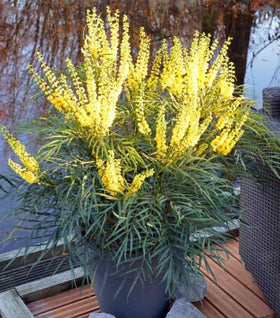
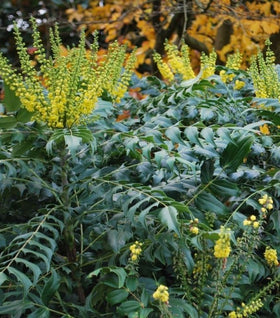
Brighten shade with evergreen structure.
Mahonia is a true problem-solver for shade and “in-between light” beds because it brings structure first, evergreen foliage that reads intentional in every season. Many selections are described as thriving beneath larger trees and blending naturally into woodland-style plantings, which makes them perfect for side yards, north-facing foundations, and shaded borders that need more than just mulch.
It’s also a smart choice when you want a shrub that looks designed without constant clipping. The foliage carries the show: bold, architectural leaves on classic types and softer, threadlike foliage on newer, thornless selections. That means you can build an elegant evergreen layer under taller shrubs and trees, then let perennials and bulbs do the seasonal color work around it.
If you’re planting for privacy in a shaded corner, mahonia can help by creating a dense, layered screen at the “human height” level where it matters most. Use it to block views into patios, hide utility areas, or fill odd gaps in mixed shrub borders—especially where sun-loving evergreens struggle to stay full.
Winter blooms and bold foliage.
One of mahonia’s biggest wins is bloom timing. Many types produce vivid yellow flowers in late fall through winter or late winter into spring, which adds real seasonal interest when most shrubs are quiet. That bloom window makes mahonia feel like a secret weapon for four-season landscapes, especially near doors, paths, and windows where you’ll actually notice winter color.
After bloom, many mahonias set blue berries that birds use, extending interest beyond flowers and adding a naturalistic, wildlife-friendly layer to the garden. If you like shrubs that bring beauty and function, this is a strong category, especially when planted in small drifts where berries and foliage read as a cohesive feature.
Mature size varies by species and cultivar, but a practical planning range for many landscape forms is roughly 3–6 feet tall with a similar spread, while compact, softer-foliage selections can stay smaller and more contained. That range makes it easy to choose a mahonia that fits a tight foundation bed or a broader woodland edge without turning into a pruning project.
Shade-smart placement for best performance.
Most mahonias prefer partial shade, especially in hotter climates, with well-drained soil as a non-negotiable. In brighter light, you’ll often get denser growth, but harsh afternoon sun and drought stress can reduce vigor, so “morning sun, afternoon shade” is a dependable target when your summers run hot.
Soil should drain well and stay evenly moist during establishment, then lean toward a lighter hand once roots are settled. Overwatering and poorly drained sites are commonly linked to decline symptoms like yellowing or drooping, so if you’re choosing between “more water” and “better drainage,” drainage wins nearly every time.
For spacing, plan around mature width rather than “day-one size.” Many mahonias are happiest with enough room for airflow and natural form—often about 3–5 feet apart for medium shrubs (tighter for compact selections, wider for larger species). This keeps foliage healthier, simplifies pruning, and helps plants look full without crowding stress.
Easy care with important cautions.
Pruning is straightforward: when shaping is needed, prune just after flowering so you avoid removing developing buds. For winter-blooming selections, that typically means late winter into early spring; for other types, prune after their bloom period. Keep pruning conservatively, mostly thinning, shaping, and removing any damaged stems—so the plant retains its natural architecture.
Pests and diseases are usually manageable when plants are sited correctly, but, like many broadleaf evergreens, mahonia can experience issues such as powdery mildew or rust under stressful conditions. The best prevention is the simplest: good airflow, appropriate light, and avoiding waterlogged soil.