
Hellebore Plants
Evergreen shade color that starts blooming when the garden is still asleep
Hellebores (Helleborus), often called Lenten rose or Christmas rose, are the rare perennials that earn their keep in the quiet season, when most landscapes are all bark and mulch. Many types bloom from late winter into early spring, and they do it with elegant, long-lasting flowers over handsome evergreen foliage, making them a go-to for woodland borders, under-tree planting, and shaded entry beds where you want real color before spring truly arrives.
They’re also wonderfully practical: hellebores typically prefer part shade to full shade, settle into a low-maintenance routine once established, and form tidy clumps in the 1–2 foot range (depending on the variety) that are easy to design with. The biggest “success keys” are drainage (no soggy feet), smart spacing for airflow, and a simple late-winter cleanup of older foliage to keep plants looking sharp and help reduce leaf spot pressure. We back your planting success with the We Grow Together Promise.
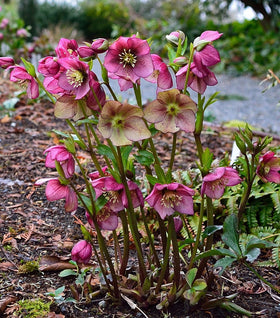

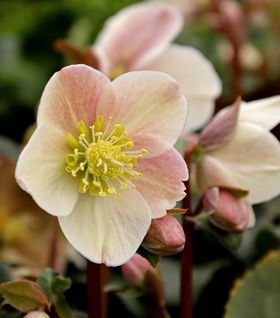
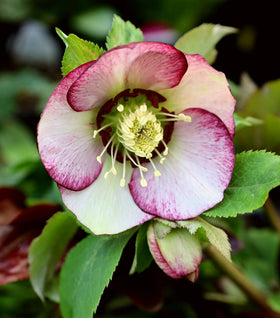


Get real winter-to-spring color in the shade.
Hellebores shine when other plants are still gearing up: many bloom in late winter through early spring, giving you flowers during the season when most shade beds are visually quiet. That timing is exactly why they’re so valuable in high-visibility spots like shaded front walks, entry beds, and under windows, places you actually look at in winter.
They’re also a natural woodland-garden fit because they’re comfortable in filtered light and cooler soil, and their evergreen foliage provides structure even when blooms are between cycles. Instead of relying on a short-lived spring burst, you get a plant that contributes texture and presence for months.
In-ground plantings are the classic use, but hellebores can also be used in containers where shade and winter interest matter, especially if you can provide excellent drainage and protect pots from staying waterlogged in cold weather. The “win” is the same: dependable early-season beauty without a high-maintenance routine.
Know the blooms, foliage, and mature size you’re planning for.
Most hellebores used in gardens form compact, clumping perennials, often around 1–2 feet tall and wide depending on type, so they’re easy to tuck into layered shade designs without overpowering nearby plants. This predictable footprint makes them great for repeating in drifts to create a calm, cohesive look.
Bloom windows vary by species and selection: some are known for flowering in mid-to-late winter, while others peak later into early spring. The big takeaway for planning is that this collection is built around early-season performance, flowers when you’re craving them most.
Growth rate is typically steady rather than aggressive, with plants becoming fuller as the clump matures. If you want a faster “finished bed” look, plan on repetition (multiple plants) and spacing that allows each clump to reach its natural shape rather than crowding them into a tight mass.
Place them where shade and drainage work together.
Hellebores generally prefer part shade to full shade, with dappled light under high tree canopies often producing the best balance of strong foliage and good flowering. Too much hot afternoon sun can stress plants in warmer regions, while deeper shade can be perfect where you want evergreen structure and subtle, lasting bloom.
Drainage is the make-or-break detail: hellebores like moisture, but they do not like saturated soil, especially in colder seasons. Prioritize humus-rich, well-drained soil (think woodland leaf-mold style), and avoid low spots that stay wet.
For spacing, plan for airflow and the mature clump, commonly in the 18–24-inch range for many landscape hellebores (variety-dependent). That breathing room helps foliage dry after rain, reduces disease pressure, and keeps each plant looking like a clean, intentional mound.
Keep care easy with a quick cleanup and smart cautions.
Water consistently during establishment, then transition to a balanced routine—hellebores are often described as fairly drought-tolerant once established, but they look best with even moisture (not wet feet). A spring top-dressing of compost can support steady growth without pushing soft, disease-prone foliage.
Pruning is refreshingly simple: in late winter (often as flower stalks begin to rise), remove older, weathered leaves to showcase blooms and help reduce hellebore leaf spot issues. This “annual cleanup” is one of the highest-impact steps for keeping plants looking polished and healthy.
Watch-outs are worth knowing: fungal leaf spot is commonly mentioned, and hellebores can be affected by serious problems like “black death” (a virus issue) in some cases—another reason good hygiene, airflow, and removing tired foliage matters. If a plant shows unusual black streaking or decline, it’s smart to isolate and follow best practices rather than letting problems spread.