
Green Flowering Hydrangea Shrubs
Lime-green blooms that brighten beds now and blush beautifully later.
Green-flowering hydrangeas are the “designer neutral” of the shrub world: fresh chartreuse blooms that look crisp with modern architecture, soft with cottage borders, and absolutely perfect against evergreens. Many of the best-known green bloomers are panicle hydrangeas, prized for cone-shaped flowers that often open lime-green, shift creamy, and then pick up pink tones as the season matures—so you get a color show without changing anything in your garden plan. They’re a slam-dunk for foundation beds, long borders, and statement plantings where you want a shrub that looks intentional from a distance and elegant up close.
The confidence piece is simple: match the plant to the light, then prune at the right time. Panicle hydrangeas are widely noted for thriving in full sun to part shade (often appreciating afternoon shade in hotter climates) and for blooming on the current season’s growth—meaning late-winter to early-spring pruning won’t steal your flowers. Give them room to mature, keep soil evenly moist but well-drained, and you’ll get sturdier stems, cleaner foliage, and bigger blooms. That’s the We Grow Together Promise—clear guidance, confident timing, and shrubs that perform year after year.
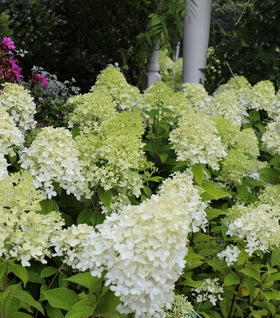
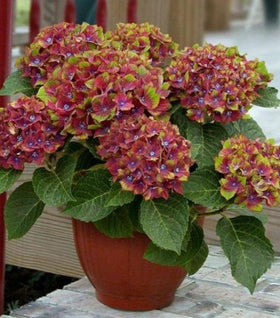
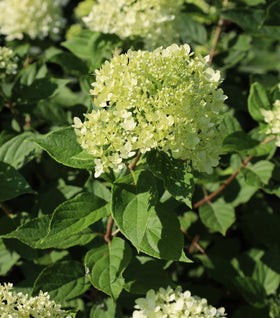
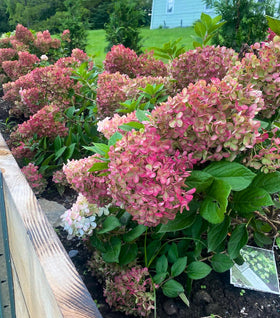

Bring fresh color to the landscape with lime-green blooms.
Green hydrangeas give you maximum impact with a surprisingly flexible color. Lime blooms brighten dark mulch, make nearby foliage look richer, and create a clean “lift” in mixed borders—especially when you repeat the same shrub down a foundation line or along a walkway. Because the flower heads are substantial, even a small planting looks more finished faster, and the shrubs carry a strong presence even when they’re not in peak bloom.
If you’re designing for homeowners, think entry moments and front beds: one plant can be a focal point, while three plants create a polished mass that reads as professionally planned. If you’re designing for landscapers, green hydrangeas work as a “repeatable structure” that pairs with almost any palette—white flowers for crisp contrast, purple foliage for drama, or soft pinks and blues for a layered cottage look. Panicle types are especially valued for reliable flowering and tough performance in a wide range of landscapes.
Green blooms also pull double duty for cutting. Cone-shaped panicle blooms are commonly used fresh and dried, and because wide varieties shift color as they age, you can harvest different looks from the same plant over the season. That’s the kind of “one shrub, many moments” payoff that makes a landscape feel curated without adding maintenance complexity.
Know the bloom changes and the mature size you’re choosing.
Many green-flowering hydrangeas are panicle hydrangeas with blooms that open chartreuse, lighten to cream, and then deepen into pink hues later in the season. This color progression is a signature feature of popular green panicle selections and is a big reason they’re so useful in design: you get a long season of interest that evolves naturally from mid- to late summer into fall.
Plan around mature size, because these can be substantial landscape shrubs. For example, widely referenced green panicle cultivars can reach 6–8 feet at maturity, and panicle hydrangeas, overall, may be maintained as large shrubs (or trained into small-tree forms) depending on pruning and habit. When you give them the space they want from the start, they develop better structure, hold blooms more upright, and stay easier to maintain.
Growth rate is often described as vigorous when the basics are right—sun, moisture, and drainage—so spacing and pruning become your best tools for keeping plants full but not crowded. The goal isn’t constant shearing; it’s smart placement and seasonal pruning that support strong new growth and heavy flowering in panicle types.
Place them in the sun, airflow, and big blooms.
Light is your first decision. Panicle hydrangeas are commonly recommended for full sun to part shade, with many care guides noting they can take more sun than other hydrangea types—while still appreciating afternoon shade in hotter climates. In practical terms, more sun usually means sturdier stems and heavier bloom, as long as soil moisture stays consistent.
Spacing should follow mature width and your desired effect. A broad rule of thumb across hydrangeas is to space based on expected mature size (often cited anywhere from a few feet up to around 10 feet depending on type), and for hedge-style plantings of larger panicle selections, 5–6 feet on center is a commonly suggested range for a full look without chronic crowding. Build in airflow now, and you’ll save yourself years of leaf-issue cleanup later.
Soil should be rich and well-drained, with consistent moisture—especially during establishment. Panicle hydrangeas are often described as adaptable, but they do not like to sit in soggy soil, and stressed plants are more likely to show disease symptoms. Mulch helps smooth moisture swings, and watering at the root zone (rather than constantly wetting foliage) supports cleaner leaves.
Prune at the right time and keep care effortless.
The best news: most green-panicle hydrangeas bloom on new wood (current-year growth), so pruning is straightforward. Extension guidance commonly recommends pruning panicle hydrangeas in late winter or early spring (or, in some guidance, from fall through spring), often emphasizing waiting until late winter/early spring if you want to enjoy dried flower heads for winter interest. This pruning window supports strong new shoots and heavy flowering without sacrificing blooms.
For day-to-day care, aim for even moisture and good drainage, and fertilize lightly if needed—especially in spring as growth starts. Many care resources emphasize that panicle hydrangeas are durable and low-fuss once established, but performance improves when you avoid extremes: not bone-dry, not waterlogged, and not overfed into leafy growth at the expense of blooms.