
Ice Plants
Brilliant, sun-loving groundcover for hot, dry spots and rock gardens
Ice plants (Delosperma) are the kind of “small plant, big payoff” groundcover that makes a tough spot look intentional—fast. In full sun, the succulent foliage forms a low mat that hugs the ground, then lights up with bright, daisy-like blooms for a long season (often summer well into fall, depending on the type and climate). They’re a rock-garden classic, a smart xeriscape choice, and a favorite for slopes and edging because they’re built for heat and low water once established.
The secret to loving ice plants is simple: treat them like they want to live. Give them sun (at least 6+ hours), keep the soil well-drained, and resist the urge to overwater—especially in heavier soils, where root rot can become a major issue. If you’ve heard “ice plant” can be invasive, that’s usually referring to other plants commonly called ice plant (notably Carpobrotus along the California coast); Delosperma is widely used as a better-behaved, garden-friendly alternative, but it’s always wise to follow local guidance for groundcovers. We back your success with the We Grow Together Promise.
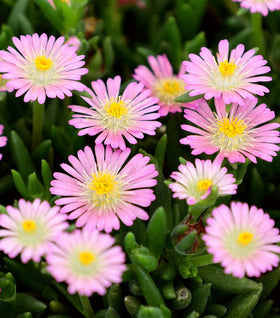
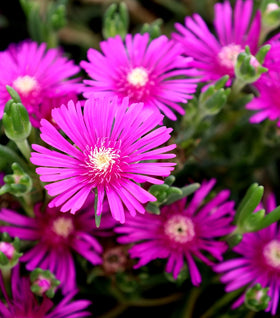

Solve dry, sunny problem spots with living color.
Ice plants are purpose-built for the places that make other perennials sulk: hot beds, reflected heat near hardscapes, lean soil, rocky pockets, and sunbaked edges. Their succulent habit helps them hold up when rainfall is inconsistent, and in the right conditions, they’re noted for strong heat and drought tolerance once established—exactly what you want when you’re trying to reduce fuss without giving up flowers.
Design-wise, they’re a “clean line” groundcover. Use them to soften the top of a retaining wall, spill between stepping stones, or create a crisp edging along a path where mowing and trimming is a headache. They’re also excellent in rock gardens and xeriscapes, where the low mound and sparkling foliage texture look natural, not forced.
Container gardeners can get in on the fun, too—ice plants handle pots and hanging baskets well when drainage is excellent, and they’ll reward you with a bright, trailing look that doesn’t demand daily watering once settled. The key is choosing a sunny placement and a fast-draining mix, so roots never sit wet.
Get the bloom punch and groundcover size you’re planning for.
Most Delosperma stay low—often just a few inches tall—but spread into mats roughly 12–24 inches wide (sometimes wider over time), which makes them so effective as groundcover. That low profile is also why they’re great at the front of borders: they add color without blocking sightlines to taller perennials behind them.
Bloom season is one of the main reasons people fall for ice plants. Many types bloom heavily in summer and can continue flowering into fall when conditions are right; some start earlier in warm regions, while others peak mid-summer and keep going with sun and lean, well-drained soil. Expect the best flowering in full sun—shade tends to reduce bloom and can lead to weaker, leggier growth.
Growth rate is typically steady to fast as plants fill space once established, especially in warm conditions. The “fast fill” comes from the spreading habit, but it still stays politely low; if it creeps farther than you want, it’s easy to edge back along a path or border line.
Plant in full sun with sharp drainage for best performance.
Full sun is the non-negotiable for maximum bloom—aim for at least 6 hours of direct light, and more is better. If you plant ice plants where the sun is limited, you’ll usually see fewer flowers and a looser, less attractive habit.
Drainage is the other deal-breaker. Multiple care guides emphasize that Delosperma performs poorly (or can fail) in soils that stay wet, especially unamended clay; sandy, gravelly, or sharply drained beds are ideal. If your soil is heavy, the best “fix” is to plant on a slope, build a berm, use a rock-garden style mix, or keep them in containers where drainage is easy to control.
Spacing depends on the cultivar and how quickly you want coverage, but a practical spacing range is about 15–24 inches. Tighter spacing fills in faster for a seamless carpet; wider spacing gives each plant room to mound and keeps airflow strong in humid or wet-weather areas.
Keep it low-maintenance with simple cleanup and smart cautions.
Water lightly and consistently while plants establish, then shift to a “less is more” approach—ice plants tolerate drought well once rooted in, and overwatering is a common cause of decline. If you’re unsure, check the soil: let it dry down between waterings, especially in cooler weather or heavier soils.
Pruning is refreshingly simple: in spring, trim out any winter-killed or damaged stems, and if plants look stretched after a long season, a light shear can encourage a denser mat. Deadheading isn’t required, but tidying spent blooms can keep the planting looking crisp in high-visibility beds.
Pests and diseases are usually minor when conditions are right, but it’s smart to know the shortlist: aphids, mealybugs, and vine weevils can show up, and overly damp conditions can invite powdery mildew or root rot. The best prevention is cultural—sun, spacing, and good drainage—so the plant stays tough instead of stressed.