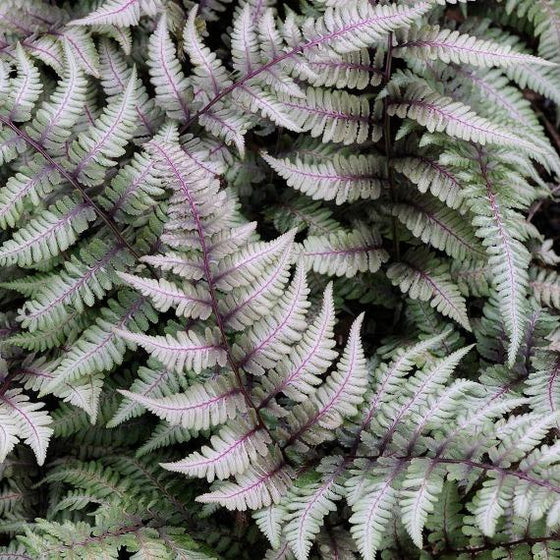
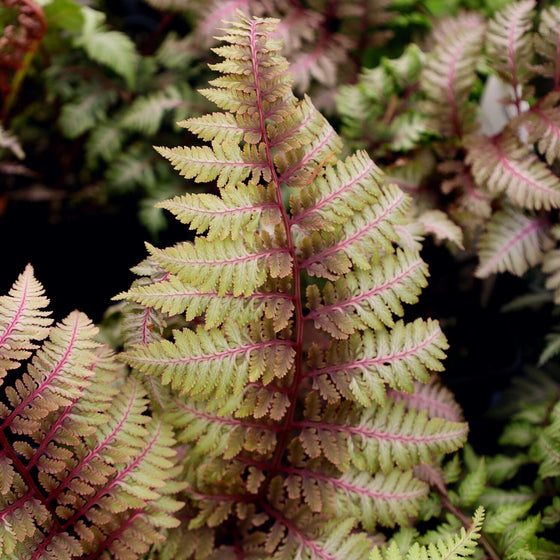


Images Depict Mature Plants
Japanese Painted Fern
Athyrium niponicum 'Pictum'
Japanese Painted Fern is one of the best ferns for adding real color to a shade garden without depending on flowers. The silver-blue fronds and burgundy stems look beautiful with hostas, heuchera, hellebores, astilbe, and dark mulch, and the compact size makes it easy to use near the front of a bed or along a shaded path. I especially like it where homeowners can see the foliage up close, because the detail is what makes this fern special.

15% OFF SITEWIDE SALE
Use Code 'PRIMETIME15' At Checkout
📦 Free shipping on orders over $99.
Delay shipping by leaving us a message at Checkout.
Share:

Silver Foliage for Elegant Shade Gardens
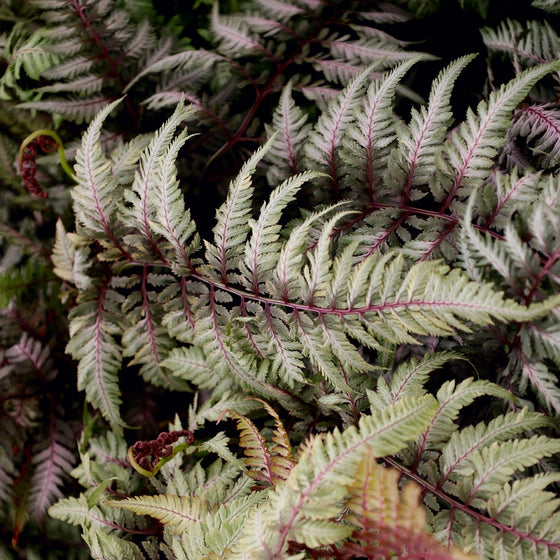
Silver-blue fronds with burgundy accents.
Japanese Painted Fern is prized for its silvery-gray fronds layered over blue-green undertones, with burgundy, maroon, or purple-red midribs that add depth and contrast. The foliage looks almost brushed with metallic color, giving shaded gardens a brighter, more refined look than standard green foliage alone. Use it where homeowners want a shade perennial that adds color without relying on flowers, especially along paths, under trees, and near patios, where the detail can be appreciated up close.
A compact fern for front-of-border texture.
This fern forms a low, arching mound that fits beautifully at the front of shaded beds, along woodland walkways, in mixed-shade borders, and around foundation plantings. Its triangular fronds create a soft layered effect that contrasts with bold hosta leaves, rounded heuchera foliage, upright astilbe plumes, hellebores, brunnera, carex, and finer-textured shade plants. Because it stays compact, Japanese Painted Fern is easy to repeat through a planting without overwhelming nearby perennials.
Colorful foliage for woodland and Zen-style gardens.
Japanese Painted Fern is especially effective in woodland gardens, Japanese-inspired gardens, Zen gardens, shaded courtyards, and quiet foundation beds where texture and subtle color matter. The silver foliage captures low light beautifully and helps brighten darker garden corners without resorting to loud flower colors. It also pairs well with dark mulch, stone, moss, variegated hostas, purple heuchera, and blue-green foliage combinations for a polished shade-garden look.
Deer-resistant beauty with low-maintenance appeal.
Japanese Painted Fern is commonly considered deer- and rabbit-resistant, making it a practical foliage plant for shaded landscapes where browsing pressure can be frustrating. Once established at the right site, it is low-maintenance and generally easy to grow. The key is to provide part shade to full shade, evenly moist well-drained soil, and protection from hot afternoon sun, which can reduce the silver color and stress the fronds.
Beautiful in containers and layered shade plantings.
Japanese Painted Fern also works well in shaded containers, porch planters, and mixed patio pots where its silver foliage can act as a soft filler or textural accent. In the ground, plant it in small groups for a stronger color effect, or repeat it through a border to create rhythm. It is a deciduous fern, so the fronds die back in winter and return in spring with fresh new color, often showing their best silver tones early in the season.
2004 Perennial Plant of the Year
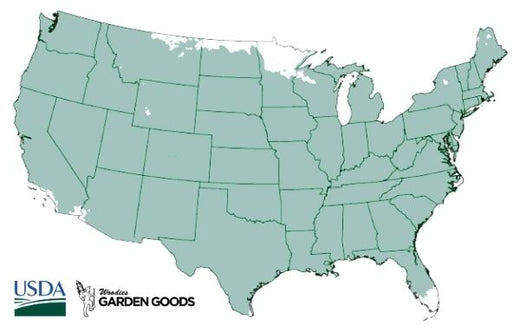
| Hardiness Zone: | 4-9 |
|---|---|
| Mature Height: | 12 to 18 Inches |
| Mature Width: | 18 to 24 Inches |
| Sunlight: | Part shade to full shade; tolerates some morning sun with consistent moisture |
| Soil | Moist, humusy, organically rich, well-drained soil |
| Water | Water regularly after planting; prefers even moisture and should not dry out for long periods |
| Bloom Time / Color | Ferns do not flower; grown for silver-gray, blue-green, and burgundy-purple foliage |
| Foliage | Triangular fronds with silver-gray overlay, blue-green undertones, and burgundy to maroon midribs |
| Ornamental Features | Silver foliage, burgundy stems, compact mounding habit, layered fronds, shade-garden color |
| Wildlife Value | Provides shade-garden texture and habitat structure |
| Resistance | Deer resistant and rabbit resistant in many landscapes; shade tolerant and low maintenance in moist, well-drained soil |
| Landscape Uses | Shade borders, woodland gardens, Japanese gardens, Zen gardens, foundation beds, under-tree plantings, shaded walkways, containers, and mixed perennial beds |
How to Care for Japanese Painted Fern
Be sure to read our planting instructions to ensure a healthy and happy Japanese Painted Fern for years to come!
-v1777657313067.png?92x91)
How should I plant Japanese Painted Fern?
Plant Japanese Painted Fern in part shade to full shade with moist, humusy, well-drained soil. A site with morning sun and afternoon shade, filtered light, or bright open shade is ideal, especially in warmer climates where hot afternoon sun can scorch the fronds. Dig a hole about twice as wide as the root ball and set the crown level with the surrounding soil. Backfill, water deeply, and space plants about 18 to 24 inches apart so the mounds have room to fill in without crowding nearby shade perennials.
-v1777657336035.png?89x84)
How often should I water Japanese Painted Fern after planting?
Water Japanese Painted Fern regularly during the first growing season while the roots establish. Keep the soil evenly moist, especially during warm weather, dry spells, or the first several weeks after planting. Once established, Japanese Painted Fern performs best with steady moisture but may tolerate slightly drier conditions better than some ferns if protected from harsh sun. If fronds brown, crisp, or fade quickly, dry soil, hot sun, or wind exposure may be the cause.
-v1777657351030.png?90x89)
When should I fertilize Japanese Painted Fern?
Fertilize Japanese Painted Fern lightly in spring with compost, leaf mold, or a gentle organic fertilizer if the soil is poor. Rich organic matter helps mimic the woodland soil conditions this fern prefers and supports strong foliage color. Avoid heavy fertilizer applications, which are usually unnecessary and can push soft growth. A yearly layer of compost or shredded leaf mulch helps feed the soil, conserve moisture, and keep the root zone cool.

When and how should I prune Japanese Painted Fern?
Prune Japanese Painted Fern by removing old, damaged, or collapsed fronds in late fall after frost or in early spring before new fronds unfurl. Cut dead fronds close to the base without damaging the crown. During the growing season, remove browned or damaged fronds as needed to keep the plant tidy. If the clump becomes crowded after several years, divide it in spring as new growth begins.