
Blue Flowering Hydrangea Shrubs for Sale Online
Big blooms, easy elegance, and shrubs that transform the whole yard.
Hydrangeas are the “instant landscaping” shrub: a single plant can turn a plain foundation bed into a focal point, and a small group can make a new home look established fast. What makes them so satisfying is the range—some types thrive with more sun, others shine in partial shade, and bloom shapes can be mophead-bold, lacecap-airy, or cone-shaped and dramatic. If you want color without fuss, hydrangeas also play well with the rest of the landscape: they pair with evergreens for structure, ornamental grasses for movement, and perennials for a longer season of interest.
Here’s the confidence-builder: you don’t have to “know everything about hydrangeas” to succeed—you just match the type to your site and prune at the right time. Panicle hydrangeas generally tolerate sunnier spots, while bigleaf and oakleaf types often prefer some afternoon shade (especially in hotter climates). Pruning is the make-or-break detail: smooth and panicle hydrangeas bloom on new wood and can be pruned in late fall (once dormant) or early spring, while bigleaf and oakleaf typically set buds on older wood and are best pruned right after flowering so you don’t remove next year’s blooms. That’s the We Grow Together Promise—clear guidance, fewer surprises, and shrubs that perform season after season.
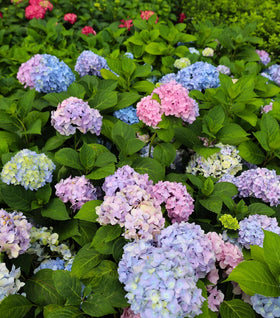
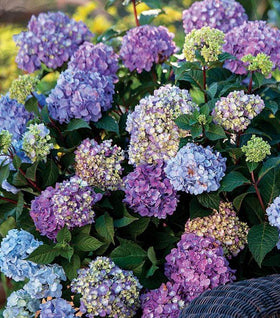
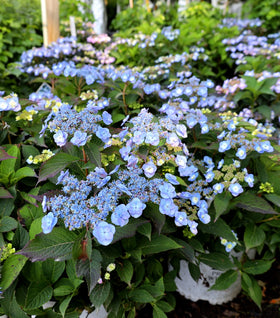
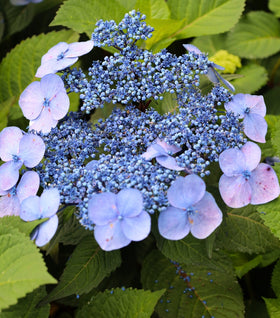
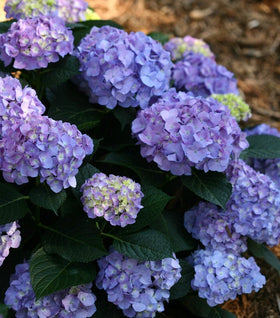

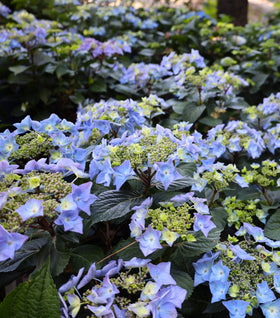
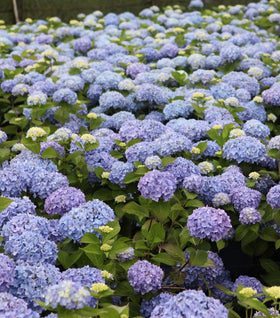
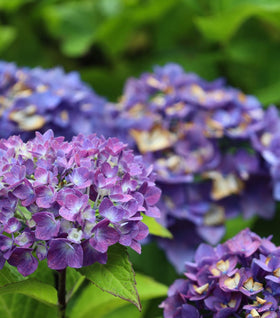

Turn one planting bed into a cool, blue showpiece.
Blue hydrangea shrubs are among the fastest ways to add “designer color” without a complicated plant palette. The bloom clusters are large enough to read from the street, which makes them perfect for front-yard beds, porch-side plantings, and foundation lines where you want instant presence. They also pair beautifully with white, pink, purple, and yellow flowers—so you can keep your bed simple or build a full mixed border around them.
For homeowners, think in threes: a small group of shrubs creates a focal moment that looks established quickly, especially when placed against evergreens or darker foliage. For landscapers, repeating the same hydrangea variety along a long bed creates rhythm and a clean, professional look while still delivering a “soft” flowering effect rather than a stiff hedge. Hydrangeas are commonly used in borders, mass plantings, and containers for exactly this reason—structure plus seasonal wow.
Containers are absolutely on the table when you can provide consistent moisture. A potted blue hydrangea can make a patio feel finished overnight, but it will dry faster than an in-ground shrub—so the win is planning ahead: a roomy container, well-drained media, and a reliable watering routine. Overwatering can cause root issues too, so aim for evenly moist—not constantly saturated—soil.
See the bloom shades and the shrub size before you plant.
“Blue flowering hydrangea” usually means bigleaf hydrangea (and close relatives) with mophead or lacecap blooms—colors ranging from sky blue to deeper blue, sometimes with hints of purple depending on soil conditions. Many cultivars bloom on older stems (old wood), while some modern “reblooming” types can flower again later in summer on newer growth, which can stretch your bloom window.
Mature size matters because these aren’t tiny accents once established. A common bigleaf hydrangea grows to roughly 3–6 feet tall and wide, forming a rounded, multi-stemmed shrub that wants room to fill out. If you plan for the mature width from day one, the plant stays fuller, blooms more evenly, and is far easier to prune and maintain.
Growth rate is often described as relatively fast when conditions are right—especially with consistent moisture and protection from harsh afternoon heat. That “fast” growth is a gift if you’re trying to soften a long foundation line or build a lush border quickly, but it’s also your cue to avoid crowding—because dense canopies dry slower and can invite leaf issues over time.
Plant in morning sun, then let the shade protect the blooms.
Blue-capable hydrangeas typically perform best with morning sun and afternoon shade, especially in warmer climates. Many guides emphasize partial shade and protection from hot, exposed sites to reduce stress and leaf scorch, and some recommend dialing down sun exposure even more in very warm regions. If you can give 5–6 hours of morning light and then shade later, you’re setting yourself up for stronger bloom and better-looking foliage.
Spacing is the difference between a lush planting and a constant maintenance project. A practical spacing range for many shrubs in this group is about 3–6 feet apart (adjusted by variety and the look you want), with the guiding principle: space based on mature size so air can move through the plant. That airflow helps leaves dry faster after rain or irrigation and supports healthier long-term performance.
To keep blooms truly blue (where the variety is color-variable), soil chemistry matters. Blue flowers are associated with more acidic soil conditions and aluminum availability; multiple horticulture resources cite a target pH range of 5.0–5.5 for bluer blooms, while higher pH tends to produce pink blooms. Soil testing is your best first step before adjusting pH, and amendments like sulfur or aluminum sulfate are commonly referenced tools when used carefully and correctly.
Prune with confidence by knowing the hydrangea type.
Pruning timing is the #1 place gardeners accidentally lose flowers. Many blue-flowering bigleaf hydrangeas set next season’s buds on old wood, so the safest approach is pruning right after flowering and avoiding late-season cuts (often flagged as “don’t prune after early August”) that can remove developing buds for the following year. If you’re growing reblooming types, you can still keep pruning light and focused—deadhead spent blooms and remove only what you truly need for shape.
Keep care simple: plant in moist, well-drained soil rich in organic matter, mulch to retain moisture, and water deeply during dry stretches rather than doing frequent light sprinkles. Hydrangeas are often described as high-water-need shrubs in heat, but they also dislike sitting in soggy soil—so drainage plus consistent moisture is the sweet spot.