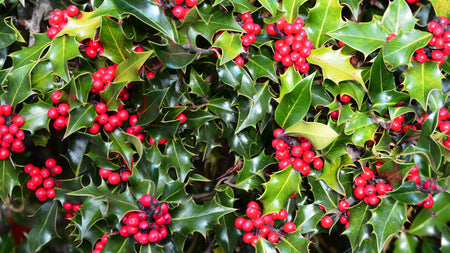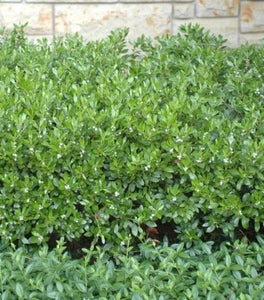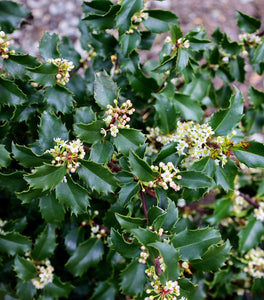
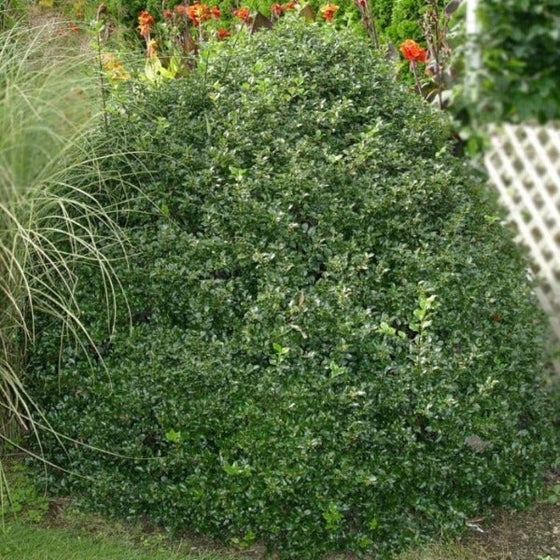


Images Depict Mature Plants
Blue Prince Holly
Ilex x meserveae 'Blue Prince'
Blue Prince Holly is one of those shrubs that does a lot of work in the landscape without asking for much attention. It looks great on its own, makes a really solid evergreen hedge, and if you are planting female blue hollies nearby, it is the plant that helps bring the whole berry show together.

15% OFF SITEWIDE SALE
Use Code 'PRIMETIME15' At Checkout
📦 Free shipping on orders over $99.
Delay shipping by leaving us a message at Checkout.
Share:

Blue-Green Evergreen Structure with Essential Pollinator Value
A handsome evergreen that does more than fill space
Blue Prince Holly is a strong choice for homeowners who want an evergreen shrub with real landscape presence and a practical purpose. Its dense habit, rich blue-green foliage, and purplish stems give it year-round ornamental value, but it also plays an important supporting role by pollinating female blue hollies. That makes it a smart plant for gardeners who want both beauty and function from the same shrub.
Blue-green foliage gives it a richer, colder-season look
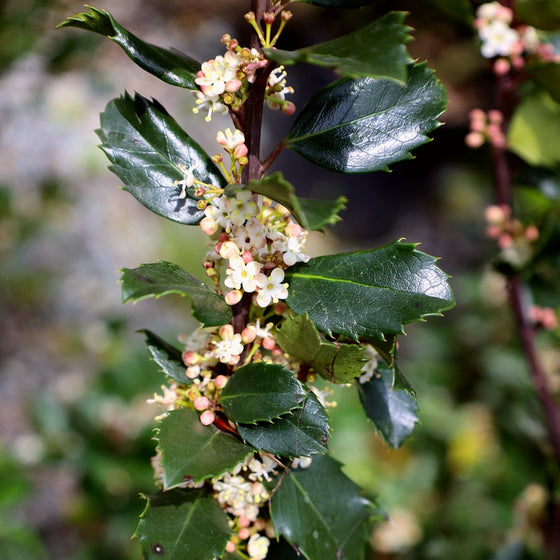
One of the most appealing features of Blue Prince Holly is its foliage color. The leaves are deep blue-green rather than plain green, which gives the plant a slightly cooler, more refined appearance throughout the year. That coloring helps it stand out in winter landscapes and pairs especially well with brick, stone, broadleaf evergreens, and female hollies nearby that carry bright red berries.
A dense upright habit makes it useful well beyond pollination
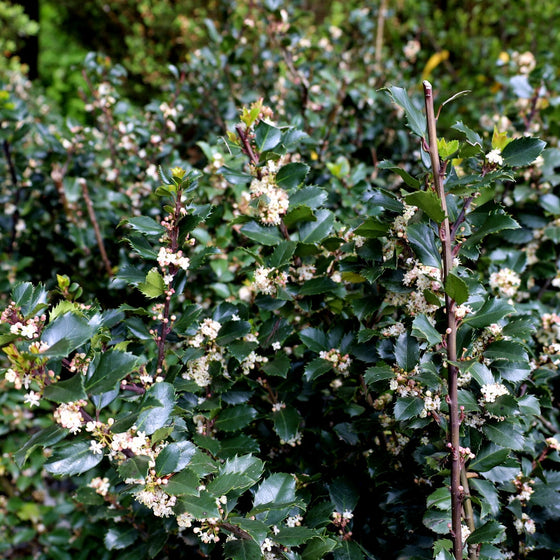
Although Blue Prince Holly is often planted as a pollinator, it is still an excellent landscape shrub in its own right. It develops into a dense, shrubby evergreen with a broad upright form that works beautifully as a hedge, privacy screen, or background plant. Homeowners who want a holly that looks substantial and polished even without ornamental fruit will find this plant especially useful.
Excellent for hedges, screens, and blue holly pairings
Blue Prince Holly is especially effective in evergreen hedges, mixed borders, foundation edges, and privacy plantings where year-round structure matters. It is also the classic companion for female blue hollies such as Blue Princess and Dragon Lady Holly, where it helps support heavy berry production. In many landscapes, it works best when planted close enough to those female hollies for pollination but still positioned where its own foliage and form can contribute to the overall design.
Cold hardy, and dependable, with berries not being the point
This Meserve holly performs best in full sun to partial shade and in acidic, well-drained soil. Once established, it is relatively low-maintenance and notably hardy, which makes it a reliable evergreen in colder regions. Deer resistance is often described for blue hollies, but it is best treated as relative rather than absolute in areas with heavy browsing pressure. Because Blue Prince is a male holly, it should be purchased for its foliage, structure, and pollination value rather than for berry display.
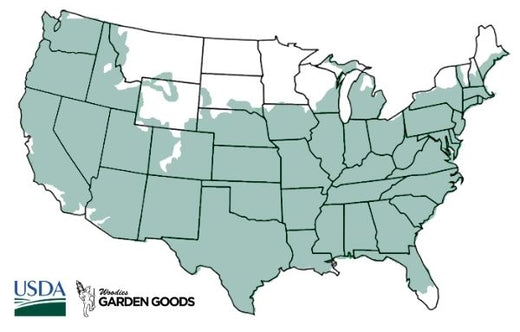
| Hardiness Zone: | 5-9 |
|---|---|
| Mature Height: | 6 to 12 Feet Untrimmed |
| Mature Width: | 3 to 8 Feet Untrimmed |
| Sunlight: | Full sun to partial shade |
| Soil: | Acidic, well-drained soil |
| Water: | Moderate during establishment; prefers even moisture with good drainage |
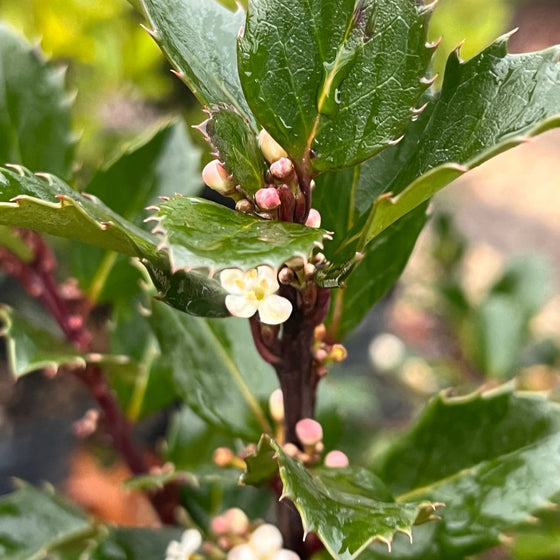
| Bloom Time / Color: | Spring; small inconspicuous greenish-white flowers |
| Ornamental Features: | Dense habit, blue-green color, broad upright form, strong year-round structure |
| Wildlife Value: | Supports pollinators; helps female blue hollies produce berries nearby |
| Pollination Role: | Male plant; pollinates female blue hollies such as Blue Princess and Dragon Lady |
| Fruit: | Does not produce ornamental berries |
| Resistance (deer/disease/drought/etc.): | Relatively deer resistant, cold hardy, adaptable once established |
| Landscape Uses: | Hedges, privacy screens, specimen planting, mixed borders, background evergreen, pollinator companion planting |
How to Care for Blue Prince Holly
Before you buy a Blue Prince holly, make sure to read about the recommended care instructions to keep this holly healthy and thriving.

How should I plant Blue Prince Holly?
Plant Blue Prince Holly in full sun to partial shade in acidic, well-drained soil. Dig a hole about twice as wide as the root ball and no deeper than the root ball itself, then set the shrub so the top of the root ball sits level with or slightly above the surrounding soil. Backfill with the native soil, water deeply, and mulch around the base to help conserve moisture and reduce weed competition. If you are planting Blue Prince Holly as a pollinator, place it within the same general planting area as female blue hollies so insects can move pollen easily between plants during bloom.

How often should I water Blue Prince Holly after planting?
Water Blue Prince Holly deeply right after planting, then keep the soil evenly moist during the first growing season while the roots establish. In most landscapes, that means watering about once or twice per week, depending on rainfall, heat, and drainage. Once established, this evergreen becomes easier to manage, but it still performs best when the soil does not swing between severe drought and prolonged sogginess. Good drainage and steady moisture support the healthiest foliage and best flowering.

When should I fertilize Blue Prince Holly?
Fertilize Blue Prince Holly lightly in early spring with a balanced slow-release fertilizer for evergreens or acid-loving shrubs. A modest spring feeding can support healthy branching, foliage color, and flower production without encouraging weak, overly lush growth. In many landscapes, heavy feeding is unnecessary. Proper soil pH, mulch, and steady establishment moisture often matter more than aggressive fertilizing when it comes to long-term performance.

When and how should I prune Blue Prince Holly?
Prune Blue Prince Holly in late winter or early spring if shaping is needed. Start by removing any dead, damaged, or crowded branches, then make selective cuts to preserve the shrub’s dense natural form. If you are growing Blue Prince Holly as a hedge, light shaping is usually enough to maintain a neat outline. Avoid aggressive pruning that removes too much flowering wood, since this male shrub is often planted specifically for pollination value.