
Allium Plants (Ornamental Onions)
Floating globe blooms that add instant “designer” structure in sunny beds
Alliums (ornamental onions) are one of the easiest ways to make a garden look intentional—those round flower heads rise on tall stems and seem to hover above the border like garden fireworks frozen in place. Most ornamental alliums bloom in spring into early summer, bridging the gap between early bulbs and peak summer perennials, and they’re famously popular with pollinators while being one of the more deer-resistant perennial choices.
If you want a plant that looks high-design without high maintenance, alliums deliver: full sun, well-drained soil, and a “don’t baby it” approach tends to produce the strongest growth. After flowering, you can deadhead for a cleaner look (or leave the seed heads for texture), but keep the foliage until it naturally yellows so the bulb can recharge for next year. We back your success with the We Grow Together Promise.
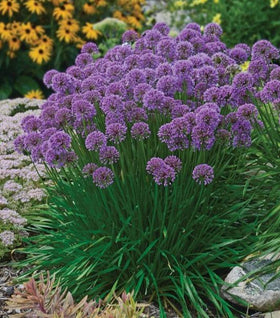
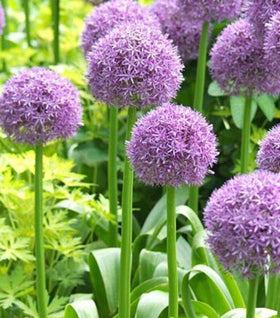
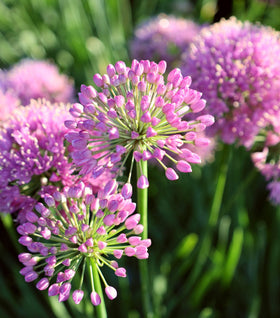
Add bold, airy blooms that look like they were designed.
Alliums create a clean architectural effect: tall stems, perfectly rounded blooms, and a light, modern feel that makes neighboring plants look more curated. They’re especially effective threaded through perennials and grasses, where the globe flowers add repetition and “visual punctuation” without blocking views of the plants behind them.
Because ornamental alliums are widely considered easy to grow, they’re a smart choice for gardeners who want impact with minimal fuss. Many are drought-tolerant once established, and they’re commonly praised as pollinator-attracting plants—so you get beauty and garden activity during the bloom window.
They also play well in both formal and relaxed designs. Use them in repeating drifts for a designer rhythm, dot them through cottage-style borders for a whimsical “popped-in” look, or line them along paths to create a blooming procession in spring.
For cutting gardens, alliums are a secret weapon: the flower heads hold their form beautifully, and the blooms can be used fresh or dried depending on type and timing. If you like arrangements that feel modern and sculptural, these stems deliver.
Know the bloom timing and the size you’re planting for.
Most ornamental alliums bloom in spring and early summer, often right after the earliest spring bulbs finish, making them ideal for extending seasonal color without crowding your summer bloomers. The bloom period can vary by species and cultivar, so mixing types is an easy way to stretch the show.
Mature size ranges widely in this category, from compact selections around 1–2 feet tall to taller forms that rise well above border plants. That range is a feature: you can choose low, tidy alliums for the front of beds or tall, statement types that read from the street.
Growth habit is typically upright and clump- or bulb-based, with blooms held above the foliage. Many alliums are described as quick to establish and straightforward, provided drainage is good, and the site isn’t waterlogged.
Spacing depends on mature width and the look you want, but a practical planning approach is “give them room to breathe” rather than packing them tight. In mixed borders, that usually means spacing of roughly 6–15 inches, depending on variety size, with larger types needing more room for proportion and airflow.
Plant in full sun and keep the soil draining.
Alliums thrive in full sun and are commonly recommended for well-drained soil—think loamy or sandy beds, raised areas, or slopes where water doesn’t sit. Heavy, damp sites are a consistent warning flag because wet conditions can lead to decline and rot issues.
If your soil is clay-heavy, improving drainage is the move: amend broadly with grit/compost and avoid planting in the lowest, wettest part of the yard. This one change often determines whether alliums act “effortless” or fussy.
Alliums are also easy to use as functional design tools: tuck them among later-emerging perennials to add spring structure, place them near hardscapes to soften edges with bloom, or run them in repeats to guide the eye along a walkway. With the right spacing, the planting looks fuller and stays healthier.
For broad success across climates, prioritize a bright site and avoid competition from dense groundcovers right at the bulb/crown zone. Light and airflow help foliage dry faster, one of the simplest ways to reduce disease pressure in ornamental alliums.
Keep care easy with smart cleanup and simple cautions.
Alliums are often low-maintenance once established: water during establishment, then ease up; many are considered drought-tolerant in the right soils. Overwatering and soggy beds are more likely to cause trouble than a slightly lean, sunny site.
After blooming, you can deadhead for a tidier look and to focus energy back into the bulb, but it’s just as valid to leave seed heads for structure and seasonal texture. The key rule is to keep green leaves in place until they yellow and die back naturally—those leaves are feeding next year’s performance.
Notable pests and diseases are worth knowing, even though ornamental alliums are often described as relatively trouble-free: allium leaf miner, slugs/snails, onion white rot, and downy mildew are commonly cited issues (especially where edible alliums have been grown). Avoiding damp sites and rotating locations away from previous onion-family plantings helps reduce risk