

No-Mow Lawns: A Beautiful Grass Alternative with Groundcover Perennials
 By Richard "Woodie" Buller, GGD co-founder with 35+ years in horticulture
Published On: Jan 17, 2025
Share:
| In this Article | |||
|---|---|---|---|
There is nothing wrong with a beautiful lawn. A healthy stretch of green grass can frame a house, give kids a place to play, and provide an open space that makes a landscape feel balanced. But here's the question I think more homeowners should ask: Does every square foot of your yard really need to be grass?
Probably not.
Those steep banks you hate mowing, the shady areas beneath trees where turf refuses to grow, the strip along the driveway that burns out every July, and the awkward corners where you drag the mower back and forth can often become something much more interesting.
That's where a no-mow lawn or groundcover lawn alternative starts to make sense.
Instead of fighting to grow turfgrass in places where it doesn't want to grow, you can replace portions of your lawn with low-growing perennial groundcovers that add flowers, foliage, texture, pollinator value, and year-round interest, with considerably less mowing.
And here's the part I like most: you don't have to tear out the whole lawn.
In many landscapes, the smartest approach is simply to put grass where grass works and use something better everywhere else.
What Is a No-Mow Lawn?
The term "no-mow lawn" gets used pretty loosely. It can refer to low-growing grasses, sedges, clover lawns, meadow-style plantings, or creeping perennial groundcovers.
For our purposes, we're talking about replacing areas of traditional turfgrass with low-growing groundcover plants that don't require regular mowing.
Some create a tight carpet only a few inches tall. Others grow into flowing masses of foliage and flowers. And a really good lawn-alternative landscape might use several different plants instead of attempting to cover the entire property with one species.
Think less about replacing one green carpet with another and more about creating a living tapestry.
That's where this idea gets interesting.

Why Replace Grass with Groundcover Perennials?
The obvious advantage is less mowing, but that's really only the beginning.
A properly selected perennial groundcover can cover soil, reduce weed pressure once established, protect slopes from erosion, add seasonal flowers, provide habitat and food for beneficial insects, and turn difficult areas into intentional parts of the landscape.
Groundcovers are particularly useful where maintaining turf is already difficult. University of Maryland Extension recommends groundcovers as lawn alternatives for areas such as slopes, narrow strips, awkward angles, and locations beneath trees where traditional turf struggles.
The important phrase is "properly selected."
A drought-tolerant groundcover planted in the right sunny, well-drained location may require much less supplemental water once established. Put the wrong plant in that same spot, and you'll spend all summer trying to keep it alive.
The best low-maintenance landscape isn't the one with the toughest plants. It's the one where the plants match the conditions.
A No-Mow Lawn Doesn't Have to Replace Your Entire Lawn
I think this is where homeowners sometimes make the idea more complicated than necessary.
You don't have to wake up Saturday morning and decide the lawn mower is leaving your life forever.
Start with the parts of the lawn that already annoy you.
Maybe it's the 500-square-foot bank that takes longer to mow than the rest of the yard. Maybe the grass underneath your maple tree gets thinner every year. Maybe there's a hot strip next to the sidewalk that turns brown every August, regardless of what you do.
Those are the places I would tackle first.
Keep traditional grass where you need recreation, frequent foot traffic, or a clean, open space. Replace it with another plant that can do the job better.
Over time, you might discover that the lawn gets smaller while the landscape gets considerably more interesting.
Best Groundcover Perennials to Replace Grass
There's no single best groundcover lawn alternative because every yard has different sunlight, moisture, soil, and traffic.
Before choosing plants, decide whether the area receives full sun, part shade, or shade. Then look at drainage, available moisture, and how much people actually walk across the area.
Most importantly, remember that groundcover does not automatically mean walkable. Some plants tolerate occasional footsteps beautifully. Others should be treated like a perennial planting bed rather than turfgrass.
Here are some of my favorite ways to approach it.
Creeping Thyme: One of the Best Low-Growing Grass Alternatives for Sun
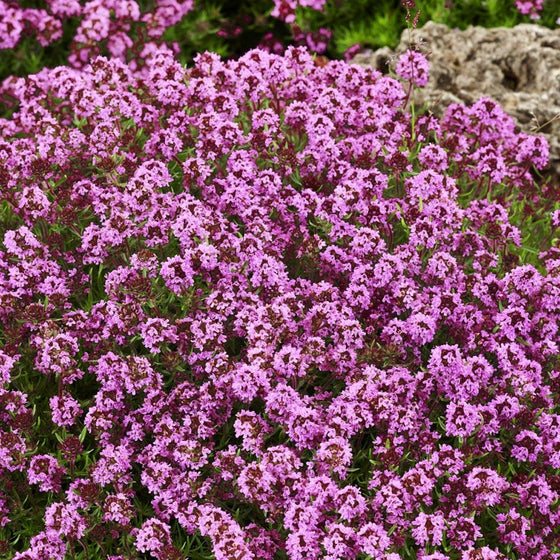
If your idea of a no-mow lawn is a low carpet of foliage that can handle some occasional foot traffic, Creeping Thyme (Thymus) deserves a serious look.
Creeping thyme stays low, spreads across sunny ground, and produces masses of small flowers that are extremely attractive to pollinators. Step on it occasionally and you'll release that wonderful thyme fragrance.
Varieties such as Red Creeping Thyme are especially useful between stepping stones, along pathways, around patios, and in small sunny areas where traditional grass creates more work than it's worth. For the tightest, most walkable seams between pavers, Elfin Thyme is another low, aromatic option.
Creeping thyme prefers full sun and well-drained soil. Once established, it handles dry conditions considerably better than many conventional lawn plants. What it doesn't want is constantly wet soil.
For homeowners looking specifically for a walkable groundcover or grass alternative, creeping thyme is one of the first plants I would consider.
Creeping Phlox: A Flowering Lawn Alternative for Sunny Areas

If you want a lawn replacement that announces spring with color, Creeping Phlox (Phlox subulata) is hard to beat.
For most of the year, creeping phlox forms a low-growing mat of foliage. Then spring arrives and suddenly the whole planting can disappear beneath pink, purple, blue, red, or white flowers.
That's a pretty good trade for an area you used to mow.
Creeping phlox performs best in full sun with good drainage and works wonderfully on slopes, along retaining walls, bordering walkways, and across difficult sunny spaces. Once established, it is also relatively drought-tolerant.
I wouldn't use creeping phlox where people will regularly walk, or children will play. Think of it as a lawn replacement visually rather than a substitute for the physical durability of turfgrass.
Gardeners can mix several varieties, including Emerald Blue, Emerald Pink, Purple Beauty, Scarlet Flame, and Amazing Grace creeping phlox, to turn what was once a plain slope into a spring display.
Sedum: A Low-Water Grass Alternative for Hot, Dry Areas
Have a piece of lawn that bakes in the afternoon sun?
Instead of fighting it, take the hint.
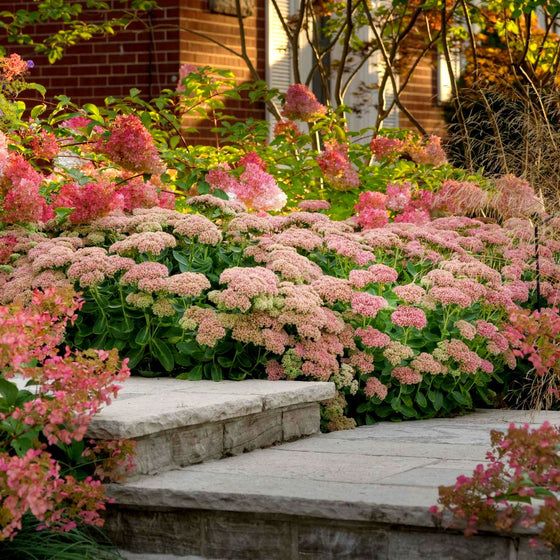
Low-growing Sedum, commonly called stonecrop, can be an excellent groundcover for hot, dry, sunny areas where maintaining conventional grass requires constant attention.
Varieties such as Angelina Sedum, Dragon's Blood Sedum, and Fuldaglut Sedum create spreading mats with colorful foliage and seasonal flowers. Their succulent leaves store moisture, helping established plants handle dry conditions.
These are particularly good choices around rock gardens, along sunny walkways, on slopes, beside stone walls, and in those hot sections of the yard where everything seems to dry out first.
Sedum isn't a soccer-field replacement. It is a living groundcover for areas where you want color and coverage instead of mowing.
Ice Plant: Big Color for a Small Groundcover
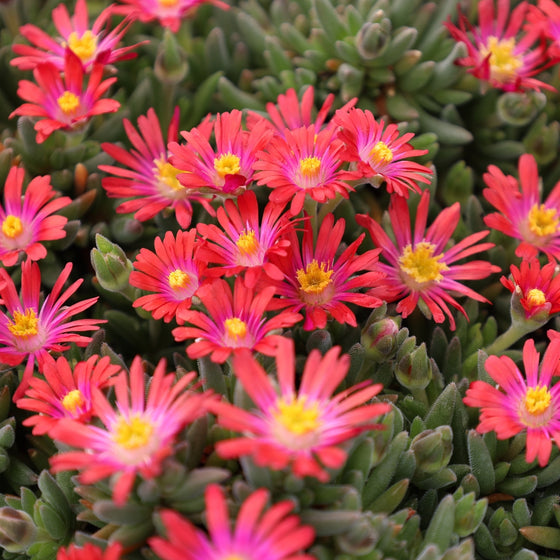
Hardy Ice Plant (Delosperma) belongs in the same conversation as sedum when you're dealing with a hot, sunny, well-drained site.
Its low, succulent foliage hugs the ground, while incredibly bright, daisy-like flowers can cover the plants during bloom. That combination makes hardy ice plant a terrific alternative to small sections of turf on sunny slopes, rock gardens, retaining walls, and difficult dry areas.
Good drainage is absolutely critical. These plants tolerate dry soil far better than wet soil.
If you have a miserable little patch where lawn grass burns up every summer, that's exactly the kind of spot where I start thinking about plants like Delosperma.
Pennsylvania Sedge: A Native Grass Alternative for Shade
Now let's walk to the other side of the yard, beneath the trees, where somebody has been trying to grow grass for the last fifteen years.
Sometimes the lawn isn't failing because you're doing something wrong. The site simply isn't a good lawn site.
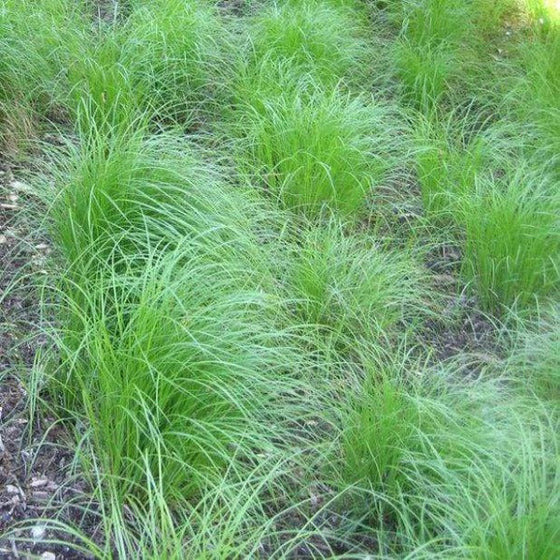
Pennsylvania Sedge (Carex pensylvanica) is a beautiful North American native sedge that produces fine, arching, grass-like foliage and performs particularly well in woodland conditions and part shade.
Instead of forcing thin turfgrass to survive beneath trees, masses of Pennsylvania Sedge can create a softer, more natural-looking ground layer that actually belongs in that environment.
It won't look like a putting green, and that's the point.
You'll get a flowing, textured landscape that works with the shade rather than constantly fighting it.
Woodland Phlox: Turn a Shady Lawn into a Woodland Garden

Another approach to replacing grass in shade is to forget about creating anything resembling a lawn.
That's where plants such as Woodland Phlox become exciting.
Varieties such as Sherwood Purple Woodland Phlox can spread into beautiful colonies beneath deciduous trees, filling the landscape with spring flowers while creating the beginnings of a genuine woodland garden.
Combine woodland phlox with sedges, ferns, heuchera, hellebores, and other shade-loving perennials, and that frustrating patch of thin grass suddenly becomes one of the most interesting parts of the property.
Sometimes the best grass alternative isn't another lawn at all.
Which Groundcover Is Best for Your No-Mow Area?
A simple way to start is by matching the problem to the plant.
| Landscape Condition | Groundcover to Consider | Foot Traffic | Best Feature |
|---|---|---|---|
| Sunny, dry area | Creeping Thyme | Light/occasional | Fragrant, flowering carpet |
| Sunny slope | Creeping Phlox | Minimal | Spectacular spring color |
| Hot, dry site | Low-growing Sedum | Minimal | Drought tolerance and foliage |
| Hot, rocky area | Hardy Ice Plant | Minimal | Bright flowers and low water needs |
| Part shade beneath trees | Pennsylvania Sedge | Light/occasional | Native, grass-like appearance |
| Woodland or shaded area | Woodland Phlox | Minimal | Native-style flowering groundcover |
| Pathway or between stepping stones | Creeping Thyme | Light | Very low-growing and aromatic |
That foot-traffic column matters. If an area is used daily by children, pets, or people walking across it, traditional turf may still be the best plant for that particular job.
How to Replace Grass with Groundcover
Don't just dig holes in your lawn and start plugging perennials into existing turf.
Grass is a remarkably good competitor. If you leave established turfgrass between your new groundcovers, they'll spend their first several seasons fighting for water, nutrients, light, and growing room.
Start with a clean planting area.

Step 1: Decide How Much Lawn You Really Want to Replace
You can convert an entire lawn, but I usually recommend beginning with one clearly defined area.
Choose a slope, shady section, dry patch, side yard, lawn edge, or other area where turf is already giving you trouble.
Use a garden hose to experiment with the shape of the new planting bed before removing anything. Curving the edge into the existing lawn can make the project look deliberate instead of like a patch where grass disappeared.
Step 2: Remove the Existing Grass and Weeds
Existing turf should be removed or thoroughly smothered before planting groundcovers.
Depending on the size of the area, sod can be removed by hand with a spade or sod cutter. Another option is sheet mulching or smothering the existing grass over time.
Whichever method you choose, do the weed control now.
Pulling weeds from an open bed is easy. Trying to identify and pull weeds after your new groundcover has woven itself into a solid mat is considerably less enjoyable.
Step 3: Match Your Groundcover to the Site
This is the most important step.
Don't choose a groundcover because you saw a beautiful picture of it. Choose it because it matches the sunlight, soil moisture, drainage, USDA growing zone, and intended use of your site.
If you have shade, plant a shade-loving groundcover.
If you have scorching afternoon sun and dry soil, choose something built for those conditions.
Right plant, right place isn't just an old gardener's saying. It's the foundation of a low-maintenance landscape.
Step 4: Determine Groundcover Spacing
Spacing determines how quickly your new no-mow area will fill in.
Plant closer together and you'll generally achieve coverage faster, which also leaves less exposed soil for weeds. Space farther apart and you'll spend less on plants initially, but the area will take longer to knit together.
Look at the recommended mature spread for the particular variety you're planting, rather than using a single spacing number for every groundcover.
I also prefer planting groundcovers in staggered or triangular patterns instead of perfectly straight rows. The planting fills in more naturally and doesn't look like a grid while you're waiting for the plants to spread.
Step 5: Plant, Water, and Mulch
Plant your groundcovers at the same depth they grew in their containers, and water the root balls thoroughly.
Apply a light layer of mulch between the young plants to conserve moisture and suppress weeds while the groundcover establishes.
Don't bury the crowns or stems beneath a heavy layer of mulch.
Step 6: Water During Establishment
Here's where "low maintenance" can be misunderstood.
A drought-tolerant groundcover isn't drought-tolerant the afternoon you plant it.
New plants still have small root systems concentrated around their original root balls. Water consistently during the first growing season while those roots establish in the surrounding soil.
Once established, plants that are properly matched to the site will generally become much more self-sufficient.
Will Groundcover Completely Stop Weeds?
Eventually, a dense stand of groundcover can dramatically reduce the amount of open soil available for weeds to colonize.
But don't expect the plants to do all the work on day one.
The first year or two is when weed control matters most. Stay ahead of weeds while your perennials are filling the gaps. As the groundcover develops into a dense living layer, maintenance generally becomes easier.
I've seen plenty of people give up on a groundcover planting during year one because they expected the finished result immediately. Give the plants time to do their job.
Can You Walk on a No-Mow Groundcover Lawn?
Sometimes — but this is where we need to be honest about what "lawn alternative" means.
Traditional turfgrass is remarkably good at handling repeated mowing and foot traffic. Most flowering groundcover perennials aren't.
Creeping thyme can tolerate occasional walking and works beautifully between stepping stones. Sedges may handle some light use depending on the species and conditions. Creeping phlox, sedum, ice plant, and woodland groundcovers are better treated as landscape plants.
For areas that receive regular traffic, add stepping stones, gravel paths, pavers, or mulch pathways through the groundcover.
That lets you have the beauty of a living carpet without asking a perennial to behave like a football field.
A Mixed Groundcover Lawn Can Be Better Than a Single Plant
One of the more interesting ways to replace traditional grass is to stop thinking in terms of monocultures altogether.
Instead of replacing one acre of turfgrass with one acre of creeping thyme, use several plants that respond to the subtle changes across the property.
Maybe creeping thyme follows the sunny walkway. Creeping phlox covers the bank. Pennsylvania Sedge moves beneath the tree canopy. Woodland phlox fills the deeper shade, while sedum handles that baked strip along the retaining wall.
Now you've built something entirely different.
Rather than a lawn, you've created a layered living landscape. One that changes with sunlight, soil, moisture, and season.
That's how nature does it, and it's a pretty good design lesson for us.
Are No-Mow Lawns Really Lower Maintenance?
They can be dramatically lower maintenance, but "no mow" does not mean "no work."
You may eliminate weekly mowing in converted areas, but groundcover plantings still require some attention. Young plants need water and weed control. Fast spreaders sometimes need edging. Perennials occasionally need cleanup. Leaves may need to be managed depending on the plants underneath.
The difference is that much of the maintenance becomes seasonal rather than weekly.
That's a trade I'll take.
Start Small and Let the Landscape Evolve
If you're interested in replacing your lawn with groundcover, my advice is simple: don't feel like you have to do it all at once.
Take the worst-performing section of grass and replace that first.
Watch what happens for a season.
You'll learn how quickly the plants spread, how much maintenance they actually require, which plants thrive on your property, and how the new planting changes the way the entire landscape feels.
Next year, maybe the bed gets a little larger.
That's often how the best landscapes develop: not from one massive Saturday project, but from paying attention to the property and letting it tell you where the next garden belongs.
Woodie's Take: Mow Where You Need a Lawn, Plant Everywhere Else
I've never been against lawns. I'm against struggling with grass where grass clearly doesn't belong.
Keep a lawn where you want to throw a ball, let the dog run, entertain the grandkids, or simply enjoy an open stretch of green. But that steep hill? The dry strip beside the driveway? The shady ground beneath the oak tree where you've reseeded grass three times? Stop fighting those places.
Give them something better.
Groundcover perennials allow us to turn the hardest-working, most frustrating pieces of a lawn into some of the most beautiful parts of the landscape. You can mow less, add flowers and texture, give pollinators more places to feed, and build a landscape that looks more interesting every year.
Sometimes improving your lawn doesn't mean growing better grass.
Sometimes it means realizing you didn't need grass there in the first place.