

Best Ornamental Grasses for Any Season
Published On: Aug 23, 2018
Updated On: Sep 1, 2026
Share:
| In this Article | |||
|---|---|---|---|
There are some plants that bloom beautifully for a few weeks, and others that quietly carry the garden through every season. Ornamental grasses belong in that second group.
I have always thought of ornamental grasses as the movement in the garden. They catch the breeze, soften hard edges, glow in low sunlight, and stand beautifully when many flowering perennials have finished for the year. In summer, they add texture. In the fall, many take on bronze, red, gold, or copper tones. In winter, their seed heads and dried plumes can turn a simple garden bed into something worth looking at from the kitchen window.

Ornamental grasses are also some of the most useful low-maintenance landscape plants you can grow. They work in foundation plantings, privacy screens, pollinator gardens, modern landscapes, cottage gardens, containers, rain gardens, slopes, borders, and deer-resistant gardens. You can browse the full range in our ornamental grasses collection as you read.
The trick is choosing the right grass for the right place. Some ornamental grasses love heat and sun. Others prefer cooler conditions or partial shade. Some stay tidy and compact, while others become bold statement plants. Once you understand the difference, grasses become one of the easiest ways to make a landscape feel finished.
Why Ornamental Grasses Deserve a Place in Every Landscape
Ornamental grasses bring something to the garden that flowers alone cannot. They add movement, sound, texture, structure, and seasonal change. When a breeze moves through a planting of grasses, the whole bed comes alive.
They are especially helpful because they solve common landscape problems. Need to soften a walkway? Use a low-growing grass or sedge. Need height without a heavy shrub? Try feather reed grass or switchgrass. Need late-season color? Look at little bluestem, pink muhly grass, or panicum. Need winter interest? Leave the plumes standing until late winter.
Ornamental grasses also fit today's style of gardening beautifully. Homeowners are moving toward landscapes that feel more natural, require less maintenance, are pollinator-friendly, drought-tolerant, and useful across multiple seasons. Grasses check all of those boxes when they are matched to the right site.
Warm-Season vs. Cool-Season Ornamental Grasses
One of the most important things to understand is that ornamental grasses do not all wake up at the same time.
Warm-season ornamental grasses grow most actively when the weather is warm and the soil has heated up. They may look slow in spring, but they hit their stride in summer and often peak in late summer through fall. Many of the best grasses for fall color, plumes, and winter structure are warm-season grasses.
Cool-season ornamental grasses begin growing earlier in spring and often look their best when temperatures are mild. They can provide earlier texture in the garden, but some may slow down or look tired in summer heat unless they receive enough moisture.
A strong grass garden usually includes both. Cool-season grasses give you earlier activity, while warm-season grasses carry the garden through summer, fall, and winter.
How to tell which one you have: watch the calendar rather than the plant tag. A grass that is green and growing in April while its neighbors are still bare is cool-season. A grass that stays brown until the weather turns genuinely warm, then grows fast and flowers in August or September, is warm-season.
Clemson Cooperative Extension puts the split cleanly: warm-season grasses "grow rapidly during spring and summer, bloom in late summer or fall, and are dormant through the winter," while cool-season types "begin new growth in fall or winter and bloom in spring or early summer."
That one fact decides more than most gardeners realize. It tells you when to plant each type, when to divide it, and how long to wait in spring before deciding a plant did not make it.
When to Plant Ornamental Grasses
The best planting time depends on which type you are planting, and the two types want opposite seasons.
Cool-Season Grasses: Fall Is Ideal
Cool-season grasses are actively rooting when the soil is cool and moisture is dependable, which is exactly what fall provides. Feather reed grass, blue fescue, and the carex sedges all establish well from a fall planting. Get them in the ground about four to six weeks before your ground normally freezes so the roots have time to move out of the root ball.
Warm-Season Grasses: Spring Is Safer
Clemson Cooperative Extension's position is that warm-season ornamental grasses do best planted in spring, and cool-season grasses can be planted in fall. The reasoning holds up. A warm-season grass planted in late October is being asked to establish roots during the months when it is shutting down for the year, and it will sit through winter with a small root system in a pot-shaped hole.
Planted early enough, in a mild zone, that works out fine. Planted late, in a cold zone, it is a real risk — especially for little bluestem and big bluestem, which are prone to heaving in soil that freezes and thaws repeatedly.
So if you are planting switchgrass, little bluestem, big bluestem, muhly grass, or purple love grass in September, you are fine. If it is November and you garden north of the Mid-Atlantic, hold them until spring and plant a carex or a feather reed grass this fall instead.
How Late Can You Plant?
What matters is whether the soil is still workable and whether the plant has enough time to root before the ground freezes. The first light frost does not end the season. A hard freeze that locks up the soil does.
If you are planting late, water thoroughly, mulch after the ground has begun to cool, and check in late winter for plants that frost heaving has pushed partway out of the soil. Press them back down and restore the mulch once the ground thaws.
Best Warm-Season Ornamental Grasses
Warm-season ornamental grasses are the patient gardener's reward. They may not rush out of the ground in early spring, but once the heat arrives, they grow with purpose and bring some of the best texture of the year.
Switchgrass

Switchgrass, or Panicum, is one of the best native ornamental grasses for full sun landscapes. It has an upright habit, beautiful seed heads, and excellent late-season color. Depending on the variety, foliage may be blue-green, burgundy-tipped, red, gold, or copper in fall. It works well in naturalized borders, pollinator gardens, rain gardens, erosion-control plantings, and sunny foundation beds, and it is also useful for adding vertical structure without the heaviness of a shrub. Reach for switchgrass when you want a durable ornamental grass with native appeal, movement, fall color, and wildlife value.
Little Bluestem
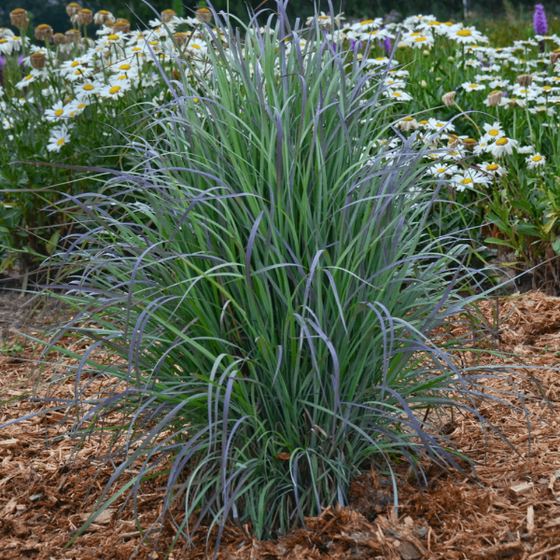
Little bluestem, Schizachyrium scoparium, is another excellent native ornamental grass for sunny gardens. It stays more compact than many large grasses and offers blue-green summer foliage that often turns orange, copper, red, or rosy in fall. This is one of the best ornamental grasses for low-maintenance landscapes, meadow-style plantings, pollinator gardens, slopes, and dry sunny sites. It pairs beautifully with coneflowers, black-eyed Susans, salvia, sedum, asters, and other sun-loving perennials — a strong choice when you want color, texture, and a natural look without a lot of fuss.
Pink Muhly Grass
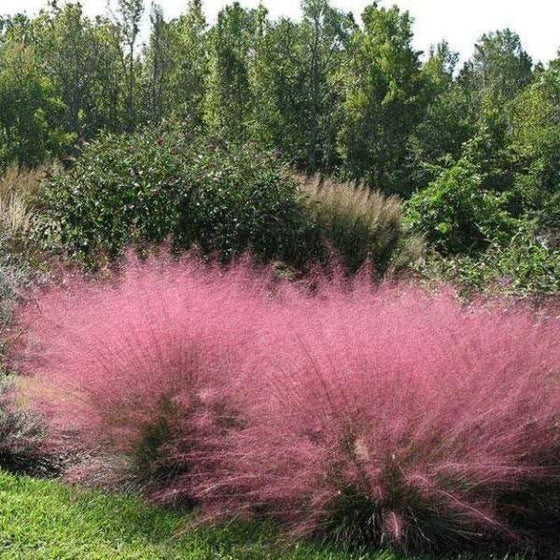
Pink muhly grass, Muhlenbergia capillaris, is grown for its unforgettable fall show. When it blooms, the plant seems to float under a cloud of airy pink plumes — soft, graceful, and surprisingly dramatic. It is best in full sun and well-drained soil, and it works beautifully in mass plantings, along driveways, in front yard beds, near patios, or anywhere you want a soft late-season focal point. Pink muhly grass looks especially good when planted in groups. One plant is pretty. A drift of them is memorable.
Big Bluestem

Big bluestem, Andropogon gerardii, is the tall native prairie grass that gives a planting height without bulk. The 'Blackhawks' selection begins green with purple undertones, deepens through summer, and finishes a dramatic burgundy purple that can read as nearly black. It generally reaches 4 to 5 feet with flower stems rising higher, but stays narrow enough to slip into a border where a wide grass would take over. Use it at the back of a bed, in a native planting, along a sunny slope, or repeated as a vertical accent — several plants together make a soft seasonal screen. Give it full sun and lean soil; rich ground and extra fertilizer produce soft growth that flops.
Purple Love Grass

Purple love grass, Eragrostis spectabilis, is a fine-textured native that produces hazy reddish purple panicles in late summer and fall. Planted in a group, those flowers merge into a soft veil of color floating above the foliage. It is particularly useful on sunny dry sites, in native plantings, in meadow gardens, and along slopes, and its smaller size lets it fit where a switchgrass or big bluestem would be too large. Like pink muhly grass, purple love grass does almost nothing as a single specimen and everything in a drift, so plan on three or five rather than one.
Best Cool-Season Ornamental Grasses
Cool-season ornamental grasses are valuable because they start earlier in the year. They help fill the spring garden while warm-season grasses are still waking up.
Feather Reed Grass
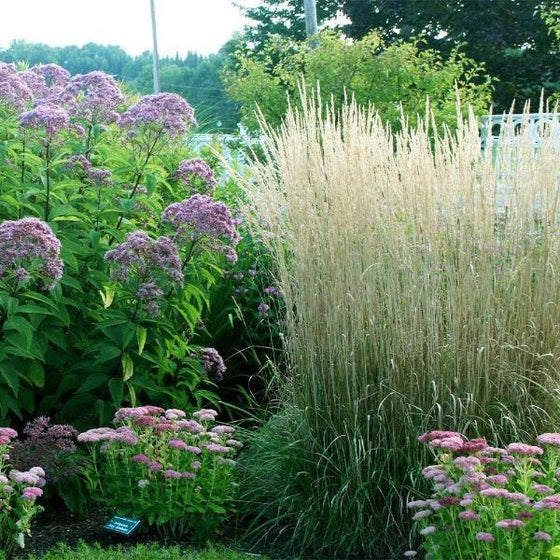
Feather reed grass, Calamagrostis, especially 'Karl Foerster,' is one of the best upright ornamental grasses for clean vertical structure. It grows in a narrow clump and sends up feathery plumes that age to a golden tan. This grass is useful in formal gardens, modern landscapes, narrow beds, foundation plantings, and mixed borders. It gives height without taking up too much width, which makes it easier to use than many larger grasses. Plant it in full sun to part sun when you want strong lines, tidy growth, and season-long structure.
Blue Fescue
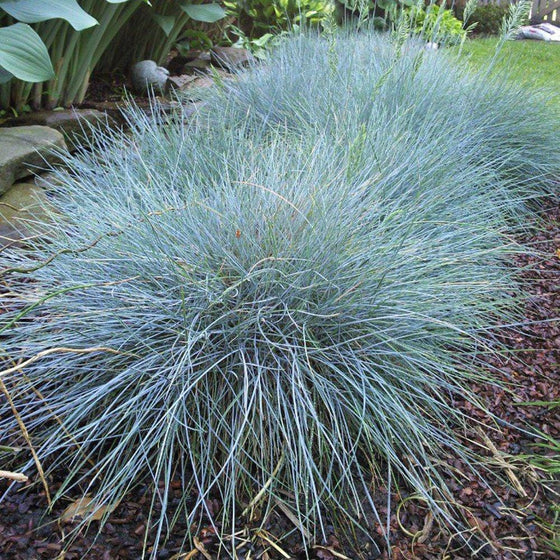
Blue fescue, Festuca glauca, is a compact ornamental grass loved for its blue foliage and rounded shape. It works best in sunny, well-drained areas and is especially useful along borders, in rock gardens, in containers, and in small-space plantings. Because blue fescue stays low, it is not a privacy grass — think of it as an edging plant, texture plant, or color accent. Its cool blue tone pairs beautifully with silver foliage, purple flowers, and warm-colored perennials. Good drainage is important; blue fescue does not want heavy, wet soil.
Mexican Feather Grass
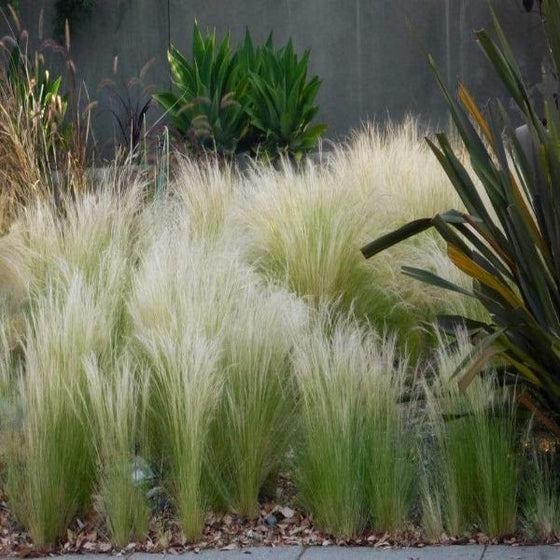
Mexican feather grass, Stipa tenuissima, is known for its fine, silky texture and constant movement. Even the slightest breeze can make it shimmer. This grass can be beautiful in containers, mass plantings, and dry sunny landscapes, but gardeners should use it thoughtfully. In some regions it may reseed more freely than desired, so always consider your local growing conditions before planting it widely. When used in the right place, it brings a soft, airy look that few other grasses can match.
Best Ornamental Grasses for Shade
Not every ornamental grass needs full sun. Some grass-like plants and shade-tolerant grasses are excellent for brightening woodland gardens, shaded borders, and foundation beds.
Japanese Forest Grass
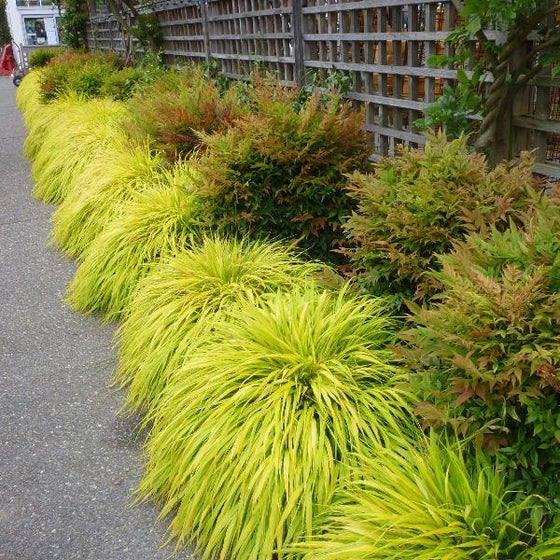
Japanese forest grass, Hakonechloa, is one of the best ornamental grasses for shade. It has a graceful, cascading habit and often comes in gold, green, or variegated forms. This is a beautiful choice for shaded walkways, woodland gardens, container plantings, and the front edge of a shady border, and the golden varieties can make a dark area feel brighter without relying on flowers. It prefers part shade to shade and evenly moist, well-drained soil.
Carex
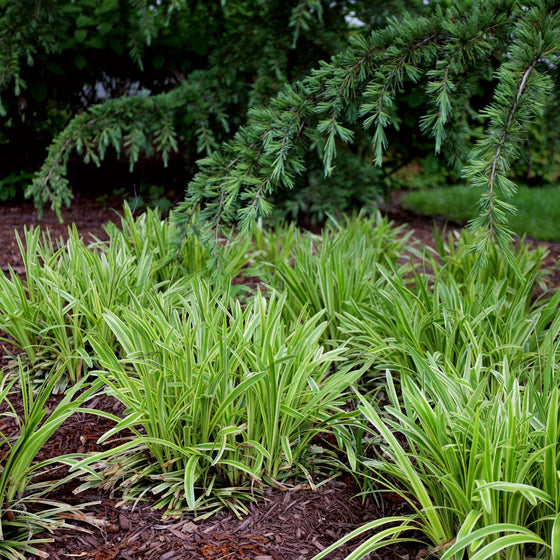
Carex is technically a sedge, not a true grass, but it is often used in the landscape like an ornamental grass. Sedges are incredibly useful because many tolerate part shade, moisture, and tricky garden conditions. Carex varieties may offer green, gold, variegated, blue-green, or bronze foliage — explore forms like Evergold carex and Blue Zinger carex for different color effects. They work well as edging plants, groundcover-style mass plantings, container fillers, and texture plants for shade gardens. Use carex when you need low, clean foliage that brings color and texture without demanding much maintenance.
Northern Sea Oats

Northern sea oats, Chasmanthium latifolium, is a shade-tolerant native grass known for its decorative seed heads that hang like little flattened ornaments. They ripen from green to bronze and bring beautiful movement to part-shade gardens. This grass can self-seed readily, so it is best used where you have room for it to naturalize or where spreading is acceptable. It can be excellent for woodland edges, naturalized areas, and informal gardens.
Best Ornamental Grasses for Privacy Screens
Ornamental grasses can create soft seasonal privacy without the heavy look of a fence or evergreen hedge. They are especially useful around patios, pools, property lines, and outdoor living spaces where you want screening but still want movement and light.
Good ornamental grasses for privacy include tall selections such as big bluestem, switchgrass, pampas grass, feather reed grass, tall varieties of Panicum, and large fountain-type grasses.
For privacy, spacing is important. Plant grasses close enough to visually connect, but not so close that they crowd each other. Larger grasses need more space than compact edging grasses.
Remember that most ornamental grasses are cut back in late winter or early spring, so they are not the same as evergreen privacy trees. They are best for seasonal screening, soft borders, and summer-through-winter structure.
Best Ornamental Grasses for Containers
Ornamental grasses are excellent container plants because they bring instant height, texture, and movement. They can be used on patios, porches, decks, balconies, and entryways.
Good container grasses include purple fountain grass, blue fescue, carex, Japanese forest grass, compact pennisetum, juncus, and dwarf pampas grass where hardy and appropriate.
Use grasses as the thriller in a mixed container or plant them alone for a clean, modern look. Pair them with trailing annuals, colorful foliage, or seasonal flowers for extra impact. Containers dry out faster than garden beds, so check moisture regularly — grasses in pots need good drainage and consistent water while they establish.
Best Ornamental Grasses for Winter Interest
One of the biggest reasons to plant ornamental grasses is winter interest. When frost catches the plumes, or low winter sun shines through the seed heads, grasses can be just as beautiful in January as they are in September.

Good grasses for winter structure include big bluestem, switchgrass, little bluestem, feather reed grass, pampas grass, northern sea oats, and pink muhly grass.
Leave ornamental grasses standing through winter when possible. The seed heads, dried foliage, and upright forms add texture when the rest of the garden is quiet. They also provide shelter and food opportunities for birds and beneficial insects. Cut them back in late winter or early spring before new growth begins.
Best Deer-Resistant Ornamental Grasses
Ornamental grasses are often useful in deer-resistant landscapes because their texture is not as appealing to deer as tender perennials. No plant is completely deer-proof, but grasses are usually lower on the deer menu than hostas, daylilies, and many soft-leaved garden favorites.
Good options for deer-resistant landscape texture include switchgrass, little bluestem, feather reed grass, blue fescue, carex, purple love grass, pink muhly grass, juncus, and big bluestem.
For best results, combine grasses with other deer-resistant perennials such as salvia, lavender, catmint, yarrow, allium, hellebores, and Russian sage.
How to Use Ornamental Grasses in Landscape Design
The best ornamental grass designs use repetition. One grass can be interesting, but repeated grasses create rhythm. That rhythm is what makes a landscape look intentional.
Use grasses in these ways:
- Plant in drifts for a natural meadow look
- Repeat the same grass along a walkway
- Use upright grasses as vertical accents
- Place arching grasses near patios or seating areas
- Mix grasses with flowering perennials for contrast
- Use compact grasses as edging plants
- Add tall grasses behind shrubs for height
- Plant grasses on slopes for erosion control
- Use grasses in containers for instant texture
A simple design formula is to pair grasses with flowers that bloom before, during, and after the grasses reach their peak. For example, combine little bluestem with coneflowers, black-eyed Susans, asters, and sedum. The flowers bring color, while the grass holds the planting together.
Ornamental Grass Spacing Tips
Spacing depends on the grass's mature size. Compact grasses may only need 12 to 18 inches between plants, while larger grasses may need several feet.
For mass plantings, space grasses close enough that they knit together as they mature. For specimen plantings, give each plant enough room to show its natural shape.
As a general guide:
- Small edging grasses: 12 to 18 inches apart
- Medium clumping grasses: 18 to 36 inches apart
- Large ornamental grasses: 3 to 6 feet apart
- Privacy grasses: space based on mature width and desired fullness
Do not judge spacing by the size of the plant in the pot. Ornamental grasses often look small at planting time and much larger by their second or third season.
How to Plant Ornamental Grasses
Plant ornamental grasses in the right light and soil for the variety you choose. Most sun-loving grasses prefer full sun and well-drained soil. Shade-tolerant options such as Japanese forest grass and carex prefer more protection from hot afternoon sun.
Dig a hole about as deep as the root ball and slightly wider. Set the plant so the crown sits level with the surrounding soil. Backfill, water deeply, and mulch lightly around the root zone.
Keep mulch away from the crown of the plant. Too much mulch piled directly against the center can hold moisture and cause problems.
Water regularly during the first growing season. Once established, many ornamental grasses become much more drought-tolerant and require lower maintenance.
When to Cut Back Ornamental Grasses
Most ornamental grasses are cut back in late winter or early spring before new growth begins. This timing lets you enjoy the winter structure while still giving the plant a clean start for the new season.
Warm-season grasses are usually cut back to about 4 to 6 inches above the ground in late winter or early spring. Cool-season grasses may need lighter cleanup, combing, or trimming depending on the variety.
Do not rush to cut grasses down in the fall unless they have collapsed, become messy, or are reseeding where you do not want them. The winter show is part of the reason we plant them.
Common Ornamental Grass Mistakes to Avoid
The first mistake is planting the wrong grass in the wrong place. A full-sun grass in too much shade may flop or thin out. A shade-loving grass in hot afternoon sun may scorch. A large grass in a narrow bed may quickly outgrow its welcome.
The second mistake is cutting grasses back too early. Many grasses look their best after frost, when their plumes and seed heads catch light in the winter garden.
The third mistake is planting too close. Ornamental grasses need room to show their form. Crowding can make them look messy and may reduce air circulation.
The fourth mistake is assuming that all grasses behave the same way. Some are clumping and stay where you plant them. Others can spread or self-seed. Always choose varieties that fit your space and your maintenance style.
A Few Words From Woodie
Ornamental grasses are the plants I turn to when a garden feels stiff. They loosen everything up. They move when the breeze moves. They catch the light in the morning and again in the evening. They make a planting feel alive even when nothing is blooming.
I also like that grasses teach patience. Some of the warm-season types sit quietly in spring, and a gardener can start wondering if anything is happening. Then summer arrives, the soil warms, and suddenly they take off. By fall, they are often the best-looking plants in the bed.
That is the gift of ornamental grasses. They do not ask for much, but they give the garden shape, rhythm, softness, and a reason to look outside in every season.
The best ornamental grasses are more than filler plants. They are structure plants, texture plants, movement plants, and four-season design plants. Choose warm-season grasses for summer, fall, and winter impact. Choose cool-season grasses for earlier spring texture. Use shade-tolerant grasses and sedges where sunlight is limited. Plant tall grasses for privacy, compact grasses for edging, and colorful grasses for contrast.
When planted in the right place, ornamental grasses are some of the most dependable low-maintenance plants in the landscape. They bring beauty when flowers fade, movement when the garden feels still, and structure when winter arrives.
Ornamental Grass Questions, Answered
When is the best time to plant ornamental grasses?
It depends on the type. Cool-season grasses such as feather reed grass, blue fescue and carex establish well from a fall planting, ideally four to six weeks before the ground freezes. Clemson Cooperative Extension recommends planting warm-season grasses such as switchgrass, little bluestem and muhly grass in spring instead, since they root during warm weather. Warm-season grasses planted early in fall in a mild zone generally do fine.
What is the difference between warm-season and cool-season ornamental grasses?
Warm-season grasses grow and flower in the heat of summer, bloom in late summer or fall, and stay dormant through winter. Cool-season grasses start growing earlier in spring, bloom in late spring or early summer, and may slow down in summer heat. The difference determines when to plant, when to divide, and how long to wait in spring before assuming a plant has died.
What are the best ornamental grasses for full sun?
Switchgrass, little bluestem, big bluestem, pink muhly grass, purple love grass, feather reed grass and blue fescue are all good full-sun choices when matched to the local climate and soil.
What ornamental grasses grow in shade?
Japanese forest grass, carex and northern sea oats all grow in partial shade. The preferred moisture level and the amount of shade tolerated vary by plant, so match each one to the specific conditions in your bed.
What are the best native ornamental grasses?
Switchgrass, little bluestem, big bluestem, purple love grass, pink muhly grass and northern sea oats are excellent native ornamental grasses when planted within appropriate regions and growing conditions.
What are the best ornamental grasses for privacy?
Big bluestem, switchgrass, pampas grass and feather reed grass all provide effective seasonal screening. Check mature height and width before planting. Because most ornamental grasses are cut back in late winter, they are not the right choice when year-round privacy is required.
How far apart should ornamental grasses be planted?
Space grasses by their mature size rather than their size in the pot. Small edging grasses generally go 12 to 18 inches apart, medium clumping grasses 18 to 36 inches apart, and large ornamental grasses 3 to 6 feet apart. For mass plantings, space them close enough to knit together as they mature.
When should ornamental grasses be cut back?
Most ornamental grasses are cut back in late winter or early spring, before new growth begins. Warm-season grasses are usually cut to about 4 to 6 inches above the ground, while cool-season grasses may only need lighter cleanup, combing, or trimming depending on the variety.
How often should ornamental grasses be divided?
Divide when a clump loses vigor, outgrows its space, or begins dying out in the center, typically every three to four years. Divide warm-season grasses in early spring just before new growth starts, and cool-season grasses in early fall. Replant the healthy outer sections and discard the old center.
Are ornamental grasses drought-tolerant?
Many native prairie grasses become drought-tolerant once they have developed established root systems. Switchgrass, little bluestem, big bluestem, purple love grass and pink muhly grass are especially useful in lower-water landscapes. Newly planted grasses still require regular watering through their first growing season.