

Best Perennials For Zone 10: Flowers, Grasses & Foliage
Published On: Sep 8, 2026
Share:
| In this Article | |||
|---|---|---|---|
One of the great things about gardening in USDA Grow Zone 10 is that the perennial garden doesn't have to follow the same rules it does farther north.
In colder climates, gardeners spend a lot of time worrying about winter survival. In Zone 10, winter usually isn't the biggest challenge.
Summer is.
Long periods of heat, intense sunlight, warm nights, reflected heat from patios and walls, and very different rainfall patterns depending on where you live can all influence how a perennial performs.
At the same time, that warm climate gives Zone 10 gardeners an incredibly long growing season and the opportunity to use plants that behave almost evergreen in conditions where they'd disappear completely for winter farther north.
As I discussed in The Ultimate Guide to Planting in Grow Zone 10, I don't want you choosing plants simply because a hardiness-zone number says you can grow them.
I want you to choose plants for the conditions you actually have.
Right plant. Right place.
For this list, I've focused on perennials from our Zone 10 perennial collection and the rest of our catalog that are genuinely appropriate for Zone 10 landscapes. That gives us a diverse palette of flowering perennials, groundcovers, ornamental grasses, foliage plants, and shade-loving selections to work with — and it also means a couple of popular plants didn't make the list. I'll tell you which ones, and why.

What Zone 10 Tells You About Perennials, and What It Doesn't
Zone 10 is one number, and it answers exactly one question: how cold it gets in an average winter. For perennials, that turns out to be the least useful thing to know.
Summer, Not Winter, Is the Limiting Season
A hardiness rating of 10 tells you a plant won't freeze here. It says nothing about whether the plant can push through four months of daytime highs in the nineties with nighttime lows that never drop below the mid-seventies.
Warm nights are the part gardeners underestimate. Many perennials rely on cool nights to recover from the day's heat and to set flower buds properly. Take that away and a plant that is technically hardy can still sulk, stop flowering, or thin out over a couple of seasons.
So when I recommend a perennial for Zone 10, I'm not asking whether it survives the winter. I'm asking whether it earns its space in August.
Some "Perennials" Here Are Evergreen, and Some Are Not
Farther north, a herbaceous perennial dies to the ground every fall and returns in spring. In Zone 10, that same plant may hold its foliage most or all of the year.
Liriope, Mondo Grass, Acorus, Rosemary and Holly Fern all behave close to evergreen in a Zone 10 landscape, which changes how you use them. A plant that never disappears can carry the structure of a bed year-round rather than leaving a hole in it every winter.
Others go the opposite direction. Hardy Hibiscus is a deciduous plant that genuinely wants a dormant period, and Zone 10 is the very edge of where that works. More on that below.
In Florida, the Plant Rules Change the List
Most of continental Zone 10 is South Florida, and Florida has its own rules about what belongs in a landscape. The UF/IFAS Assessment of Non-Native Plants in Florida's Natural Areas evaluates ornamental plants for invasion risk and publishes a plain conclusion for each one: recommended, use with caution, or not recommended.
Two ornamental grasses that show up on almost every "Zone 10 perennials" list published online carry the same conclusion from that assessment: predicted to be invasive and not recommended. I've left both off this list and I explain the substitution in the grasses section, because it changes what I'd plant, not just what I'd write.
Two Zone 10 Palettes: The Upper Edge and the True Tropics
Zone 10 is not one place. Zone 10a in inland central Florida or coastal Louisiana behaves very differently from Zone 10b in Miami-Dade or the Keys, where a genuine cool season barely exists.
That difference matters most for the plants at the cold end of their range — the ones rated to Zone 10 that actually come from farther north. Those plants perform well on the upper edge and get progressively less reliable as you move toward the true tropics. Where a plant in this article belongs to one palette rather than both, I say so in its section, and the palette section near the end is split into two lists rather than one.
Flowering Perennials for Full Sun
This is where a Zone 10 perennial garden earns its long season. The plants below flower over months rather than weeks, and every one of them is doing that work in full sun and heat.
Homestead Purple Verbena
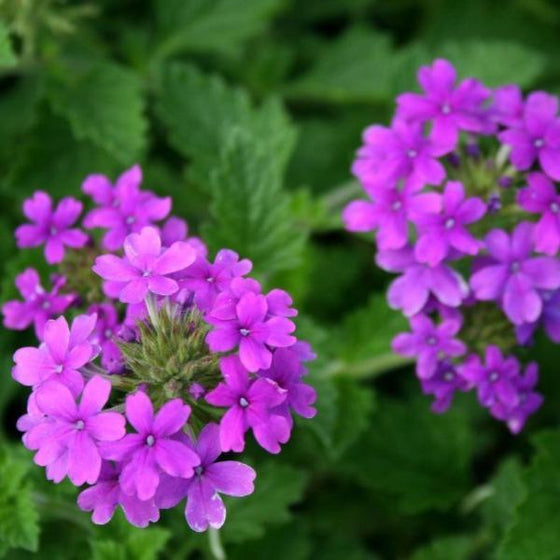
If you're looking for a perennial that understands what a long, hot growing season is all about, Homestead Purple Verbena is a great place to start. This low-growing perennial produces clusters of rich purple flowers over spreading stems, creating color from spring well into fall under favorable conditions. It thrives in full sun, handles heat well, and becomes drought-tolerant once established. We rate it for Zones 7 through 10.
What I particularly like about Homestead Purple is its habit. This isn't another upright perennial competing for space in the middle of the border. Let it spread along the front of a planting, trail over a retaining wall, cover a sunny slope, or spill over the edge of a large patio planter. It's also valuable to butterflies, bees, and other pollinators. In Zone 10, where the flowering season can be so long, a plant capable of producing months of flowers becomes an important part of the garden.
Tall Verbena
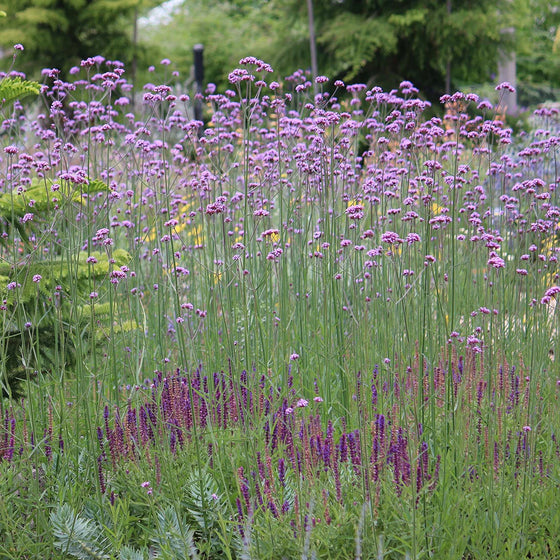
Tall Verbena (Verbena bonariensis) changes the way a perennial border feels. Rather than creating a dense mass of foliage, tall slender stems carry flowers above the surrounding plants. The effect is almost transparent. You can see through it, which is incredibly useful when you want height without visual heaviness. Plant it among shorter perennials and grasses where its flowers can float above the rest of the planting. It also brings pollinator activity higher into the garden, adding movement at eye level rather than at your ankles.
Worth knowing if you garden in Florida: the UF/IFAS Assessment reviewed this species and concluded it is not considered a problem species at this time and may be recommended by IFAS in North, Central and South Florida. It reseeds freely in a garden bed, so deadhead it if you want to keep it in bounds, but it is not on anyone's watch list. At Zones 7 through 11, it is one of the few flowering perennials here that is comfortable across both Zone 10 palettes.
Morello Agastache

Morello Agastache adds something completely different to the Zone 10 perennial garden: upright flower spikes. That's important. If every perennial in the garden grows into the same rounded mound, the landscape eventually starts looking flat. Vertical flowers break that pattern and pull your eye upward.
Agastache is especially useful in pollinator gardens, mixed sunny borders, cottage-style gardens, and naturalistic plantings. Hummingbirds, butterflies, and bees are all drawn to the flowers. I like using it in groups of three or more rather than planting one by itself. One plant is pretty. Several plants become a destination for pollinators. Note that Agastache wants sharp drainage and full sun — it is far more likely to be lost to a wet winter than to a hot summer.
Poquito Orange Agastache

For a completely different Agastache look, Poquito Orange Agastache brings warm flower color into the perennial border. Orange becomes especially effective when paired with blue, purple, or deep burgundy plants. Use Poquito Orange near purple Verbena, darker ornamental foliage, or grasses, and suddenly both colors become stronger.
That's one of the easiest landscape-design tricks there is: don't just choose plants individually. Think about what you're going to put beside them. Agastache also fits beautifully into low-water and pollinator-conscious landscapes wherever full sun and good drainage are available. You can see the rest of the range in our Agastache collection.
Little Goldstar Black-Eyed Susan
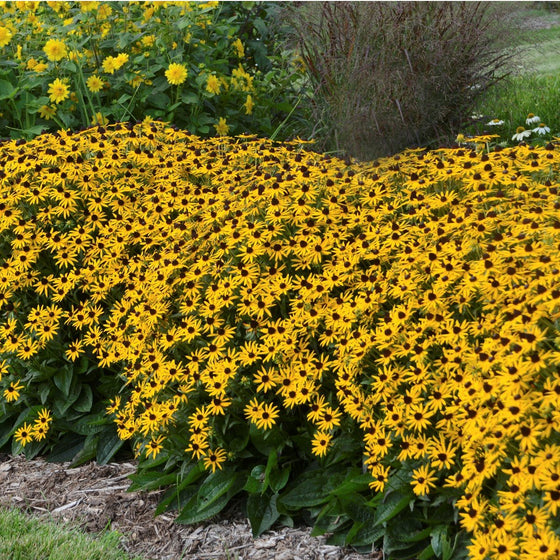
Sometimes a garden needs something familiar. That's where Little Goldstar Black-Eyed Susan fits beautifully. The golden-yellow flowers with dark centers have the classic Black-Eyed Susan appearance gardeners recognize immediately, but at 14 to 16 inches tall and wide the compact habit makes it far easier to work into smaller perennial borders and mixed plantings.
Use it toward the front or middle of a sunny bed where the yellow can contrast against purple Verbena, ornamental grasses, or darker foliage. I especially like yellow in a Zone 10 landscape because it holds its own against strong sunlight. Soft colors can disappear visually from across the yard. Yellow doesn't. This is an upper-edge Zone 10 plant rather than a true-tropics one — Rudbeckia performs best where there is at least a mild cool season, and you'll find more of the range in our Black-Eyed Susan collection.
Go Big: Hardy Hibiscus for Summer Drama
Hardy Hibiscus produces the kind of flowers people stop and look at. The enormous blooms bring almost tropical drama to a perennial garden, which makes the plant feel perfectly at home in a warm-climate landscape.
Where Hardy Hibiscus Stops in Zone 10
This is worth saying plainly before you buy one. Hardy Hibiscus is Hibiscus moscheutos and its hybrids — a deciduous perennial native to wetlands and creek edges across the southeastern United States. It dies back to the ground in fall and flowers on new growth the following season. NC State Extension rates the species through Zone 9b, while our product pages rate these particular hybrids to Zone 10.
My read: Hardy Hibiscus is an upper-edge Zone 10 plant. In Zone 10a, where there is still a real cool season and the plant gets a genuine winter rest, it performs. In the frost-free parts of Zone 10b it often stays semi-evergreen, never fully rests, and gradually declines rather than dying outright. If you garden in Miami-Dade or the Keys and you want that flower size, a tropical Hibiscus is the more honest answer. If you're in the cooler half of Zone 10, plant these.
They also want consistent moisture. That wetland origin is not a footnote — Hardy Hibiscus is the one plant in this article that will not tolerate the dry, sharply drained conditions the Rosemary and Ice Plants want.
Airbrush Effect Hardy Hibiscus

Airbrush Effect Hardy Hibiscus is about making a statement. Use it where there is enough space for it to become a focal point. I wouldn't tuck it behind a bunch of shrubs where nobody can appreciate it — give it a place where those flowers can be seen. It also pairs beautifully with ornamental grasses, because the fine grass foliage creates excellent contrast against both the enormous flowers and the broader Hibiscus leaves.
Watermelon Ruffles Hibiscus

Watermelon Ruffles Hibiscus gives you another way to bring oversized summer flowers into the Zone 10 perennial garden. I like using Hardy Hibiscus almost the way I'd use a flowering shrub. Give it enough space. Let it establish some visual mass. Then surround it with smaller perennials and ornamental grasses rather than trying to squeeze it into a crowded collection.
This is an important part of perennial design. Not every plant needs equal billing. Choose a few plants to become the stars and let everything else support them. If you want to compare the full range of flower colors and sizes, they're all in our Hardy Hibiscus collection.
Ornamental Grasses Bring Movement to the Garden
One of my favorite things ornamental grasses bring to a landscape is something we don't talk about enough.
Movement.
Shrubs mostly sit still. Perennials mostly sit still. Grasses respond to the slightest breeze, and in a climate where you spend most of the year outdoors, that matters more than it does anywhere else.
White Cloud Muhly Grass

White Cloud Muhly Grass adds fine texture and airy white-flowering plumes that seem to float above the landscape. I particularly like Muhly Grass planted in groups. One plant is interesting. Five or seven plants moving together in the breeze become an experience. Use it near patios, along sunny borders, around pools, or mixed among flowering perennials where its fine texture can contrast against broader foliage.
Here's the part that makes it the single best grass choice on this list: Muhly Grass is a Florida native. UF/IFAS notes that it occurs naturally in Florida's pine flatwoods, coastal uplands and roadsides, develops good drought tolerance once established, and performs best in a sunny spot. NC State adds that it tolerates heat, humidity, drought and poor soil and is highly salt-tolerant — which is a fair description of a Zone 10 coastal landscape. It asks for full sun and drainage, and then it takes care of itself.

The Two Grasses I Left Off This List
If you've read other Zone 10 perennial lists, you've seen Pampas Grass and Mexican Feather Grass on nearly all of them. They aren't on this one, and the reason isn't horticultural — both grow well here. It's that most of continental Zone 10 is Florida, and Florida has published a conclusion on both.
The UF/IFAS Assessment rates Cortaderia selloana, Pampas Grass, as a high invasion risk, predicted to be invasive and not recommended, in North, Central and South Florida alike. UF/IFAS Gardening Solutions puts it even more bluntly: pampas grass "has been found by the UF/IFAS Assessment of Non-Native Plants in Florida's Natural Areas to be invasive and is not recommended for any use." That assessment covers the species and does not carve out dwarf cultivars.
Nassella tenuissima, Mexican Feather Grass, carries the identical conclusion — high invasion risk, predicted to be invasive, not recommended — across all three Florida regions.
Here's the useful part. When UF/IFAS names replacements for Pampas Grass, the first plant on their list is Muhly Grass. So the swap isn't a compromise. You give up a non-native grass with a bad regulatory record and you get a Florida native with better salt tolerance, better drought tolerance, and a flowering display that reads at a distance. If you want an architectural grass with height, plant a group of Muhly at the back of the bed rather than one Pampas.
If you garden in the parts of Zone 10 outside Florida, the calculus is similar rather than identical — both species are widely listed as invasive on the West Coast as well. Check what your own state or county says before planting either one, and browse the rest of the range in our ornamental grasses collection.
Build the Ground Layer With Liriope and Mondo Grass
Some plants get attention because of spectacular flowers. Others earn their place by solving problems. This group does a little of both, and it is the part of a Zone 10 garden that gardeners most often skip.
Big Blue Liriope
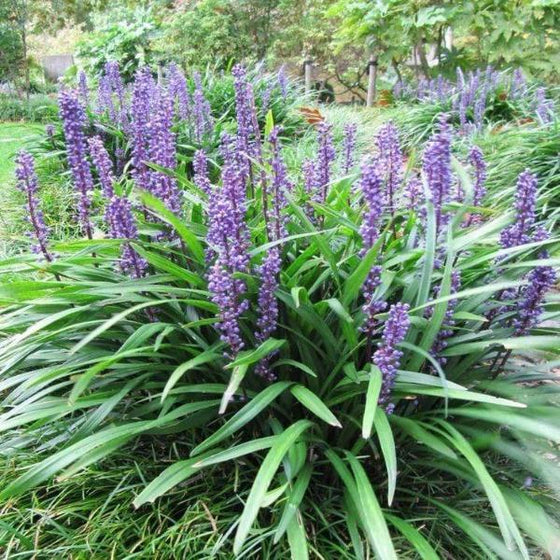
Big Blue Liriope creates neat grass-like clumps that can be repeated along walkways, around trees, across slopes, at the front of shrub borders, and anywhere you need a dependable transition between larger plants and hardscape. We stock it in 4 inch pots, 1 gallon pots, 3-packs and flats of 18, and that last size is the one worth paying attention to, because Liriope almost always looks better repeated.
Don't think about one plant. Think about fifteen. Or thirty. Used in masses, Liriope connects completely different areas of the landscape.
One botanical note worth having: this is Liriope muscari, the clumping species, not Liriope spicata, the running one. That distinction is the whole ballgame for a groundcover in a warm climate. L. spicata spreads by rhizomes and is the plant that gets people into trouble; L. muscari stays where you put it and increases slowly from the crown. UF/IFAS currently rates L. muscari as moderate risk, evaluate and is still gathering input on it, so I'd plant it confidently in a bed and think twice before planting it against a natural area.
Variegated Liriope
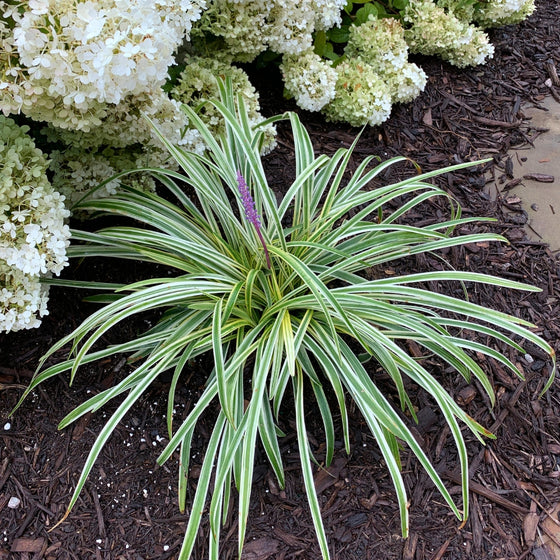
Variegated Liriope performs a similar landscape role but offers brighter foliage. The variegation helps lighten planting areas dominated by dark-green shrubs and trees. I particularly like it along shaded or partially shaded walkways, beneath larger shrubs, and as a transition between evergreen foundation plants and the lawn. It's available in the same 1 gallon and flat-of-18 sizes, which is how you'd want to buy it for a real mass planting.
Mondo Grass
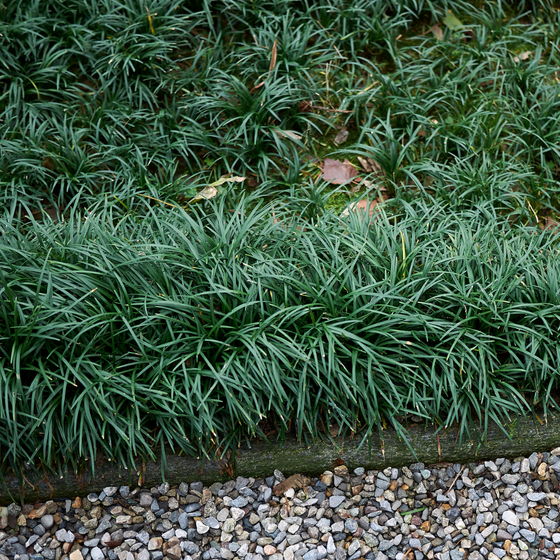
Mondo Grass becomes much more impressive when you stop thinking about individual plants. Its narrow, dark-green foliage creates a low, grass-like ground layer that works beneath trees, around shrubs, between larger plants, and along shaded or partially shaded walkways. Think of it almost as living mulch. Instead of leaving every space between shrubs empty and covering the whole landscape in mulch, use low-growing plants to create another layer. That adds texture and makes the landscape feel more mature.
For Florida gardeners specifically, this is an easy call: UF/IFAS assesses Ophiopogon japonicus as not a problem species at this time and may be recommended in North, Central and South Florida.
Dwarf Mondo Grass

Where regular Mondo Grass is still taller than you want, Dwarf Mondo Grass gives you an even lower option. I like it around stepping stones, along walkway edges, beneath low shrubs, and anywhere you want a tight evergreen carpet. Again, mass planting matters. A few Dwarf Mondo plants scattered randomly through a bed won't accomplish much. A broad sweep can completely change the character of the space, which is why we stock it by the flat.
Black Mondo Grass

Then there's Black Mondo Grass. This is where foliage color becomes part of the design. Its nearly black foliage gives you tremendous contrast against chartreuse, silver, bright green, white, and yellow plants. I wouldn't plant it everywhere — you don't need to. Use it strategically where the dark foliage can make surrounding plants look brighter.
This is exactly the same principle I used with Purple Daydream Loropetalum in our guide to the best shrubs for Zone 10. Flowers aren't the only source of color in a garden. Sometimes foliage does an even better job, and it does it for twelve months instead of six.
Use Masses, Not Alternating Plants
You can use Big Blue and Variegated Liriope on the same property, but I wouldn't alternate them plant by plant. Create masses. Use Big Blue in one area. Use Variegated where you need brightness. Keep Black Mondo for the two or three places where dark foliage does real work.
That's how repetition creates a cleaner design instead of a checkerboard.
Bright Foliage for the Lower Layer
Acorus Ogon

Acorus Ogon is another foliage plant that brightens the lower layer of the garden. Its narrow, golden-variegated leaves have a grass-like appearance, giving them fine texture and bright color. This is particularly useful when the garden contains a lot of dark evergreen foliage. Put bright foliage near dark foliage and suddenly both become more noticeable. That's landscape design without needing a single flower.
One condition to respect: unlike most plants in this article, Acorus wants consistent moisture and will not thrive in a dry, sharply drained bed. Put it where the soil stays damp — low spots, pond edges, irrigated beds, the shaded side of the house — and pair it with Black Mondo Grass if you want the sharpest foliage contrast available in the whole catalog.
Perennials for Hot, Dry, Sharply Drained Ground
Every Zone 10 property has a spot where the traditional perennials struggle. Full afternoon sun, reflected heat off a wall or driveway, soil that dries out within a day of rain. Most gardeners respond by watering that area harder. The better answer is to plant it differently.
Delosperma Cooperi
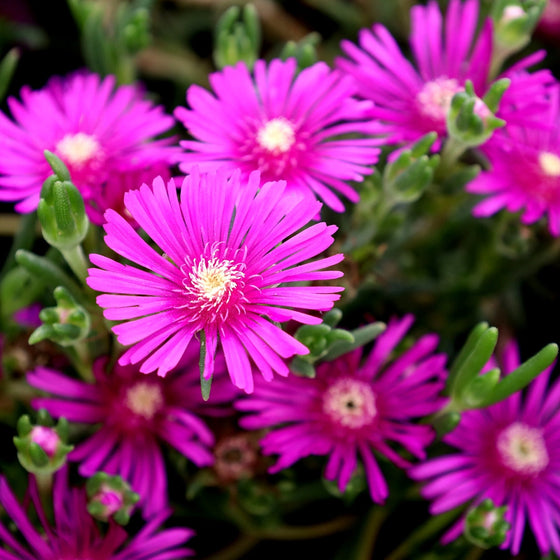
If you have a hot, sunny, well-drained spot where many traditional perennials struggle, Delosperma Cooperi deserves consideration. Ice Plants bring succulent foliage and brilliant flowers into the garden while staying very low. Use them in rock gardens, along retaining walls, on slopes, around stone, or toward the front of dry perennial beds.
This is not a plant for wet soil. That's the tradeoff, and in a humid Zone 10 summer it is a real one. Give Delosperma excellent drainage and plenty of sunshine and it thrives in conditions that would make thirstier perennials miserable. Plant it in a heavy, poorly drained bed and you will lose it in a wet August, not a cold January.
Jewel of the Desert Garnet Ice Plant
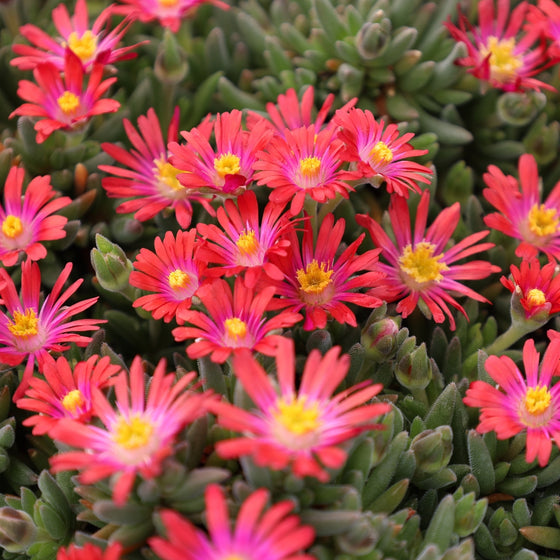
Jewel of the Desert Garnet Ice Plant takes that same low-growing, drought-conscious idea and adds intense garnet-red flowers. We rate it for Zones 5 through 10, full sun, and sharply drained soil, and it grows only about 3 to 6 inches tall — which makes it particularly useful along edges, in rock gardens, over retaining walls, and in low-water landscapes.
I love plants like this around stone. The hard texture of rock or gravel against succulent foliage and bright flowers creates a completely different garden style from the lush Gardenia-and-Azalea landscape I described in the Zone 10 shrub guide.
And that's the point. Zone 10 doesn't have one landscape style.
Rosemary Arp
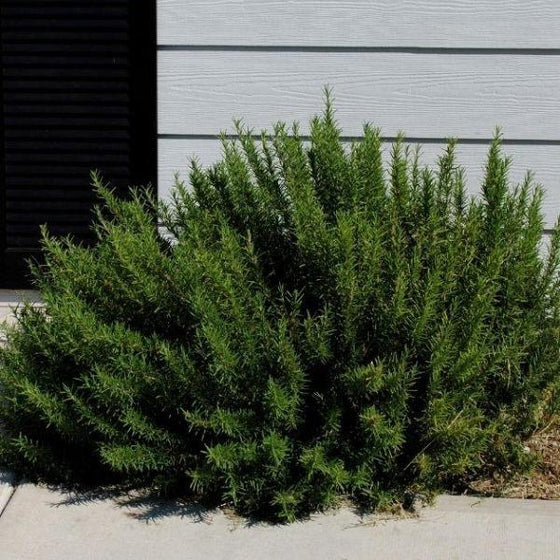
One of the opportunities warm-climate gardeners have is to use plants that blur the line between a herb garden and an ornamental landscape. Rosemary Arp is a great example. Rosemary gives you evergreen needle-like foliage, fragrance, flowers, and culinary value. Why hide that in a separate herb garden?
Use it in a sunny, well-drained landscape alongside ornamental grasses, Roses, Yucca, and other plants that appreciate the same conditions. Suddenly the herb becomes part of the design. The one caution for the humid end of Zone 10: Rosemary is far more likely to be lost to root rot in soggy soil than to anything else. Raised beds, berms, gravel mulch and slopes are your friends here.
Rosemary Tuscan Blue

Rosemary Tuscan Blue gives you another way to bring edible plants into the ornamental garden. Its more upright habit makes it particularly useful where you want a stronger vertical form.
Think Mediterranean. Olive Trees. Rosemary. Ornamental grasses. Stone. Gravel. Low flowering plants. You can build an entire section of a Zone 10 landscape around plants that are beautiful, useful, and comfortable in full sun and good drainage. That's much more interesting to me than separating every edible plant from the rest of the yard.
Don't Forget the Zone 10 Shade Garden
Perennial gardening in Zone 10 isn't all about sun and heat. Some of the best areas of a Zone 10 property are the places protected from intense afternoon sun, and they should be planted differently rather than treated as leftover space.
Japanese Holly Fern

Japanese Holly Fern gives you substantial foliage for shaded and partially shaded portions of the landscape, and its glossy, leathery fronds hold up to heat far better than the delicate ferns most people picture. I like it beneath trees, along protected foundations, beside shaded walkways, and around Camellias, Azaleas, Gardenias, and other broadleaf evergreen shrubs. There are more options in our fern collection if you want to mix textures.
Think in Layers, Not Spots
The key to a shade garden is to think in layers. Trees overhead. Shrubs in the middle. Ferns and groundcovers underneath.
Create a shaded garden beneath trees or along the protected side of the house using Japanese Holly Fern, Liriope, Mondo Grass, Dwarf Mondo Grass, and Acorus Ogon. Then combine those perennials with the Gardenias, Camellias and Azaleas appropriate for those conditions. Now you've created an entirely different experience from the sunny garden on the other side of the property.
That's what microclimates allow you to do. It's also how you turn shade from a problem into a garden.

Design Zone 10 Perennial Gardens in Layers
One of the biggest mistakes gardeners make with perennials is buying plants individually.
They see something flowering. They buy one. Then they see something else flowering. They buy one of those. Eventually they have a collection. But they don't necessarily have a garden.
Instead, think in layers and repeated groups. Start with taller plants such as Hardy Hibiscus and grouped Muhly Grass where you need height. Use medium-height flowering plants and grasses through the center. Bring Verbena, Ice Plants, Liriope, Mondo Grass and Acorus toward the edges.
Then repeat those plants elsewhere. That's what visually connects the garden.
Create a Zone 10 Pollinator Garden
The long Zone 10 growing season creates an excellent opportunity to support pollinators over an extended period rather than a six-week burst.
Use plants such as Morello Agastache, Poquito Orange Agastache, Homestead Purple Verbena, Tall Verbena and Little Goldstar Black-Eyed Susan to create successive blooms. Muhly Grass and the Ice Plants extend the season further at either end.
Don't plant one of each. Plant groups. Pollinators find masses of flowers more easily, and groups create a much stronger visual effect for you.
A pollinator garden should be good for pollinators. But there's absolutely no reason it can't also be beautiful.
Watering and Drainage in Zone 10
Water New Perennials Until They're Established
Even drought-tolerant plants need water when they're new. That's something I can't emphasize enough.
Drought tolerance comes after the root system becomes established, not before. Water newly planted perennials deeply enough to moisten the root ball and the surrounding soil, then monitor how quickly the soil begins drying. Plants such as Delosperma, Rosemary and Muhly Grass don't want to remain constantly wet even while establishing.
The goal is establishment, not saturation.
Drainage Matters as Much as Heat
We talk a lot about heat in Zone 10, but drainage is just as important and it is what actually kills most of the plants people lose here.
Rosemary, Agastache, Verbena, Muhly Grass and Ice Plants all perform best when excess water can move away from the root system. Hardy Hibiscus and Acorus Ogon want the opposite. Grouping plants by their water needs rather than by their flower color is the single change that most improves a Zone 10 perennial bed.
If you have heavy soil, plant slightly raised, create berms, improve the planting area, or choose plants better suited to your existing conditions. Don't spend years trying to force a plant to tolerate a location it doesn't like.
Remember: right plant, right place.
How to Plant a Perennial in Zone 10
The planting process itself is simple, but the order matters more in a hot climate than it does farther north.
- Match the plant to the spot before you dig. Check how many hours of direct sun the location actually gets and how fast it drains after rain. A sun-and-drainage plant like Rosemary and a moisture plant like Acorus are not interchangeable, and no amount of care fixes putting one where the other belongs.
- Plant in fall or winter rather than late spring. In Zone 10 the cool season is the planting season. Setting perennials out in October through March gives roots months to establish before summer heat arrives, instead of asking a new plant to establish and survive July at the same time.
- Dig the hole twice as wide as the container and no deeper. Wide encourages roots to move outward into the surrounding soil. Deep causes the plant to settle, which buries the crown and invites rot in a humid climate.
- Loosen the root ball and set the crown slightly high. Tease apart circling roots so they grow outward. Position the top of the root ball level with or just above the surrounding grade, then backfill with the native soil you removed rather than filling the hole with amendment.
- Water deeply, mulch, then taper off. Soak the root ball and surrounding soil at planting, add 2 to 3 inches of mulch while keeping it off the crown, and water deeply but less frequently as the plant establishes so roots follow the moisture downward.
A Simple Zone 10 Perennial Palette
You don't need every perennial available to build a beautiful garden. I'd rather choose a smaller group and repeat it. Because Zone 10 covers two quite different climates, here are two starting lists rather than one.
The Upper-Edge Palette (Zone 10a)
Where there is still a real cool season, you can use the plants at the cold end of their range. Start with White Cloud Muhly Grass for movement, Airbrush Effect Hardy Hibiscus for big summer flowers, Morello or Poquito Orange Agastache for pollinators, Little Goldstar Black-Eyed Susan for reliable yellow, and Homestead Purple Verbena toward the front. For the ground layer, mass Big Blue Liriope or Mondo Grass.
The True-Tropics Palette (Zone 10b)
Where winter never really arrives, lean on the plants that don't need a rest. Use Muhly Grass for structure and movement, Tall Verbena for height and pollinators, Rosemary Arp and Rosemary Tuscan Blue in the hot dry sections, Ice Plants over stone and along edges, and Mondo Grass, Dwarf Mondo Grass and Liriope as the connective ground layer. In shade, Japanese Holly Fern with Mondo Grass beneath it.
Either way, the method is the same. Choose a small group. Then repeat it. Repetition is what turns individual perennials into a garden.
The Biggest Zone 10 Perennial Mistakes to Avoid
- Buying one of everything. A collection of single plants reads as clutter. Three, five or seven of one plant reads as design.
- Choosing by hardiness number alone. The zone tells you the plant won't freeze. It doesn't tell you the plant can flower through a Zone 10 August.
- Mixing water needs in one bed. Putting Hardy Hibiscus next to Rosemary guarantees you will disappoint one of them every time you irrigate.
- Planting in late spring. Fall and winter planting gives roots a head start. Spring planting asks a new perennial to establish during the hardest part of the year.
- Skipping the ground layer. Bare mulch between shrubs is the most common reason a Zone 10 landscape looks unfinished, and it is the cheapest thing to fix.
- Planting a grass your state lists as invasive. Check before you buy, especially in Florida. There is almost always a native that does the same job better.
Shop the Zone 10 Perennial Collection
Not sure which zone you're actually in? Our grow zone lookup tool will tell you from your zip code. You can also work through the companion guides to the best trees for Zone 10 and the best shrubs for Zone 10 to build the layers above these perennials.
Zone 10 Perennial Questions, Answered
What perennials actually survive summer in Zone 10?
The most reliable performers are the ones that treat heat as normal rather than as stress: Liriope, Mondo Grass, Muhly Grass, Rosemary, Ice Plants, Acorus and Tall Verbena. Hardiness ratings tell you a plant will not freeze in a Zone 10 winter, but they say nothing about whether it can flower through four months of daytime highs in the nineties with warm nights. When you are choosing a Zone 10 perennial, judge it on August rather than on January.
Do Hardy Hibiscus grow in Zone 10?
On the upper edge of Zone 10, yes. Hardy Hibiscus is a deciduous perennial that dies to the ground and wants a genuine winter rest, and NC State Extension rates the species through Zone 9b. In Zone 10a, where a real cool season still happens, it performs well and delivers the largest flowers of any plant in this article. In frost-free Zone 10b it often stays semi-evergreen, never fully rests, and declines over a few seasons. It also needs consistent moisture, so keep it out of dry, sharply drained beds.
Should I plant pampas grass in Florida?
No. The UF/IFAS Assessment rates Cortaderia selloana a high invasion risk and states plainly that it is predicted to be invasive and not recommended in North, Central and South Florida, and that conclusion applies to the species rather than carving out dwarf cultivars. Mexican feather grass, Nassella tenuissima, carries the identical conclusion. UF/IFAS names muhly grass as its recommended replacement, and muhly is a Florida native with better salt and drought tolerance, so the substitution costs you nothing.
Is Liriope invasive in Florida?
It depends which one you buy. Liriope spicata spreads aggressively by underground rhizomes and is the plant that causes problems. Liriope muscari, the clumping species sold as Big Blue and Variegated Liriope, stays where you put it and increases slowly from the crown. UF/IFAS currently rates Liriope muscari as moderate risk and is still gathering expert input on it, so plant it confidently inside a landscape bed and think twice before planting it directly against a natural area.
How many perennials do I need for a Zone 10 garden bed?
Fewer varieties and more of each. A bed planted with one of fifteen different perennials reads as clutter, while the same bed planted with five varieties in groups of three to seven reads as design. Groundcovers like Liriope and Mondo Grass should be bought by the flat rather than by the pot, because their whole effect depends on mass. Choose a small palette, repeat it in several places, and let two or three plants act as the focal points.
When is the best time to plant perennials in Zone 10?
Fall and winter. In most of the country spring is the planting season, but in Zone 10 the cool season from roughly October through March is when roots establish most easily. Planting then gives a perennial several months to build a root system before summer heat arrives. Planting in late spring asks the same plant to establish and survive its hardest conditions at the same time, which is why so many Zone 10 perennials are lost in their first July.
Woodie's Take
If I were building a Zone 10 perennial garden from scratch, I wouldn't start by looking for the ten plants with the biggest flowers.
I'd start with the bones of the garden.
I'd use White Cloud Muhly Grass where I wanted movement and soft texture — in groups, never as a single plant. I'd bring in Hardy Hibiscus where I wanted a few big moments of summer color, and I'd use Agastache and Verbena to keep flowers and pollinators moving through the garden across the season.
Then I'd pay attention to the ground. That's the area I think gardeners overlook most.
I'd use Liriope and Mondo Grass to connect planting beds, soften walkways, and create broad areas of permanent texture. I'd work Black Mondo Grass into a few strategic places where I wanted dark foliage contrast, and Acorus Ogon wherever the soil stays damp and the bed needs lifting.
In the hottest, driest parts of the property, I'd change direction completely. I'd use Rosemary, Ice Plants and gravel rather than trying to force moisture-loving perennials into conditions they don't want.
And I'd absolutely build a shade garden. Japanese Holly Fern, Mondo Grass, Liriope, Camellias, Azaleas and Gardenias can create a cool, layered garden that feels completely different from the property's sunny portions.
That's one of the things I like most about Zone 10. You don't have to create one type of garden. You can create a sunny pollinator garden, a Mediterranean-inspired garden, a shaded foliage garden and a colorful patio garden on the same property.
Pay attention to what each part of your yard is telling you. Then choose the plants that actually want to grow there.
That's when perennial gardening gets easier — and the landscape starts looking like it belongs exactly where it is.