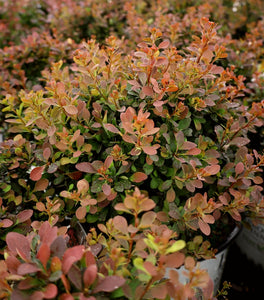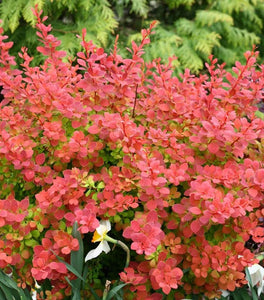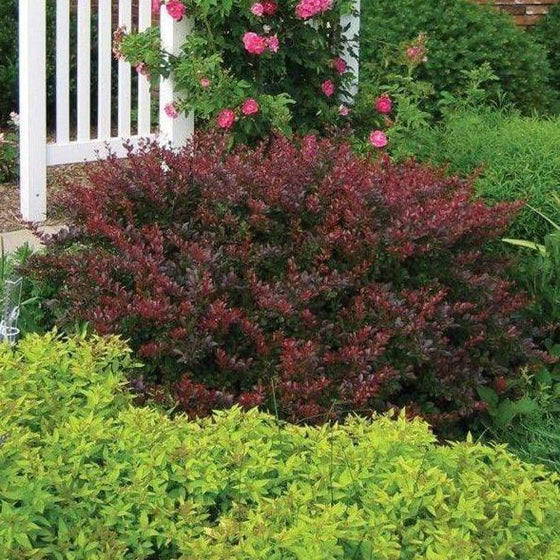
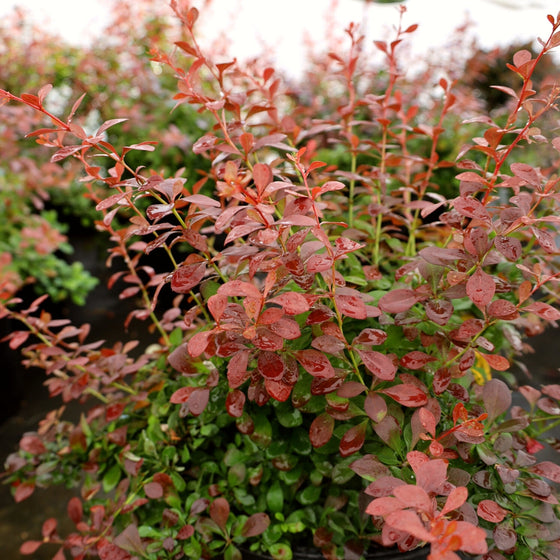
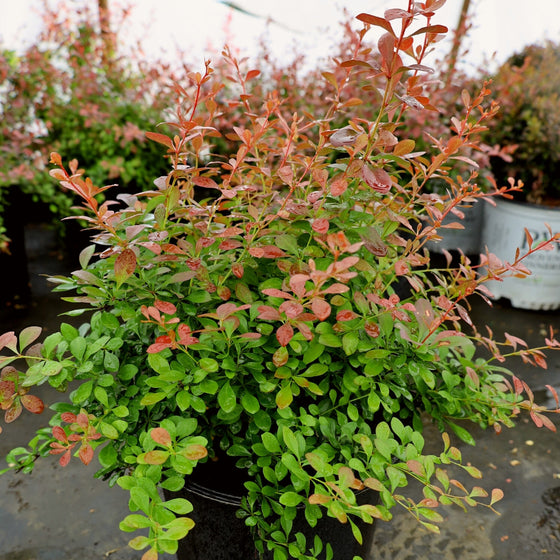
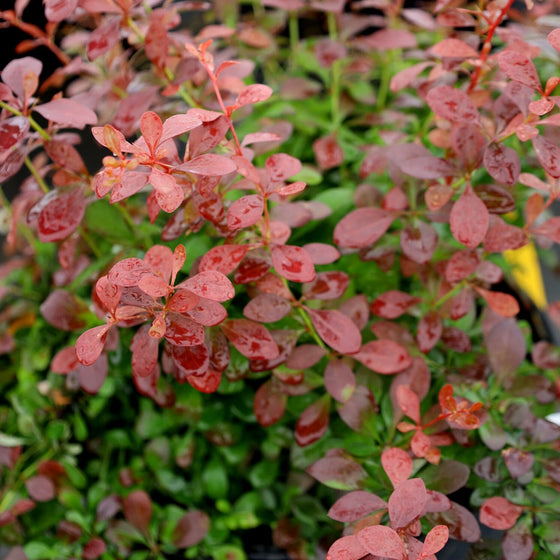


Images Depict Mature Plants
Crimson Pygmy Barberry
Berberis thunbergii 'Crimson Pygmy'
Crimson Pygmy Barberry is a great answer when a planting needs dependable color without leaning on flowers alone. I like using it where a bed needs a strong burgundy anchor, especially along foundations, walkways, and front borders, where its compact habit stays useful and easy to manage. It gives gardeners a low-maintenance shrub with real presence, and that combination of red foliage, deer resistance, and tidy size makes it a practical favorite for sunny landscapes.

20% OFF SITEWIDE SALE
Use Code 'OCTOBER20' At Checkout
📦 Free shipping on orders over $99.
Delay shipping by leaving us a message at Checkout.
Share:Recommended Add-Ons


Compact Burgundy Color for Borders and Foundation Beds
Rich burgundy foliage that delivers season-long color
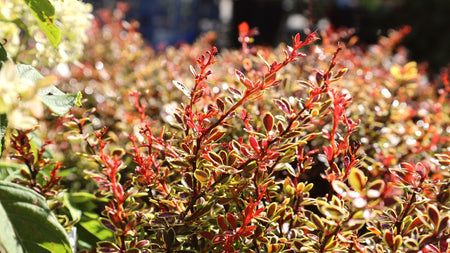
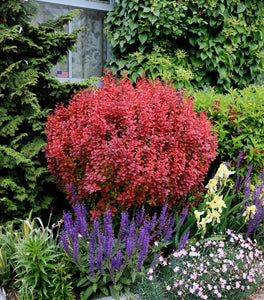
Crimson Pygmy Barberry is prized for its deep red to burgundy foliage, which gives garden beds a stronger color foundation from spring through fall. Instead of relying solely on flowers for impact, this compact deciduous shrub provides lasting foliage color that helps anchor mixed plantings and sharpen the contrast around green shrubs, silver foliage, and bright blooming perennials. It is especially useful where a landscape needs color consistency rather than a short seasonal burst.
That foliage color is strongest in full sun, where the leaves develop the richest tones, and the plant keeps a tighter, more polished habit. In part shade, it can still perform well, but the color usually softens. For homeowners trying to build curb appeal with reliable structure and strong leaf color, Crimson Pygmy Barberry offers a smart way to add visual weight without using a large shrub that overwhelms the bed.
Compact size that fits smaller spaces beautifully
One of the biggest selling points of Crimson Pygmy Barberry is its naturally dwarf, mounded habit. This is not a shrub that constantly asks for size control to stay useful. It generally matures around 2 feet tall and about 3 feet wide, which makes it an easy fit for foundation plantings, front-of-border use, edging, and low mass plantings where a neat, spreading shape is more valuable than height.
Because it stays relatively low and broad, it works well in repeated groupings that create a rhythmic effect in a planting bed. It can soften walkways, define the front edge of larger shrub borders, or bring year-to-year consistency to island beds and commercial-style layouts. Gardeners who want dependable form and color without constant pruning often find this variety especially useful, since its mature proportions are naturally suited to many residential landscapes.
Low-maintenance performance for sun-filled landscapes
Crimson Pygmy Barberry thrives in full sun and adapts to a range of average garden soils as long as drainage is good. Once established, it handles dry periods, heat, and urban conditions well, making it a dependable choice for homeowners who want a shrub that looks colorful and intentional without needing constant attention. It is also generally deer tolerant, which adds to its appeal in landscapes where browsing pressure limits planting options.
Its thorny branching helps give the plant texture and function while discouraging casual browsing. The plant responds well to selective pruning when shaping is needed, but it rarely needs heavy maintenance to remain attractive. For busy gardeners, that combination of strong foliage color, broad adaptability, and relatively low upkeep makes Crimson Pygmy Barberry an easy shrub to work into long-term landscape plans.
A strong fit for borders, edging, and layered design
Crimson Pygmy Barberry shines when used as a structural accent in layered plantings. Its rounded form and dark foliage help define bed edges, highlight entry plantings, and create contrast beneath taller shrubs or ornamental grasses. It pairs beautifully with gold foliage, chartreuse perennials, blue-green evergreens, and flowering shrubs because the burgundy tones give neighboring plants a stronger stage to play against.
It is also useful as a low-barrier or informal edging shrub thanks to its dense, thorny branching and compact footprint. Whether planted in a row, grouped in clusters, or used as a repeating accent along a path, it adds clean definition and durable color. For homeowners seeking a compact shrub that delivers both visual impact and practical performance, Crimson Pygmy Barberry remains a standout choice.
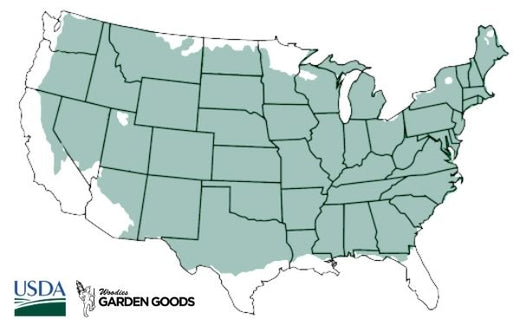
| Hardiness Zone: | 4-8 |
|---|---|
| Mature Height: | 2 to 2.5 Feet |
| Mature Width: | 2 to 3 Feet |
| Sunlight: | Full sun to part shade |
| Bloom Time / Color: | Spring; small yellow flowers |
| Soil Condition: | Average, well-drained soil; tolerates dry to medium moisture once established |
| Water Requirements: | Regular water during establishment; drought tolerant once established |
| Wildlife Value: | Dense branching provides cover; berries may be eaten by birds |
| Resistance (deer/disease/drought/etc.): | Deer resistant, drought tolerant, heat tolerant, urban tolerant |
| Landscape Uses: | Borders, edging, low hedges, mass planting, foundation beds, color contrast plantings |
How to Care for Crimson Pygmy Barberry
Before you buy a Crimson Pygmy Barberry Shrub, make sure to read about the care instructions that are recommended to keep this plant healthy and thriving.

How should I plant Crimson Pygmy Barberry?
Plant Crimson Pygmy Barberry in full sun to part shade in well-drained soil, with full sun giving the best burgundy foliage color. Dig a hole two to three times wider than the root ball and no deeper than the root ball itself, then position the plant so the top of the root ball sits level with the surrounding soil before backfilling with native soil. Water thoroughly after planting to settle the soil, then add a light mulch layer around the base while keeping mulch away from the stems. Space plants according to your goal: closer for a denser edging effect and a bit wider for individual mounded shrubs that show off their natural form without crowding.

How often should I water Crimson Pygmy Barberry after planting?
Water Crimson Pygmy Barberry regularly during its first growing season to help the roots establish well. In most landscapes, a deep soaking once or twice a week is enough, depending on rainfall, soil type, and heat, and the soil should be allowed to drain rather than stay constantly wet. After establishment, this shrub becomes fairly drought-tolerant and typically needs supplemental watering only during prolonged dry periods. Deep, occasional watering is better than frequent shallow watering because it encourages stronger roots and better long-term performance in the landscape.

When should I fertilize Crimson Pygmy Barberry?
Fertilize Crimson Pygmy Barberry in early spring if needed, just as new growth begins. A balanced slow-release shrub fertilizer or a light application of compost is usually enough to support healthy foliage and steady growth without pushing the plant too hard. In many average garden soils, this shrub performs well without heavy feeding. Overfertilizing can encourage softer growth and reduce the dense, compact habit that makes this barberry so useful in borders and edging, so it is best to keep feeding light and consistent rather than aggressive.

When and how should I prune Crimson Pygmy Barberry?
Prune Crimson Pygmy Barberry in late winter or early spring to remove any dead, damaged, or crossing branches and to maintain shape. You can also lightly trim after the main spring flush if you want a tidier outline, but wear gloves because the stems are thorny. This shrub usually looks best with minimal shaping because its natural dwarf, mounded habit is part of its appeal. Selective pruning keeps the plant dense and attractive while allowing it to maintain the low, spreading form that works so well in foundation beds, borders, and repeated mass plantings.