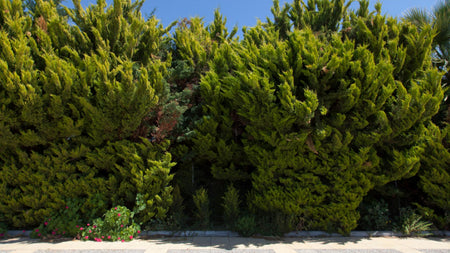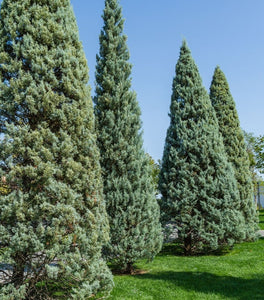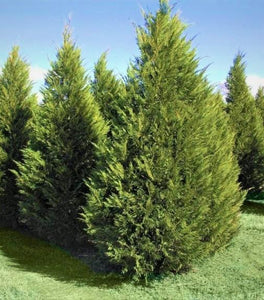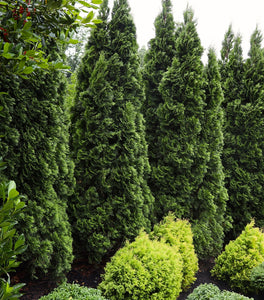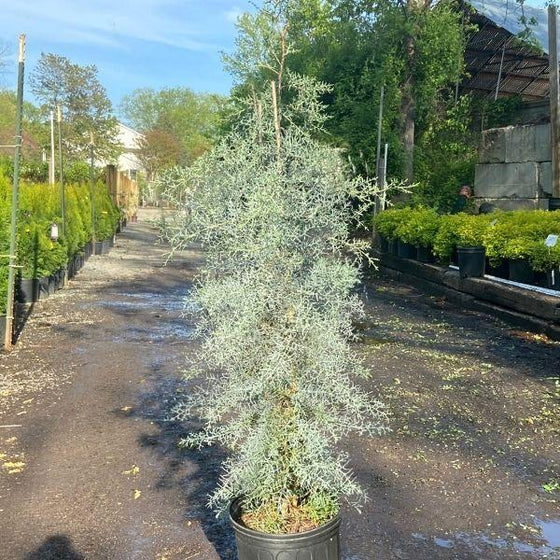


Images Depict Mature Plants
Blue Ice Cypress
Cupressus arizonica 'Blue Ice'
Blue Ice Cypress is a really strong choice when you want privacy or evergreen structure, but also want something with a little more beauty than a standard green screen. I like it because the silver-blue foliage really stands out, the tree handles hot sunny sites well, and it gives you year-round color with a more refined look than many screening evergreens. It is a smart fit for homeowners who want both function and style.

20% Off Sitewide Sale!
Use Code 'ENDOFSEASON20' At Checkout
📦 Free shipping on orders over $99.
Delay shipping by leaving us a message at Checkout.
Share:

Silver-Blue Evergreen Color for Privacy and Year-Round Structure
A Distinctive Evergreen With Icy Blue Color
Blue Ice Cypress is a standout choice for homeowners who want an evergreen structure without settling for ordinary green. Its foliage carries a striking silver-blue to icy blue tone that gives the landscape a brighter, cooler look and creates beautiful contrast against darker shrubs, mulch, stone, and traditional evergreens. When a landscape needs year-round color and a strong evergreen presence, this tree brings something noticeably different.
That unusual foliage color is one of the biggest reasons people choose it. Instead of disappearing into a row of standard screening trees, Blue Ice adds ornamental value even when used in larger privacy plantings. It can look dramatic as a specimen and equally effective when repeated in a screen.
An Upright Evergreen for Screening, Windbreaks, and Specimen Use
Blue Ice Cypress grows in a naturally pyramidal to broadly conical form, which makes it a strong option for privacy planting, windbreaks, and open-space screening. It has enough height to create real separation and enough density to give the landscape a year-round structure. Homeowners looking for a tall evergreen with a narrower feel than some broad screening trees often find this variety especially useful.
It is also flexible enough to work as a specimen. In the right location, its silver-blue foliage and reddish to mahogany-toned bark can give a landscape a more refined, collector-style look. That makes it a smart fit for large front-yard focal points as well as practical privacy rows.
A Strong Choice for Hot, Sunny, Well-Drained Landscapes
One of the biggest advantages of Blue Ice Cypress is how well it handles sun, heat, and drier conditions once established. This evergreen performs best in full sun and well-drained soil, and it is especially useful in landscapes where other evergreens might struggle with reflected heat or summer drought. For homeowners in sunnier, tougher planting conditions, that is a major benefit.
Because of that adaptability, Blue Ice works well in wide-open yards, sunny side yards, perimeter plantings, and windbreak installations. It is not the right choice for wet or poorly drained sites, but in the right setting, it can be a very reliable long-term evergreen.
Year-Round Texture, Color, and Bark Interest
Blue Ice Cypress offers more than just screening value. The foliage provides consistent cool-toned color throughout every season, and the bark develops warm reddish-brown to mahogany tones, with exfoliating character that adds another layer of interest as the tree matures. That combination of blue foliage and warm bark helps it stand out even more in the landscape.
This kind of four-season appeal is especially useful in larger beds and open landscapes where evergreen trees need to do more than simply fill space. Blue Ice helps a planting feel more intentional and ornamental while still serving a practical function.
A Better Fit for Larger Spaces Than Tight Foundation Beds
Blue Ice Cypress is best thought of as a larger evergreen for screening, specimen use, and open landscape placement rather than a small accent conifer. It shines when given room to grow into its natural shape and is most effective in rows, groupings, and larger focal zones. It is not the best choice for cramped foundation beds, but it is an excellent fit for property edges, privacy lines, and open sunny sites where strong evergreen structure is needed.
For homeowners who want a silver-blue evergreen with strong year-round presence, practical privacy value, and low-maintenance performance once established, Blue Ice Cypress is one of the most distinctive options available.
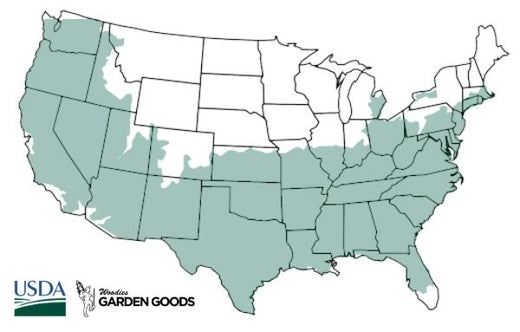
| Hardiness Zone: | 6-9 |
|---|---|
| Mature Height: | 25 to 40 Feet |
| Mature Width: | 10 to 20 Feet |
| Sunlight: | Full sun |
| Soil: | Well-drained soil |
| Water | Regular moisture during establishment; low to moderate water once established |
| Bloom Time / Color | Bloom Time / Color |
| Ornamental Features | Silver-blue foliage, pyramidal habit, reddish-brown exfoliating bark |
| Wildlife Value | Primarily shelter and screening value |
| Resistance (deer/disease/drought/etc.) | Drought tolerant once established, deer resistant, heat tolerant, wind tolerant |
| Landscape Uses | Privacy screen, hedge, windbreak, specimen tree, evergreen backdrop |
How to Care for Blue Ice Cypress
Before you buy a Blue Ice Cypress, make sure to read about the recommended care instructions to keep this plant healthy and thriving.

How should I plant Blue Ice Cypress?
Plant Blue Ice Cypress in full sun in well-drained soil where it has room to develop its natural pyramidal shape. Dig a hole two to three times as wide as the root ball but no deeper than the root ball itself, and set the tree so the root flare sits at or slightly above grade. Choose a location with open sun and enough space for the tree to develop its full width over time. This tree works especially well along property lines, in windbreak rows, and in open planting areas where the silver-blue foliage can be appreciated. It is best used where its natural form can develop without being crowded by buildings or oversized neighboring trees.

How often should I water Blue Ice Cypress after planting?
Water deeply right after planting and keep the soil evenly moist during the establishment period. Deep watering is better than frequent shallow watering because it encourages stronger root development and helps the tree settle in more successfully during its first growing season. Once established, Blue Ice Cypress is much more tolerant of ordinary dry conditions, but it still benefits from supplemental watering during long dry spells, especially in hotter climates. Good drainage is important, and the soil should never stay waterlogged.

When should I fertilize Blue Ice Cypress?
Blue Ice Cypress usually does not need heavy feeding. A light application of balanced slow-release fertilizer in early spring is usually enough if the tree appears to need support. Good soil, full sun, and proper watering are often more important than frequent fertilization. Too much fertilizer can encourage soft growth and reduce the dense, steady habit that makes this tree so useful. A moderate approach is generally best for a conifer grown mainly for evergreen structure and foliage color.

When and how should I prune Blue Ice Cypress?
Blue Ice Cypress usually needs only light pruning. Remove dead, damaged, or awkward branches and preserve the tree’s natural pyramidal form rather than cutting it back too aggressively. If shaping is needed, prune lightly before the plant becomes overgrown. The goal is to maintain a healthy, full evergreen with a natural look, not to force it into a harsh or unnatural outline.