
Heather Plants for Colorful Blooms & Evergreen Ground Coverage
Evergreen groundcover that lights up winter with bell-shaped blooms.
Heather is the kind of plant that makes you feel like you outsmarted winter. When so much of the garden is resting, these low, evergreen mounds stay tidy and green—then open up with clusters of tiny bell flowers in shades like pink, white, and deep rosy red. Many “heather” favorites in landscapes are winter heaths (Erica types), celebrated because they can bloom from winter into early spring—exactly when you’re craving color along walkways, foundation beds, and sunny edges. Set them where you’ll see them every day: by the front steps, along a driveway curve, or tucked into a rock garden that needs year-round structure. Give them bright light, sharp drainage, and slightly acidic soil, and they’ll reward you with a clean, finished look that never feels fussy.
Here’s the confidence piece: heather isn’t asking for perfection—just the right “lane.” Skip soggy spots, keep mulch light and airy, and do a quick, gentle shear after flowering to keep plants dense and bloom-ready for next season. If you garden in a region where Scotch heather (Calluna vulgaris) is considered invasive, lean into winter heaths (Erica) or keep plantings contained and monitored—same beautiful effect, fewer worries. And if you ever feel unsure, that’s what the We Grow Together Promise is for: real guidance on placement, watering, and pruning so your planting settles in fast and performs for the long haul.

Mediterranean Pink Heather
As Low As $36.95

Kramer's Red Heather
As Low As $36.95
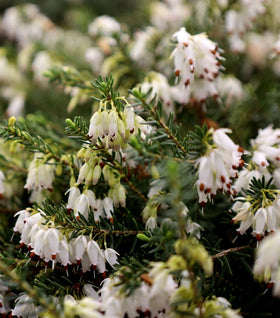
Mediterranean White Heather
As Low As $36.95
Create winter color that feels intentional.
Heather earns its keep in the “hard months.” Winter heaths (Erica × darleyensis and Erica carnea types) can flower from late fall through mid-spring, with wide varieties peaking in winter to early spring—bringing real color when most beds are quiet. That long seasonal window is why designers love using them as the “front-row evergreen” in foundation plantings and entry beds: they keep the landscape looking maintained, even between bigger seasonal moments.
These plants also solve a practical problem: how to make small spaces look finished without constant trimming. Heather’s naturally low, mounding habit reads as neat groundcover, but with more texture and seasonal interest than many flat mats. Use a single variety for a clean sweep, or plant a few colors in drifts to give the bloom season a layered, planned feel.
If you garden on a slope or a spot that dries faster than the rest of the bed, heather is a smart ally. Dense growth helps knit together the surface of the soil, and once established many heathers/heaths handle drier periods better than you’d expect—especially when they’re planted in well-drained soil that stays oxygen-rich around the roots.
Heather also plays well with the plants you already love. Pair it with dwarf conifers, ornamental grasses, early bulbs, and other evergreens so the bed has structure first—and flowers second. The result is a garden that looks “designed,” not seasonal and empty.
Evergreen texture with bell blooms, you’ll notice.
What you’re really getting with Heather is a compact evergreen base layer—fine, needle-like foliage and a tight mound that stays attractive through the year. Winter heath selections typically mature around 1–2 feet tall, with spreads often in the 2–3 foot range (cultivar-dependent), so they read as substantial groundcover without ever turning into a bulky shrub.
The flowers are small up close, but the overall effect is big: masses of bells held along the stems that tint the whole plant pink, white, or purple-magenta. Many winter heaths are prized specifically because blooms can show in winter months, and some cultivars keep color running into spring—creating a long “payoff window” from one planting.
Growth rate is generally steady rather than wild, which is exactly what you want in front-of-bed plants. Expect a gradual thickening and widening over the years, especially when plants get the light they prefer and aren’t competing with heavy, wet soil. The goal is density—so the planting looks plush and weed-resistant.
Seasonal interest doesn’t stop at flowers. Many winter heath cultivars carry bronze-green foliage tones, especially in colder weather, so you still get color and contrast even when blooms pause. That evergreen texture is what makes heather such a reliable “connective tissue” between boulders, stepping stones, and mixed shrub/perennial beds.
Place them where drainage stays sharp.
Light is your first success lever: Heather performs best in full sun to partial shade, and brighter exposures typically mean tighter growth and heavier flowering. In hot summer areas, a little afternoon shade can help reduce stress, but avoid deep shade—these are plants that want light on their shoulders.
Next comes soil and drainage. Heather/heath roots dislike being waterlogged, so aim for well-drained soil—often sandy or loamy—with an acidic to near-neutral pH depending on the type. If your site is heavy clay, consider mounding the bed, using a rock-garden-style mix, or planting in containers so excess water can’t pool around the crown.
For spacing, think in ranges and outcomes. For individual “pillow mounds,” space many winter heaths about 18–36 inches apart depending on the cultivar’s mature spread and how quickly you want coverage; tighter spacing knits into a carpet sooner, wider spacing keeps each plant more distinct. On slopes and along edges, stagger planting so the mounds overlap visually without crowding airflow.
Simple care that keeps them blooming.
Watering is straightforward: keep new plants evenly moist while roots establish, then shift to a “deep soak, then let the surface dry” rhythm—especially in well-drained soils. Heather is often described as fairly drought-tolerant once established, but performance stays best when you prevent extreme dry-downs during flowering and during the first growing season.
Feed lightly (if at all). Many heaths/heathers prefer modest fertility, and over-fertilizing can do more harm than good—pushing soft growth and reducing the tight, durable habit you actually want. If you fertilize, keep it gentle and timed to early spring growth rather than mid- to late-season forcing.
Pruning is the “secret handshake” for long-term beauty: shear lightly right after flowers fade to remove spent blooms and tip growth, keeping plants dense and encouraging fresh branching. Avoid cutting hard into old, leafless wood, and don’t wait too late—many winter heaths set next season’s flower buds later in the year, so late pruning can reduce bloom.