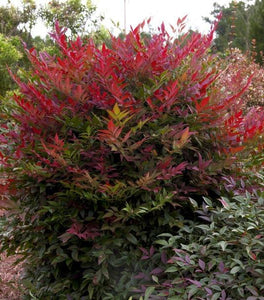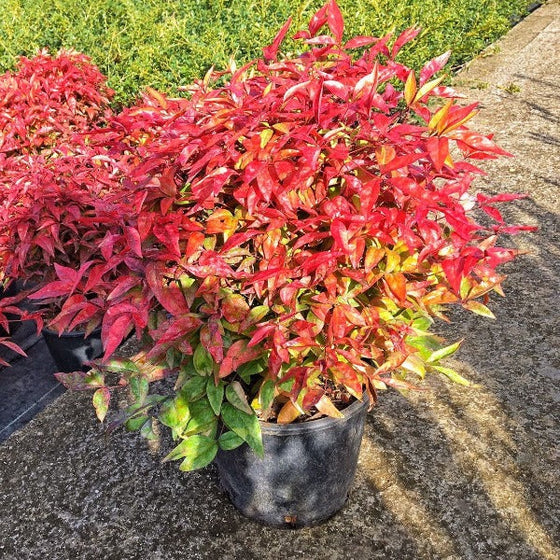
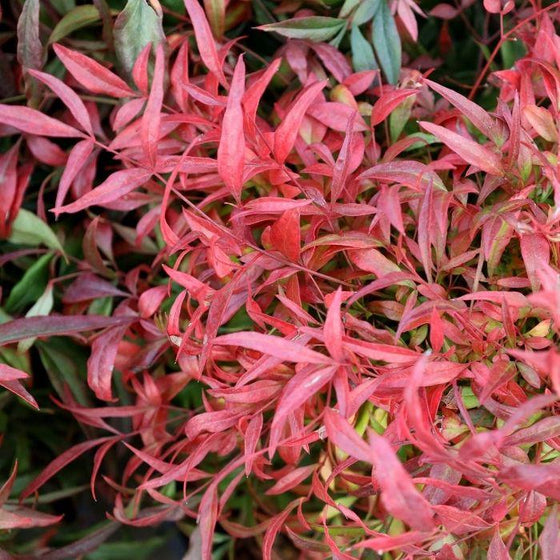


Images Depict Mature Plants
Fire Power Nandina
Nandina domestica 'Firepower'
Firepower Nandina is the kind of evergreen that makes a landscape look finished—tight, compact form in spring and summer, then that fiery red winter color that turns simple borders into a feature. If you want a low, polished shrub for edging, massing, or containers—and you don’t want a plant that constantly needs haircutting—this one checks the boxes in a clean, reliable way.

20% Off Sitewide Sale!
Use Code 'ENDOFSEASON20' At Checkout
📦 Free shipping on orders over $99.
Delay shipping by leaving us a message at Checkout.
Share:Recommended Add-Ons



Buy Firepower Nandina for Compact Evergreen Color That Turns Fiery Red
A Dwarf Evergreen Shrub That Delivers Red Winter Color
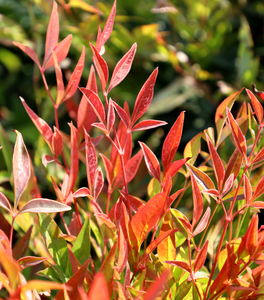
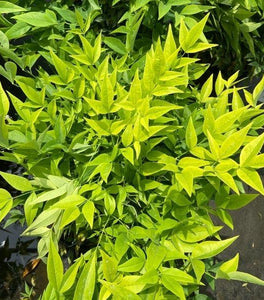
Firepower Nandina is the “set-it-and-forget-it” shrub for shoppers who want year-round structure with a seasonal payoff: fresh lime-green foliage in warm months that shifts into fiery red fall and winter color. Its dense, rounded form reads clean and modern, making it an easy upgrade for foundation beds, walkway borders, and tight urban landscapes.
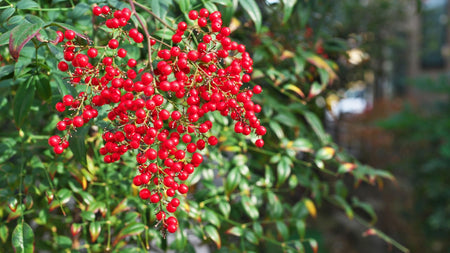
This dwarf selection is grown primarily for foliage (not flowers), and it’s widely described as mostly flowerless/fruitless—a major reason homeowners choose it when they want the look without heavy berry production.
Compact, Mounding, and Perfect for Edging
Firepower stays small and tidy, typically topping out around 1–2 feet tall and 1–2 feet wide (roughly 2' × 2'). That compact footprint makes it a strong “buy it once, place it anywhere” evergreen for crisp lines along beds, driveways, patios, and pool hardscapes.
Because it naturally forms a dense mound, it performs like a refined evergreen groundcover shrub—great for repeating in rhythm down a border, or massing in sunny islands where you want color to pop in cold weather
Sun for Best Color, Tough in Real-World Soils
Plant Firepower in full sun to partial shade; brighter light produces stronger fall/winter color, while shade can soften the red tones. It tolerates a wide range of soil textures as long as drainage is reasonable, and it can show leaf yellowing (chlorosis) in more alkaline conditions.
Once established, it’s drought-tolerant and dependable—ideal for homeowners who want low-maintenance plantings that still look intentional. Keep moisture consistent during establishment, then transition to deep watering during extended dry spells.
Borders, Mass Planting, Containers, and Year-Round Structure
Use Firepower Nandina as a clean evergreen “filler” that becomes a seasonal accent when temperatures drop. It’s especially effective as a low border, in mass plantings, and in containers where its compact size stays proportional and tidy.
If you garden in regions where standard nandina is considered invasive, Firepower is often highlighted as a sterile/non-fruiting choice with lower risk—still, it’s smart to follow local guidance and avoid planting near natural areas where any escape would be a concern.
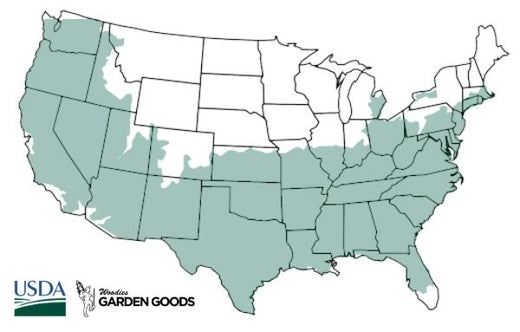
| Hardiness Zone: | 6 -9 |
|---|---|
| Mature Height: | 1 to 2 feet |
| Mature width: | 1.5 to 2 feet |
| Classification: | Broad leaved evergreen shrub |
| Sunlight: | Full sun, partial shade, dappled sun |
| Foliage: | Green turning to red |
| Bloom Time / Color: | Mostly flowerless; grown for foliage |
| Soil condition: | Adaptable; best in well-drained soil |
| Water Requirements: | Regular during establishment; drought tolerant once established |
| Resistance: | Deer resistant; salt/drought tolerant traits noted |
| Landscape Uses: | Borders, mass planting, containers, small spaces, edging |
How to Care for Fire Power Nandina
Before you purchase your Nandina Firepower Shrub, be sure to read the recommended care instructions to ensure your Nandina remains happy and thriving for years to come!

How should I plant Firepower Nandina?
Choose a site with sun to partial shade, and dig a hole 2–3 times as wide as the root ball but no deeper. Set the plant so the top of the root ball sits level with the surrounding soil, then backfill with your native soil and water deeply to settle everything in. Finish with a 2–3-inch mulch layer to conserve moisture and reduce weeds, keeping the mulch a few inches off the stems. For best long-term performance, prioritize drainage—avoid low spots where water stands after heavy rain.

How often should I water Firepower Nandina after planting?
Water deeply right after planting, then keep the root zone consistently moist (not soggy) for the first several weeks. In warm or windy weather, check more often—new shrubs dry out faster than established plants. After establishment, Firepower is considered drought-tolerant and usually only needs supplemental water during extended dry spells. A mulch ring helps dramatically by slowing evaporation and keeping soil temperatures steadier.

When should I fertilize Firepower Nandina?
Feed lightly in spring with a balanced, slow-release fertilizer if growth is weak or soil is very lean. Most landscapes do best with “steady and moderate” nutrition rather than pushing rapid growth. For a more natural approach, top-dress with compost in spring and refresh mulch annually. Organic matter improves moisture-holding capacity and supports healthier roots—often the quickest path to fuller, more vibrant foliage.

When and how should I prune Firepower Nandina?
Firepower usually needs minimal pruning to stay compact. If you want to tidy it, prune in late winter or early spring before new growth begins—remove a few of the oldest canes at the base or shorten select stems to maintain a natural, layered look. Avoid shearing it into tight shapes; selective cane removal keeps it looking dense and fresh without stressing the plant. If stems become sparse over time, a light renovation approach (removing a few older canes each year) helps it re-fill evenly.