


Images Depict Mature Plants
Pink Kousa Dogwood
Cornus kousa var. chinensis 'Miss Satomi'
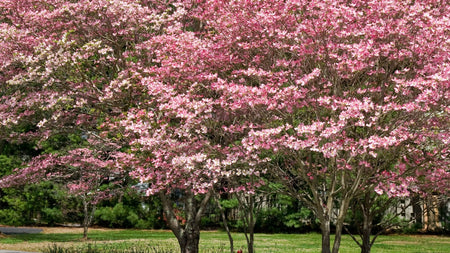
Pink Kousa Dogwood has a refined look that always feels special in the landscape. I like that it blooms a little later, holds its flowers longer, and keeps giving with red berries and beautiful bark after the bloom season has passed. For homeowners looking for a pink flowering specimen tree, a cleaner ornamental for the front yard, or a dogwood with strong four-season interest and better deer resistance, this is an easy one to recommend.

20% Off Sitewide Sale!
Use Code 'ENDOFSEASON20' At Checkout
📦 Free shipping on orders over $99.
Delay shipping by leaving us a message at Checkout.
Share:


A Beautiful Pink Kousa Dogwood With Long-Lasting Blooms And Four-Season Interest
Soft Pink Blooms That Arrive Later And Last Longer
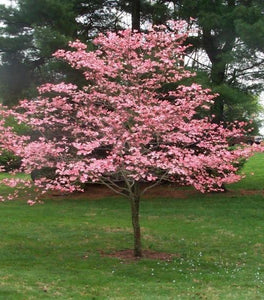
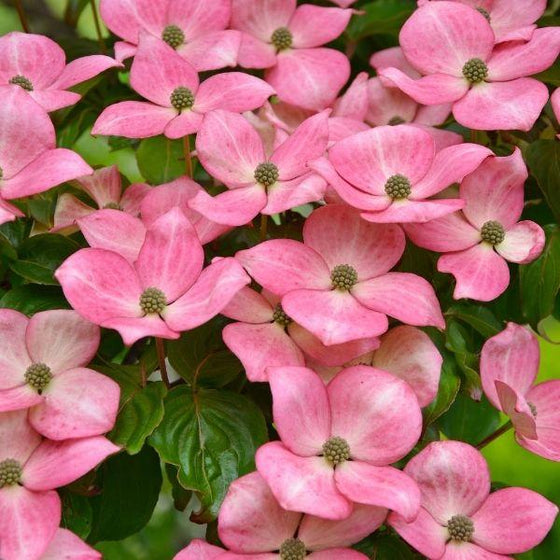
Pink Kousa Dogwood offers a different kind of spring show than the traditional native flowering dogwood. Instead of blooming very early, it flowers weeks later, once the tree has leafed out, giving the display a fuller, more layered look. The blooms are soft pink and star-like, bringing a graceful, elegant presence to the landscape that feels refined rather than flashy.
One of the biggest advantages of Pink Kousa Dogwood is its long-lasting bloom display. Rather than fading quickly, the flowers can remain attractive for nearly a month, giving homeowners a longer window of color and enjoyment. This makes it a wonderful choice for front yards, patio views, and entry landscapes where a longer-lasting ornamental feature adds real value.
A Four-Season Ornamental Tree With Red Berries And Exfoliating Bark
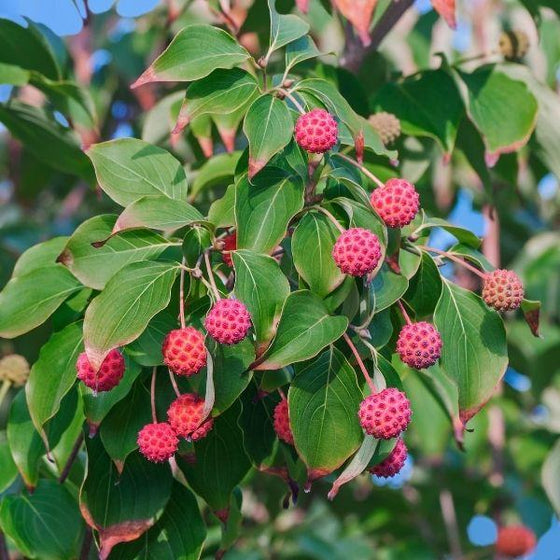
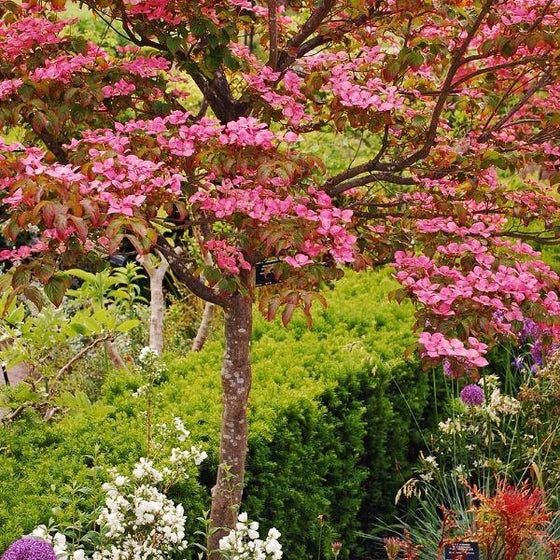
Pink Kousa Dogwood keeps adding beauty long after spring bloom ends. As the season progresses, the tree develops red berries that birds enjoy, adding wildlife value and another layer of visual interest. In fall and winter, the bark becomes part of the show as it exfoliates, revealing a mottled pattern that adds texture and character to the landscape.
That combination of bloom, berries, foliage, and bark makes this more than just a flowering tree. It is a four-season ornamental that continues to reward good placement year after year. For gardeners who want a specimen tree that keeps contributing after bloom season, Pink Kousa Dogwood stands out as a smart and beautiful choice.
A Tidy, Manageable Tree For Front Yards And Residential Landscapes
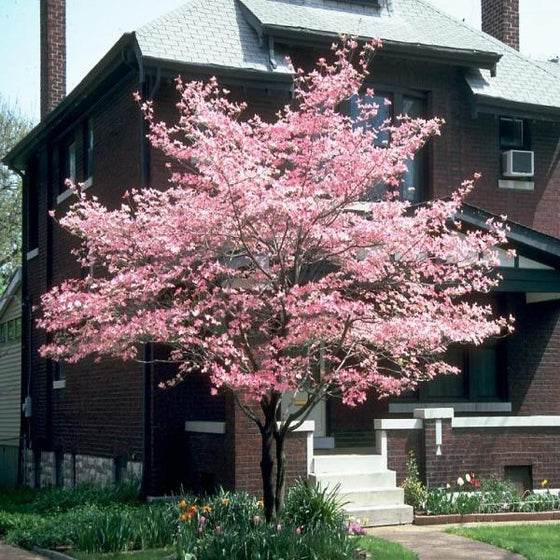
Pink Kousa Dogwood is especially appealing in home landscapes because it offers ornamental impact without becoming oversized or unruly. Its branching habit is relatively compact and is often described as more vase-shaped or structured than that of many sprawling deciduous trees. That makes it a strong fit for smaller yards, lawn islands, pathway plantings, and layered borders where space is at a premium.
It also works well as an understory tree beneath larger canopies or as a specimen in open garden beds. Because it handles full sun to part shade and adapts to many well-drained soils, it fits into a wide range of residential settings. Homeowners who want a flowering tree with strong curb appeal but a cleaner, more manageable habit will find this variety especially attractive.
An Easy-To-Grow Kousa Dogwood With Everyday Landscape Appeal
Pink Kousa Dogwood is often easier to grow than native flowering dogwood and is noted for being less prone to certain common disease issues. It is also among the more deer-resistant dogwoods, making it especially useful in landscapes where browsing pressure is a concern. Those practical advantages add to its beauty and help explain why it remains such a popular ornamental tree.
Once established, it is a relatively low-fuss plant that benefits from the basics done well: good drainage, regular watering while young, and thoughtful siting. It does not need heavy pruning, and its naturally attractive habit means very little shaping is required. For homeowners seeking a pink-flowering tree with elegance, resilience, and multi-season beauty, Pink Kousa Dogwood is a standout selection.


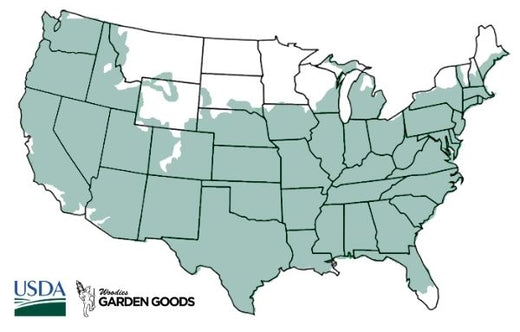
| Hardiness Zone: | 5-9 |
|---|---|
| Mature Height: | 20 to 25 feet |
| Mature Width: | 20 to 25 feet |
| Sunlight: | Full sun to part shade |
| Bloom Time / Color | Late spring to early summer; pink flowers |
| Soil Condition: | Any well-drained soil |
| Water Requirements: | Water well until established |
| Wildlife Value | Red berries support birds |
| Resistance (deer/disease/drought/etc.) | Less prone to powdery mildew than American flowering dogwood; among the more deer-resistant dogwoods |
| Landscape Uses | Specimen tree, understory tree, front yard accent, pathway planting, patio view focal point |
How to Care for Pink Kousa Dogwood
Be sure to read our planting instructions to ensure a healthy and happy Pink Kousa Dogwoodfor years to come!
-v1774132819945.png?92x91)
How should I plant Pink Kousa Dogwood?
Plant Pink Kousa Dogwood in well-drained soil where it has room to develop its natural branching habit. It grows well in full sun to part shade, making it flexible for front yards, open beds, and understory planting. Choose a site with enough space for the canopy to mature comfortably so the tree can show off its flowers, fruit, and bark over time. Dig a hole two to three times as wide as the root ball but no deeper than the root ball itself. Set the tree so the root flare is at or slightly above grade, backfill with native soil, and water deeply to settle the roots. Add mulch over the root zone to help conserve moisture and reduce competition, but keep the mulch pulled back from the trunk.
-v1774132839876.png?89x84)
How often should I water Pink Kousa Dogwood after planting?
Water Pink Kousa Dogwood regularly after planting so it can establish a healthy root system. During the first growing season, deep watering once or twice a week is usually appropriate depending on rainfall, heat, and soil type. The goal is to keep the soil evenly moist without allowing it to stay saturated. After establishment, the tree becomes easier to manage and generally needs less frequent watering. During extended dry periods or summer heat, deep watering is still beneficial. A mulch ring helps hold moisture and supports steadier root-zone conditions.
-v1774132856434.png?90x89)
When should I fertilize Pink Kousa Dogwood?
Fertilize Pink Kousa Dogwood lightly in early spring if the soil is poor or if the tree appears to need a boost in vigor. A balanced slow-release fertilizer for trees and shrubs is usually sufficient, and many gardeners also see good results from compost added around the root zone. Avoid excessive fertilizing, especially with high-nitrogen products. Too much fast growth can create imbalance and is usually less helpful than steady soil improvement, mulch, and proper watering. In many landscapes, this tree performs beautifully with only moderate feeding.

When and how should I prune Pink Kousa Dogwood?
Pink Kousa Dogwood generally needs very little pruning because it naturally develops an attractive habit. If cleanup is needed, remove dead, damaged, or crossing branches in late winter or very early spring before active growth begins. The focus should be on preserving the tree’s structure rather than reshaping it. One of the appealing features of this variety is that it usually does not require routine shaping. Minimal corrective pruning is often enough to keep it healthy, balanced, and attractive in the landscape for years.