

Images Depict Mature Plants
Cherokee Chief Dogwood
Cornus florida 'Cherokee Chief'
Cherokee Chief Dogwood is one of those trees that can make spring feel like it has officially arrived. The red bracts are bold without being gaudy, the fall color gives you another season of payoff, and the classic flowering dogwood shape fits beautifully into home landscapes where a full-size shade tree would be too much. For homeowners who want a specimen tree with real spring presence and strong ornamental value across more than one season, this is a really handsome choice.

20% Off Sitewide Sale!
Use Code 'ENDOFSEASON20' At Checkout
📦 Free shipping on orders over $99.
Delay shipping by leaving us a message at Checkout.
Share:


Red Spring Dogwood Color with Native Beauty and Four-Season Landscape Interest
A Classic Flowering Dogwood with Rich Red Spring Color
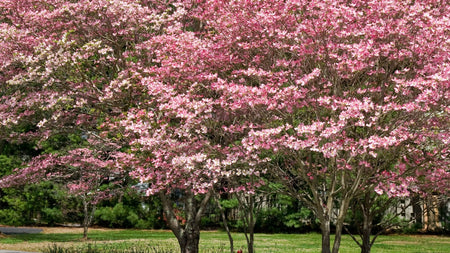
Cherokee Chief Dogwood is a beautiful choice for homeowners who want the classic shape and grace of native flowering dogwood, but with stronger red spring color than the more common white selections. In bloom, the tree is covered in rich rose-red to ruby-red bracts that create one of the most memorable spring displays available in a small ornamental tree. That bloom color gives it a little more drama and contrast than a standard flowering dogwood, while still keeping the refined woodland character people love.
One of the biggest strengths of this tree is that it delivers that spring impact in a manageable size. Cherokee Chief stays in the small to medium ornamental tree range, which makes it much easier to use in residential landscapes than larger flowering trees. It works beautifully as a front-yard specimen, near a patio, along a woodland edge, or in a layered planting where homeowners want a spring focal point without overwhelming the space. The natural form is broadly pyramidal to rounded with a graceful branch structure that looks right at home in traditional, cottage, and woodland-inspired gardens.
The bloom effect is especially strong because flowering dogwood bracts appear before or as the leaves emerge, which means the flowers are not hidden in foliage. Instead, the whole canopy seems to light up at once. That makes Cherokee Chief an excellent tree for homes where spring curb appeal matters and where the tree needs to read clearly from the street as well as up close.
For homeowners seeking a red-flowering ornamental tree with classic form and lasting landscape value, Cherokee Chief Dogwood is a strong option. It brings color, scale, and a more memorable spring presence to the landscape.
Spring Bloom Leads into Fall Color and Wildlife Value
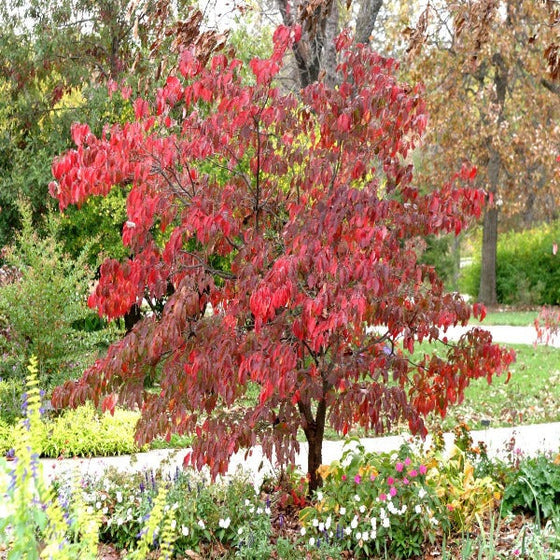
Cherokee Chief Dogwood is especially appealing because it offers more than just one spring moment. After bloom, the tree settles into a handsome summer canopy of dark green foliage, then often turns shades of red to reddish-purple in fall. That fall color extends its ornamental value well beyond the bloom season, giving homeowners another strong visual payoff later in the year. In many landscapes, that second season of color is one of the reasons dogwoods remain such beloved ornamental trees.
The tree also adds wildlife interest. Like other flowering dogwoods, Cherokee Chief can produce attractive red fruit in fall that helps support birds. That makes it especially useful in home landscapes where homeowners want a tree that offers both ornamental beauty and some ecological value. When planted near shrubs and perennials that extend bloom or berry season, it helps create a much more layered and active garden.
Another advantage is the branching habit. Even when the tree is not in bloom, the layered structure gives it a year-round presence and helps it feel elegant rather than heavy. That is especially important in smaller home landscapes where the tree needs to contribute shape and structure, not just flowers.
For gardeners who want a four-season ornamental tree with spring bloom, fall color, and wildlife value, Cherokee Chief Dogwood is a rewarding choice. It does not rely on only one feature to be useful, and that makes it much more valuable in real landscape design.
A Strong Fit for Specimen Planting, Woodland Edges, and Patio Views
Cherokee Chief Dogwood works best in landscapes where a small ornamental tree can be appreciated as a true focal point. It is especially effective as a lawn specimen, near a patio or terrace, in a woodland-edge bed, or as part of a layered planting near larger evergreens or shade trees. Because it has a strong spring bloom and a graceful form, it deserves a spot where homeowners will actually see it during its best seasons. Monrovia specifically highlights its use near patios and terraces where the blooms can be enjoyed up close.
Its mature size is one of the most important things to understand. Cherokee Chief is generally described within the broader flowering dogwood range of about 15 to 30 feet tall, though many nursery listings place it more commonly in the 15 to 25 foot range with a similar spread. That gives it the scale of a true ornamental tree rather than a shrub or oversized shade tree. For most homeowners, that means it works best where it has room to develop a full canopy without being squeezed between the house and a walkway or jammed too closely against other major trees.
This tree also pairs beautifully with azaleas, camellias, hellebores, hostas, ferns, and broadleaf evergreens. Its spring bloom color can pull a whole planting together, while the darker summer foliage and fall tones help it continue contributing after flowering ends. Used thoughtfully, it becomes one of those anchor plants that gives the whole landscape more character.
For homeowners trying to create a more layered, elegant front yard or side garden, Cherokee Chief Dogwood is a very practical and beautiful choice. It offers a strong ornamental return without the overwhelming scale of a large shade tree.
Easy-Care Performance Starts with Good Siting and Moisture
Cherokee Chief Dogwood performs best in full sun to part shade and in moist, rich, acidic, well-drained soil. Like many flowering dogwoods, it appreciates a site where the root zone stays cool and evenly moist, especially during establishment and dry summer weather. It is not a tree for harsh reflected heat, badly compacted soil, or standing water. Good siting matters a lot with dogwoods, and homeowners will usually get the best long-term results when the tree is planted where it has decent air movement and protection from the worst stress.
Disease notes also matter with flowering dogwoods. NC State identifies Cherokee Chief as resistant to spot anthracnose, which is helpful, but that is not the same thing as full resistance to dogwood anthracnose. If homeowners are planting in an area with severe dogwood anthracnose pressure, there are more highly resistant cultivars, such as Appalachian Spring. Still, Cherokee Chief offers a meaningful improvement over many older dogwoods in regard to spot anthracnose and remains a strong ornamental choice when properly sited and cared for.
Pruning needs are minimal. Most of the time, the tree needs only light cleanup of damaged or crossing branches, ideally after bloom or during dormancy when structure is easy to see. Regular deep watering during drought, avoiding overhead irrigation, and mulching the root zone all help support healthier, long-term performance.
For gardeners who want a classic flowering dogwood with strong red spring color and a manageable care routine, Cherokee Chief Dogwood is a rewarding tree. Give it the right soil, moisture, and spacing, and it can become one of the most beautiful plants in the landscape.
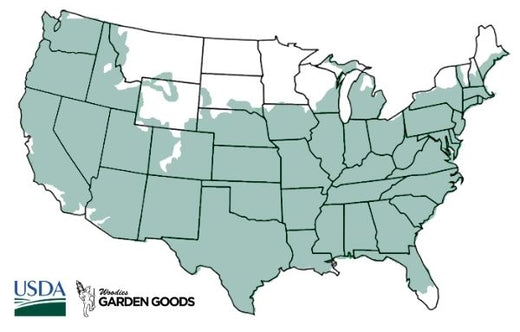
| Hardiness Zone: | 5-9 |
|---|---|
| Mature Height: | 15 to 25 Feet |
| Mature Width: | 15 to 25 Feet |
| Sunlight: | Full sun to part shade |
| Bloom Time / Color | Early to mid-spring; deep rose-red to ruby-red bracts |
| Soil Condition: | Moist, rich, acidic, well-drained soil |
| Water Requirements: | Moist, rich, acidic, well-drained soil |
| Wildlife Value | Red fruit for birds; pollinator support during bloom |
| Wildlife Value | Resistant to spot anthracnose; best with good siting and regular moisture |
| Landscape Uses | Specimen tree, patio tree, woodland edge, front yard accent, wildlife garden, mixed border anchor |
How to Care for Cherokee Chief Dogwood
Be sure to read our planting instructions to ensure a healthy and happy Cherokee Chief Dogwood for years to come!

How should I plant Cherokee Chief Dogwood?
Plant Cherokee Chief Dogwood in full sun to part shade in moist, rich, well-drained acidic soil. Dig a hole about twice as wide as the root ball and no deeper than the root ball itself, then set the tree so the root flare sits level with or slightly above the surrounding soil. Give it a site with enough room for a broad ornamental canopy and avoid harsh, exposed spots with reflected heat or poor drainage. Backfill with native soil, water deeply, and mulch over the root zone to help keep the roots cool and evenly moist. This tree works especially well as a specimen near patios, lawns, and woodland edges where the spring bloom can be seen and enjoyed clearly.

How often should I water Cherokee Chief Dogwood after planting?
Water Cherokee Chief Dogwood deeply right after planting, then keep the soil evenly moist during the establishment period. In the first growing season, that usually means watering during dry spells so the roots can settle in and support healthy spring bloom and summer foliage. Once established, continue watering during hot or prolonged dry weather. Flowering dogwoods perform best when they do not go through repeated drought stress, especially in sunnier sites, and steady moisture helps reduce stress that can make the tree more vulnerable to decline.

When should I fertilize Cherokee Chief Dogwood?
Cherokee Chief Dogwood usually needs only moderate feeding if planted in good soil. A general-purpose fertilizer before new growth begins in spring is commonly recommended, though many trees in healthy organic soil may need little extra feeding beyond mulch and good soil care. Avoid heavy fertilizing, because this tree responds better to balanced soil health and even moisture than to aggressive feeding. In most landscapes, mulch, moisture, and good siting matter more than pushing fast growth.

When and how should I prune Cherokee Chief Dogwood?
Cherokee Chief Dogwood needs very little pruning. Most of the time, the goal is simply to remove damaged, dead, or crossing branches and preserve the tree’s natural layered shape. If pruning is needed, keep it light and selective rather than aggressive. The natural branching habit is part of what makes flowering dogwoods so attractive, so maintenance should focus on cleanup and structure rather than reshaping the canopy heavily.