Images Depict Mature Plants
Catalpa Tree
Catalpa speciosa
The Northern Catalpa Tree is a great pick when you want a shade tree that also feels like a conversation piece. The giant leaves, white flowers, and hanging pods give it a lot more personality than a typical canopy tree, and that makes it especially useful where one tree needs to do a lot of visual work.

20% Off Sitewide Sale!
Use Code 'ENDOFSEASON20' At Checkout
📦 Free shipping on orders over $99.
Delay shipping by leaving us a message at Checkout.
Share:


A bold native shade tree with flowers, giant leaves, and striking seed pods
A shade tree that never really blends into the background.
The Northern Catalpa Tree is one of those trees that immediately changes the feel of a landscape. Its oversized heart-shaped leaves, bold branching, and broad canopy give it a dramatic presence that feels almost tropical in summer. If you want a tree that provides shade and visual character, this is a strong choice.
Showy white flowers add real ornamental value.
In late spring to early summer, the Northern Catalpa Tree produces large upright clusters of white bell-shaped flowers marked with yellow and purple in the throat. The blooms are showy and fragrant enough to make the tree feel like more than just a shade tree. When it flowers heavily, it becomes a real focal point in the landscape.
The long seed pods make it especially distinctive.
After flowering, the Northern Catalpa Tree develops long, slender seed pods that hang from the branches well into the season. These bean-like pods are one of the tree’s signature features and give it strong summer and fall interest. They also make the tree easy to identify, even from a distance.
Best for larger yards, specimen use, and naturalized spaces.
Northern Catalpa Tree works best where it has room to mature into a substantial canopy tree. It is especially useful as a specimen tree, shade tree, or feature in larger native and naturalized plantings. Because it can grow quickly and cast a broad shade, it is a better fit for open landscapes than for tight foundation spaces.
Fast growth and adaptability make it useful, but siting still matters.
Northern Catalpa Tree performs best in full sun and is adaptable to a range of soils as long as drainage is reasonable. It is often valued for toughness and fast growth, but it does drop flowers, leaves, and pods, so it is best planted where seasonal litter will not be a problem. Given the right placement, it becomes a memorable and durable landscape tree.
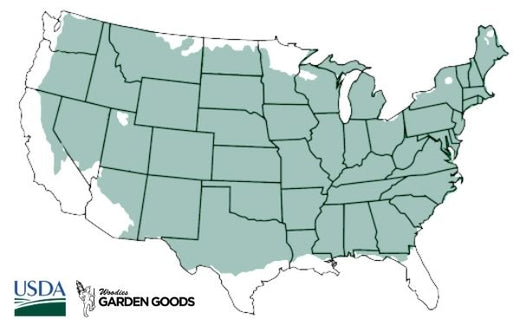
| Hardiness Zone: | 4-8 |
|---|---|
| Mature Height: | 40 to 70 feet |
| Mature Width: | 30 to 50 feet |
| Sunlight: | Full Sun |
| Soil | Adaptable to a range of soils; prefers reasonably well-drained conditions |
| Water | Moderate; water regularly during establishment |
| Bloom Time / Color | Late spring to early summer; white flowers with yellow and purple markings |
| Ornamental Features | Showy flowers, huge leaves, long seed pods, bold branching habit |
| Wildlife Value | Flowers can attract pollinators and hummingbirds |
| Resistance (deer/disease/drought/etc.) | Tough and adaptable once established; performs best in full sun |
| Landscape Uses | Shade tree, specimen tree, native landscape tree, naturalized planting, wildlife-friendly tree |
How to Care for Catalpa Tree
Be sure to read our planting instructions to ensure a healthy and happy Northern Catalpa Tree for years to come!

How should I plant Northern Catalpa Tree?
Plant Northern Catalpa Tree in full sun in a location with enough room for its mature height and canopy spread. Dig a hole about twice as wide as the root ball and no deeper than the root ball itself, then set the tree level with the surrounding soil and backfill carefully. Water deeply after planting and apply mulch around the root zone to help conserve moisture and reduce weed competition, but keep mulch a few inches away from the trunk. Because the Northern Catalpa Tree becomes a substantial shade tree, it is best planted away from crowded foundation areas and where falling pods will not be a nuisance.
-v1777060983044.png?89x84)
How often should I water Northern Catalpa Tree after planting?
Water the Northern Catalpa Tree deeply right after planting, then continue watering regularly through the first growing season while the roots establish. In warm or dry weather, deep watering once or twice a week is usually more effective than frequent shallow watering. Once established, the Northern Catalpa Tree becomes much more adaptable and typically needs less supplemental watering. During extended drought, occasional deep watering can still help keep the tree healthier and better able to support strong summer foliage.

When should I fertilize Autumn Gold Ginkgo Tree?
The Northern Catalpa Tree usually does not need heavy fertilization right after planting. In many landscapes, letting it establish first in existing soil is the best approach. If feeding is needed later, apply a balanced slow-release tree fertilizer in early spring before new growth begins. Avoid over-fertilizing, especially if the tree is already growing vigorously, since excessive soft growth is usually not necessary on a naturally fast-growing tree.

When and how should I prune Northern Catalpa Tree?
Prune the Northern Catalpa Tree in late winter or very early spring while the tree is dormant. Start by removing dead, damaged, or crossing branches, then guide young trees toward a strong structure with a well-spaced branching framework. As the tree matures, pruning should remain fairly light, focusing on structure, clearance, and overall canopy health. Because Northern Catalpa Tree naturally has a bold, somewhat irregular character, it usually looks best with selective pruning rather than heavy shaping.