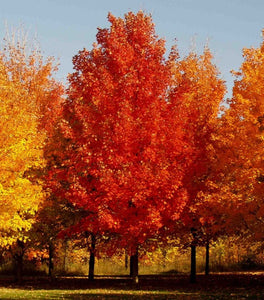
Images Depict Mature Plants
Sun Valley Maple
Acer rubrum ‘Sun Valley’
Sun Valley Maple is a great choice when you want red maple fall color without the seed mess. I like it for front yards and lawn plantings where homeowners want a cleaner, medium-sized shade tree with bright red autumn color. Give it sun, moisture, and slightly acidic soil if possible, and avoid hot, dry, compacted, high-pH sites where red maples can struggle.

20% Off Sitewide Sale!
Use Code 'ENDOFSEASON20' At Checkout
📦 Free shipping on orders over $99.
Delay shipping by leaving us a message at Checkout.
Share:


A Seedless Red Maple with Brilliant Fall Color and Clean Shade
Bright Red Fall Color on a Seedless Red Maple
Sun Valley Maple is a selected red maple cultivar valued for brilliant red fall color, glossy green summer foliage, and a clean, seedless habit. This male red maple selection provides the classic autumn color homeowners want from a red maple without the heavy samara production that can come from seed-bearing trees.
In fall, Sun Valley Maple develops rich red foliage that creates strong curb appeal in front yards, lawns, streetscapes, and large residential landscapes. Its reliable seasonal color, moderate mature size, and tidy habit make it a smart choice where homeowners want shade, structure, and standout autumn beauty in one tree.
A U.S. National Arboretum Selection with Strong Landscape Value
Sun Valley Maple was introduced by the U.S. National Arboretum and is known as a seedless red maple selection. It is often described as a hybrid between Red Sunset and Autumn Flame, combining strong red fall color with a practical male, seedless habit.
The tree develops a broadly oval to rounded canopy with attractive green foliage through the growing season. Its size makes it useful in residential landscapes where a large shade tree is desired but where the scale of some larger red maples may be too much. It is especially valuable for homeowners who want a cleaner maple near lawns, driveways, or high-visibility landscape areas.
Ideal for Front Yards, Lawns, Streets, and Driveways
Sun Valley Maple works well as a front-yard, lawn, street, or driveway accent, or as a medium-to-large shade tree in sunny landscapes. It gives homeowners the familiar look of a native red maple with improved ornamental consistency and reduced seed mess.
Plant it where it has room for a mature canopy. It should not be placed directly under overhead utility lines or squeezed into narrow foundation beds. When given space, Sun Valley Maple becomes a handsome shade tree that provides cooling summer coverage and bold fall color.
Cold Hardy, Adaptable, and Less Mess Than Seeded Maples
Sun Valley Maple is cold-hardy and adaptable across many landscapes. It grows best in full sun to part shade and prefers moist, well-drained, slightly acidic soil. It can tolerate seasonal wet soil and short dry periods once established, but consistent moisture produces the healthiest growth and best foliage quality.
Its seedless nature is one of its strongest landscape advantages. Homeowners who like red maple color but dislike the nuisance of winged seeds will appreciate Sun Valley’s cleaner habit. Like other red maples, it may struggle in very alkaline soils, where chlorosis can cause leaves to yellow.
Easy Care with Good Siting and Early Structure
Plant Sun Valley Maple in a sunny or lightly shaded location with enough room for its mature spread. Water regularly after planting until the root system establishes, and mulch around the root zone to conserve moisture and protect the trunk from mower and trimmer damage.
Young trees benefit from structural pruning to develop strong branch spacing and a balanced canopy. Remove crossing, damaged, or poorly attached branches while the tree is young. With good siting, moisture, and early care, Sun Valley Maple becomes a dependable long-term shade and fall color tree.
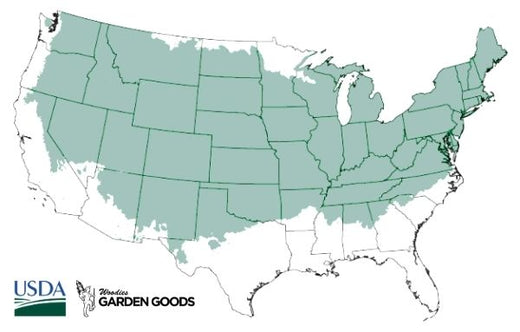
| Hardiness Zone: | 4-7 |
|---|---|
| Mature Height: | 20 to 30 Feet |
| Mature Width: | 15 to 25 Feet |
| Sunlight: | Full sun to part shade; best fall color in full sun |
| Soil Condition | Moist, slightly acidic, well-drained soil preferred; tolerates seasonal wet soil |
| Water Requirements: | Water regularly after planting; prefers moderate moisture; tolerates short dry periods once established |
| Bloom Time / Color | Early spring; small red flowers |
| Ornamental Features | Brilliant red fall color, glossy foliage, seedless habit, medium shade-tree form, broadly oval canopy |
| Wildlife Value | Provides shade, canopy habitat, and seasonal cover for birds and wildlife |
| Resistance (deer/disease/drought/etc.) | Cold hardy; adaptable; tolerates urban conditions; may be sensitive to alkaline soil and prolonged drought |
| Landscape Uses: | Shade tree, lawn tree, front yard tree, street tree, driveway tree, park tree, residential landscape tree, fall color focal point |
How to Care for Sun Valley Maple
Be sure to read our planting instructions to ensure a healthy and happy Sun Valley Maple Tree for years to come!

How should I plant Sun Valley Maple Tree?
Plant Sun Valley Maple Tree in full sun to part shade with moist, well-drained soil. Choose a location with enough room for the tree to mature into a shade tree without crowding buildings, sidewalks, driveways, overhead wires, or narrow planting beds. Dig a hole about twice as wide as the root ball and just as deep. Set the root flare slightly above the surrounding soil line, backfill with native soil, and water thoroughly. Apply mulch over the root zone, keeping mulch several inches away from the trunk.

How often should I water Sun Valley Maple Tree after planting?
Water Sun Valley Maple deeply after planting, then keep the root zone evenly moist while the tree establishes. During the first growing season, water when the top few inches of soil begin to dry, especially during heat, wind, or drought. Established Sun Valley Maple trees prefer moderate moisture. They can tolerate short dry periods, but deep watering during extended drought helps protect foliage quality, fall color, and overall tree health.

When should I fertilize Sun Valley Maple Tree?
Fertilize Sun Valley Maple in early spring only if growth is weak or soil fertility is low. A balanced slow-release tree fertilizer or compost topdressing can support healthy growth in poor soils. Avoid heavy fertilizing, especially with high-nitrogen fertilizer. Too much fertilizer can encourage excessive soft growth. If leaves appear yellow with green veins, especially in alkaline soil, test the soil before treating for possible chlorosis.

When and how should I prune Sun Valley Maple Tree?
Prune Sun Valley Maple when the tree is young to develop strong branch spacing and a balanced canopy. Remove dead, damaged, crossing, or poorly attached branches. Major pruning is best done while the tree is dormant or during an appropriate pruning window for maples. Avoid removing too much canopy at one time. Good early structure helps the tree mature into a stronger, more attractive shade tree.