Images Depict Mature Plants
Orange Marble Heliopsis
Heliopsis helianthoides 'Orange Marble'
Orange Marble earns its space before it ever produces a flower. The cream, green and reddish marbling gives you months of foliage interest, then those dark buds open into warm orange blooms that look especially good with purple and blue perennials. Give it full sun, average soil and enough room for air to move around the foliage. Do not overfeed it—the leaner approach will keep the plant tighter, strengthen the stems and preserve the colorful pattern that makes this Heliopsis different.

20% Off Sitewide Sale!
Use Code 'ENDOFSEASON20' At Checkout
📦 Free shipping on orders over $99.
Delay shipping by leaving us a message at Checkout.
Share:



Marbled Foliage and Warm Orange Flowers on One Compact Perennial
Colorful Marbled Leaves Start the Display Before Summer
Orange Marble Heliopsis offers something most false sunflowers cannot: ornamental foliage that deserves attention before the first flower opens. Its green leaves are irregularly marbled with creamy yellow, pale gold, and red-purple tones, creating a lively pattern that changes from one leaf to the next.
Young foliage may carry stronger reddish or pink-purple markings along the margins and veins. As the leaves mature, the pattern develops into a varied mixture of green, yellow, and burgundy-red accents rather than a simple two-color edge.
This marbling makes Orange Marble useful even before its midsummer bloom period begins. The foliage brightens sunny borders, adds contrast beside solid-green plants, and provides a transition between silver, burgundy, gold, and orange companion plants.
Because the variegation is naturally irregular, individual leaves and stems will not look identical. That variation is part of the cultivar’s ornamental character and gives the plant a more layered appearance than a uniformly striped or edged perennial.
Chocolate-Colored Buds Open into Warm Orange Flowers
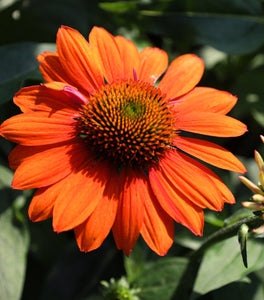
Dark chocolate-brown flower buds rise above the foliage, providing a strong contrast before opening. The buds gradually reveal warm orange, daisy-like flowers with brighter yellow-orange coloring toward the tips of the petals.
Each flower reaches approximately 2 to 2½ inches across. The rounded petals surround a deeper orange-brown center, creating a rich summer display that coordinates with both hot-color gardens and softer naturalistic plantings.
Orange Marble generally begins flowering in July and can continue into late September. Removing faded flowers helps maintain a clean appearance and encourages the plant to continue developing buds rather than directing all its energy into seed.
The flowers are not fragrant, but their unusual coloring and dark buds give the plant plenty of visual interest. The long stems may also be cut for warm-colored summer arrangements with purple coneflowers, blue salvia, garden phlox, and ornamental grasses.
A Compact Rounded Habit for Borders and Patio Containers
Orange Marble Heliopsis generally grows approximately 24 to 32 inches tall and 18 to 24 inches wide. It develops a compact, freely branching, and rounded habit that is easier to place than traditional false sunflowers, reaching four feet or more.
Its medium height works well through the front or middle of a sunny perennial border. The plant is tall enough to rise above low groundcovers but compact enough to avoid hiding coneflowers, salvias, and other medium-sized companions.
Use Orange Marble as a single colorful accent or repeat several plants through a broad bed. Its patterned foliage creates continuity before flowering, while the orange blooms provide a stronger seasonal display during midsummer and late summer.
Orange Marble can also grow in a large patio container with dependable drainage. Its combination of foliage and flowers makes it especially useful in containers, as the plant remains ornamental beyond its main bloom period.
Long-Season Flowers Welcome Bees and Butterflies
Orange Marble’s warm orange flower heads attract bees, butterflies, and other beneficial pollinating insects. The open, daisy-like blooms provide convenient landing areas and accessible pollen during the height of summer.
Its flowering period continues into early fall, helping to extend the season of color and pollinator activity after many spring and early-summer perennials have finished blooming.
Plant Orange Marble with coneflowers, agastache, perennial salvia, asters, and native ornamental grasses to create a longer sequence of nectar and pollen. Purple and blue companions provide an especially effective contrast with the orange flowers and cream-yellow foliage markings.
Orange Marble is a cultivar of a North American native species, but it originated as a selected nursery seedling in Europe. It is best described as a cultivar of a native species rather than a straight native wildflower or local ecotype.
Full Sun and Well-Drained Soil Maintain the Best Color
Plant Orange Marble Heliopsis in full sun for its densest habit, strongest stems, and heaviest flowering. Good sunlight also helps develop the strongest contrast among the green, yellow, and red-purple foliage tones.
Choose average, well-drained soil. Orange Marble tolerates occasional drought after establishment, but regular deep watering during extended summer dryness will help maintain its foliage and flower production.
Avoid heavy fertilizer and constantly saturated soil. Rich, overly wet conditions can encourage soft growth and reduce the compact habit. A light spring application of compost is usually sufficient in average garden soil.
Orange Marble has been introduced for strong performance in heat, drought, and humidity. Proper spacing and watering near the soil will further support healthy foliage. Deadhead during summer, then cut the old stems back after frost or leave them standing until late winter before new growth begins.
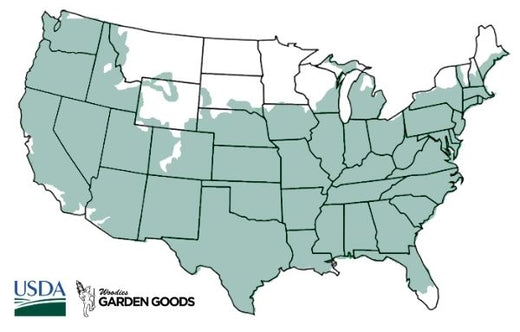
| Hardiness Zone: | 5-9 |
|---|---|
| Mature Height: | 12 to 32 Inches |
| Mature Width: | 18 to 24 Inches |
| Sunlight: | Full sun is best; light partial sun may be tolerated but can reduce flowering and compactness |
| Water Requirements: | Average; water consistently during establishment and during prolonged summer drought |
| Soil | Average-fertility, well-drained clay, loam or sandy soil |
| Bloom Time / Color | July through late September; warm orange flowers with brighter yellow-orange tips and dark orange-brown centers |
| Ornamental Features | Multicolored marbled foliage; chocolate-brown flower buds; warm orange blooms; yellow-orange petal tips; purple-toned stems; compact rounded habit |
| Wildlife Value | Flowers attract bees, butterflies and other beneficial pollinating insects |
| Resistance (deer/disease/drought/etc.) | Introduced for tolerance of heat, humidity, drought and disease; the species is generally considered resistant to deer and rabbits, although browsing can occur |
| Landscape Uses | Perennial borders; pollinator gardens; cottage gardens; mass plantings; cutting gardens; native-inspired landscapes; focal points; large patio containers |
How to Care for Orange Marble Heliopsis
aBe sure to read our planting instructions to ensure a healthy and happy Orange Marble Heliopsis for years to come!
-v1785783785871.png?92x91)
How should I plant Orange Marble Heliopsis?
Choose a location with full sun, good drainage and enough room for the plant to reach approximately two feet wide. Dig a planting hole about twice as wide as the nursery container but no deeper than the root ball. Position the crown level with the surrounding soil. Backfill with loosened native soil, press gently around the roots and water thoroughly. Space multiple plants approximately 18 to 24 inches apart. Apply a light layer of mulch to moderate soil moisture, keeping it slightly away from the crown and lower stems.

How often should I water Orange Marble Heliopsis after planting?
Water deeply immediately after planting and maintain moderate moisture during the first growing season. Check the soil regularly and water when the upper one or two inches begin to dry. Once established, Orange Marble tolerates occasional dry conditions. Provide a deep soaking during prolonged drought, but avoid frequent shallow watering or soil that remains continuously saturated.
-v1785783786868.png?90x89)
When should I fertilize Orange Marble Heliopsis?
Apply a thin layer of compost around the plant in early spring as new shoots begin emerging. Average garden soil usually provides enough nutrition for healthy growth and flowering. If growth is weak, use a light application of balanced slow-release fertilizer according to its label. Avoid excessive nitrogen, which can encourage soft stems, reduce foliage contrast and produce a looser plant.

When and how should I prune or cut back Orange Marble Heliopsis?
Deadhead faded flower heads during summer by cutting each stem back to a healthy leaf or developing side branch. This keeps the plant tidy and encourages continued flower production. After frost browns the stems, cut the plant back to approximately three or four inches above the soil. The stems can also remain through winter for added structure and be removed in late winter before new growth emerges.