

Images Depicted Range in Maturity & Container Size
Pots & Decorations Not Included Unless Otherwise Stated
Arbequina Olive Tree
Olea europaea
Arbequina Olive Tree is one of those plants that gives you more than one reason to grow it. The silvery foliage brings a beautiful Mediterranean look to a patio or bright room, the container-friendly habit makes it practical for many homeowners, and the edible potential gives it an extra layer of appeal that standard foliage plants just do not have. If you have the sun to support it, this is a smart choice for plant lovers who want a potted olive tree with real style, long-term character, and the possibility of homegrown olives.

15% OFF SITEWIDE SALE
Use Code 'PRIMETIME15' At Checkout
📦 Free shipping on orders over $99.
Share:Recommended Add-Ons


Arbequina Olive Tree for Sunny Patios and Bright Indoor Spaces
Silvery Evergreen Foliage With Mediterranean Character
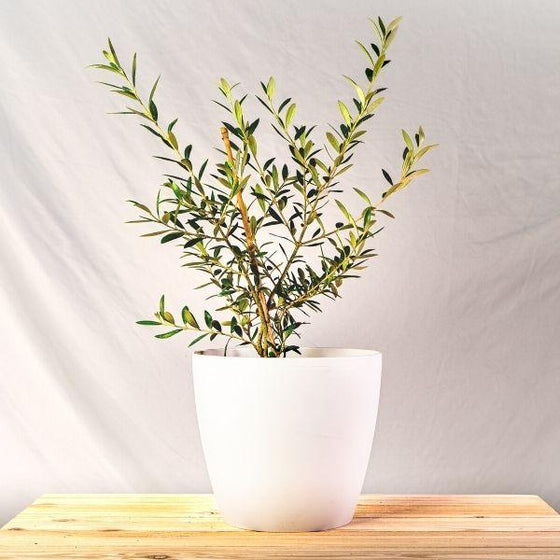
Arbequina Olive Tree brings a look that feels timeless, relaxed, and architectural all at once. The narrow gray-green leaves have a soft silvery cast that stands out from typical glossy houseplants and adds a lighter, more refined texture to patios, porches, and bright indoor rooms. Even when it is not fruiting, this tree has strong ornamental appeal because its foliage and naturally handsome branching create that classic Mediterranean feel so many plant lovers seek. It works beautifully in clean-lined containers, rustic clay pots, and layered outdoor arrangements where texture matters just as much as color.
That visual style is part of what makes Arbequina so attractive for homeowners who want more than a standard leafy green plant. It feels fresh and airy rather than dense or heavy, and it brings an understated elegance that suits modern, coastal, farmhouse, and European-inspired spaces alike. As the tree matures, the trunk and branches can develop even more character, adding to its long-term design value. For anyone looking for an edible tree that also functions as stylish evergreen décor, the Arbequina Olive Tree offers beauty well beyond the harvest season.
A Container-Friendly Olive Tree for Patios, Courtyards, and Winter Rooms
Arbequina is especially appealing because it is well-suited to container growing, making it a strong choice for patios, balconies, courtyards, and sunny entry areas. In warmer climates it can live outdoors year-round, but in colder regions it is commonly grown in pots and moved indoors or into protected spaces before hard freezes arrive. That flexibility gives homeowners in many regions a chance to enjoy an olive tree even when it is not reliably hardy in the ground. It is a smart option for gardeners who want edible interest, evergreen structure, and a patio tree with real styling value.
Indoors, this plant is best treated as a bright-light seasonal container tree rather than a low-light houseplant. It needs the sunniest possible placement, ideally with strong direct light from a south- or west-facing exposure, and many growers find it performs best when it can spend warm months outside and winter indoors only when necessary. That makes Arbequina a wonderful fit for plant lovers who have a sunny patio in season and a bright winter room, greenhouse, or sunroom when temperatures drop. In the right setup, it brings year-round foliage appeal with the added possibility of homegrown olives.
High-Reward Growth for Sunny, Low-Water Lifestyles
Arbequina Olive Tree is at its best when the care routine matches its Mediterranean roots. Give it full sun, excellent drainage, and a thoughtful watering rhythm, and it becomes a relatively easy tree to maintain in a pot. Once established, olives are notably drought tolerant, which makes this a strong pick for homeowners who prefer plants that do not need constant attention. The biggest key is light: this is not a low-light foliage plant, and strong sun is essential for healthy growth, better structure, and the best chance at flowering and fruiting.
Watering should be deep but not overly frequent, allowing the potting mix to dry somewhat between waterings instead of staying constantly wet. A fast-draining soil mix and a container with drainage are critical because olive roots dislike soggy conditions. In colder areas, fruiting can also depend on light quality and seasonal temperature patterns, so it is wise to view olives grown mostly indoors as foliage-forward container trees first, with fruit as an added bonus when conditions line up well. For sunny spaces and plant lovers who appreciate a more restrained watering routine, Arbequina can be a very satisfying long-term container tree.
An Edible, Giftable Tree With Year-Round Appeal
Arbequina Olive Tree makes an especially memorable gift because it feels both practical and aspirational. It is evergreen, attractive in a pot, and tied to the idea of slow meals, sunny terraces, and homegrown harvests. That makes it a strong choice for housewarmings, birthdays, holiday gifting, or anyone building a patio garden with more personality. It also appeals to homeowners who want to blur the line between ornamental and edible planting, since this tree brings attractive foliage and the potential for fruit on a naturally compact, container-friendly plant.
From a household standpoint, the Arbequina Olive Tree also has an advantage for many families because olive trees are generally regarded as pet-friendly. The main practical consideration is not pet toxicity, but placement for light and seasonal movement. This plant needs sun, air circulation, and a container that supports steady growth without trapping excess moisture. For plant lovers who want Mediterranean style, edible potential, and a patio tree that can winter indoors in bright conditions, Arbequina is an easy plant to feel excited about.

| Hardiness Zone: | 7-10 Outdoors; 4-6 indoors as a patio tree |
|---|---|
| Mature Height: | 6 to 8 Feet, Larger Outdoors |
| Mature Width: | 4 to 6 Feet, Larger Outdoors |
| Sunlight: | Full sun; strongest performance comes with at least 6 or more hours of strong light |
| Water | Water deeply, then allow the soil to dry somewhat between waterings; avoid constantly wet soil |
| Humidity | Average humidity is usually fine; prefers good air circulation over overly humid, stagnant conditions |
| Foliage Color / Texture | Narrow gray-green to silvery-green leaves with a fine, refined texture |
| Pet Safety | Generally regarded as pet safe |
| Best Uses Indoors | Bright winter room, sunroom, greenhouse, seasonal indoor overwintering, sunny decorative container |
| Notes | Best treated as a full-sun container tree; fruiting is more likely with strong light, mature growth, and suitable seasonal conditions |
How to Care for Arbequina Olive Tree
Before you buy an Arbequina Olive Tree, make sure to read about the recommended care instructions to keep this plant healthy and thriving.

How should I pot Arbequina Olive Tree?
Pot Arbequina Olive Tree in a container with excellent drainage and use a fast-draining soil mix that does not stay heavy or soggy for long. Choose a pot only a few inches wider than the current root ball so the tree can establish steadily without sitting in too much wet soil, and use a sturdy container that can support the top growth outdoors in the wind. After potting, set the tree at the same depth it was growing before and water thoroughly so the soil settles around the roots. Place the container in the sunniest location available, because light is just as important as potting technique for keeping an olive tree healthy and attractive in a container.
-v1776195624412.png?89x84)
How often should I water Arbequina Olive Tree?
Water Arbequina Olive Tree deeply, then allow the potting mix to dry somewhat before watering again. The exact timing depends on heat, sun exposure, wind, and container size, but this tree generally performs better with a soak-and-dry rhythm than with constantly damp soil. During hot outdoor weather, containers may dry faster and need more frequent checks, while trees overwintering indoors usually need less water. The best approach is to monitor the soil directly and avoid watering on a rigid schedule that keeps the roots too wet.
-v1776195651190.png?90x89)
When should I fertilize Arbequina Olive Tree?
Fertilize Arbequina Olive Tree during active growth in spring and summer, when the tree is putting on new foliage and establishing in its container. A balanced fertilizer formulated for container plants or fruiting plants can support healthy growth, but moderate feeding is usually better than heavy, frequent applications. Ease back on fertilizer in fall and winter, especially when the tree is indoors and growing more slowly. Too much fertilizer can push soft growth or create salt buildup in containers, so a steady, moderate approach usually gives the best long-term results.

When and how should I prune Arbequina Olive Tree?
Prune Arbequina Olive Tree in late winter to early spring or after harvest where fruiting is reliable, focusing on light shaping, removing dead wood, and keeping the canopy open. In containers, pruning is also useful for maintaining a manageable size and encouraging a balanced framework that suits patio or indoor winter spaces. Use clean, sharp pruners and remove crossing, crowded, or weak shoots to improve structure and airflow. Avoid excessive pruning all at once, because the goal is usually to maintain the tree’s handsome shape and manageable size rather than force dramatic regrowth.