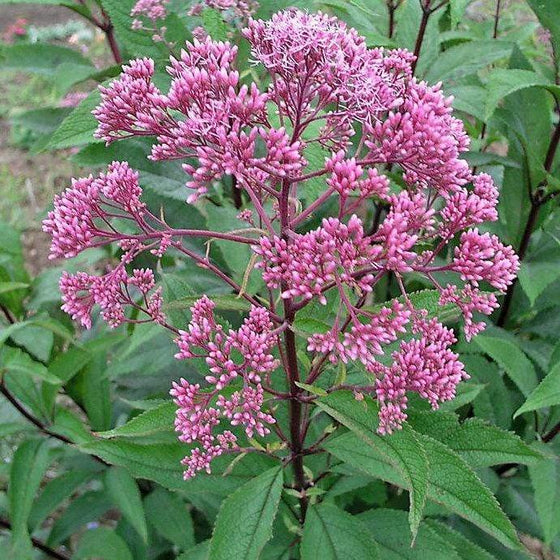


Images Depict Mature Plants
Gateway Joe Pye Weed
Eutrochium maculatum ‘Gateway’
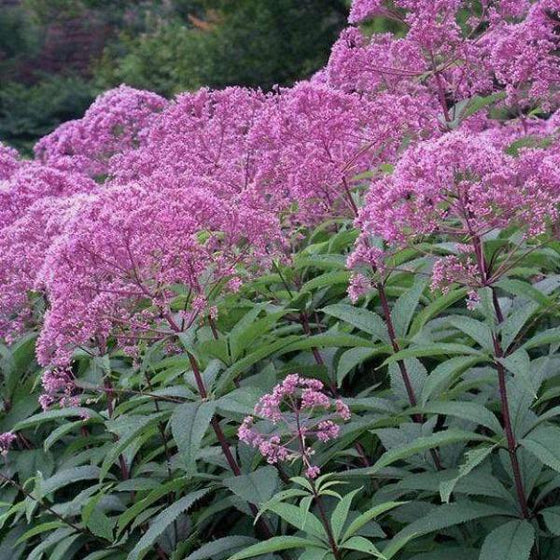
Gateway Joe Pye Weed is a great choice when you want the pollinator power and height of Joe Pye Weed in a more garden-ready form. The mauve-pink flower clusters bring butterflies in late summer, and the purple-toned stems give the plant extra character before it even blooms. Give it sun, moisture, and room to grow, and it becomes a standout anchor for rain gardens, native borders, and large pollinator beds.

15% OFF SITEWIDE, USE CODE 'FALLPLANT15'
📦 Free shipping on orders over $99.
Delay shipping by leaving us a message at Checkout.
Share:Recommended Add-Ons


A Garden-Friendly Joe Pye Weed with Mauve-Pink Blooms and Pollinator Power
Tall Mauve-Pink Blooms with Strong Native-Style Presence
Gateway Joe Pye Weed is a bold perennial grown for its upright purple-toned stems, large mauve-pink flower clusters, and outstanding value in pollinator-friendly gardens. Blooming from midsummer into early fall, this cultivar brings height, color, and movement to sunny borders, rain gardens, moist meadows, and native-style plantings.
Compared with many straight Joe Pye Weed forms, Gateway offers a more garden-friendly habit while still delivering the dramatic scale gardeners expect from this group. It is tall enough to anchor the back of a perennial border, yet tidy enough to use in designed landscapes where structure and reliable late-season bloom matter.
Late-Summer Flower Clusters for Butterflies, Bees, and Garden Color
Gateway produces broad domes of mauve-pink to rosy-purple flowers that rise above whorled green foliage. The flower clusters have a soft, airy look from a distance but are packed with nectar value up close, making them especially attractive to butterflies, bees, and other beneficial insects.
The bloom timing is one of Gateway’s strongest advantages. It flowers when many early-summer perennials are fading, helping bridge the garden into fall. Pair it with asters, goldenrod, coneflowers, Black Eyed Susans, bee balm, ornamental grasses, phlox, and sedges for a layered late-season planting with strong wildlife value.
Ideal for Rain Gardens, Back Borders, and Moist Meadow Plantings
Gateway Joe Pye Weed performs beautifully in moist, fertile garden soil and is especially useful in rain gardens, pond edges, streamside plantings, damp meadows, naturalized borders, and the back of sunny perennial beds. It can tolerate average garden conditions when moisture is consistent, but it looks best where the soil does not dry out for long periods.
Use Gateway as a vertical anchor behind shorter perennials or repeat it through a large planting for rhythm. Its height makes it excellent for screening, soft backdrops, and large pollinator beds where bold structure is needed. In smaller gardens, place it carefully so its mature size feels intentional rather than crowded.
Deer Resistant, Pollinator Friendly, and Best with Consistent Moisture
Gateway Joe Pye Weed is generally considered deer resistant, making it useful in native-style gardens and larger perennial beds where browsing pressure is a concern. Deer resistance can vary by location and season, but mature Joe Pye Weed is usually a lower-risk choice compared with many softer garden perennials.
This plant is especially valuable for pollinators. Butterflies are strongly attracted to the late-season flowers, and bees and beneficial insects also visit the blooms. Gateway is not a true dry-site perennial. For best performance, provide consistent moisture, especially in full sun and during hot weather.
Easy Care with Sun, Moist Soil, and Seasonal Cutback
Plant Gateway Joe Pye Weed in full sun to part shade with moist, fertile, well-drained to wet soil. Full sun encourages the strongest flowering and upright habit, while light afternoon shade can be helpful in hotter climates. Good airflow and proper spacing help keep the plant sturdy and attractive.
Water regularly after planting and during dry spells. Cut old stems back to the ground in late winter or early spring before new growth begins. If a shorter, bushier plant is desired, stems can be cut back by about one-third to one-half in early summer before flower buds form.
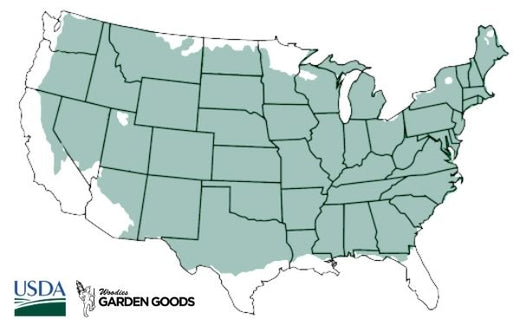
| Hardiness Zone: | 4-8 |
|---|---|
| Mature Height: | 4 to 6 Feet |
| Mature Width: | 2 to 4 Feet |
| Sunlight: | Full sun to part shade; best flowering in full sun with consistent moisture |
| Soil | Moist, fertile, humusy, well-drained to wet soil; tolerates clay and damp sites |
| Water | Water regularly after planting; prefers consistent moisture and is not ideal for dry sites |
| Bloom Time / Color | Midsummer to early fall; mauve-pink to rosy-purple flower clusters |
| Ornamental Features | Mauve-pink flower clusters, purple stems, tall upright habit, late-season bloom, native meadow texture |
| Wildlife Value | Attracts butterflies, bees, and beneficial pollinators |
| Resistance | Generally deer resistant; tolerant of moist soil and clay; not ideal for drought-prone beds |
| Landscape Uses | Rain gardens, butterfly gardens, pollinator gardens, native borders, back borders, moist meadows, pond edges, streamside plantings, naturalized areas |
How to Care for Gateway Joe Pye Weed
Be sure to read our planting instructions to ensure a healthy and happy Gateway Joe Pye Weed plant for years to come!
-v1781194946614.png?92x91)
How should I plant Gateway Joe Pye Weed?
Plant Gateway Joe Pye Weed in full sun to part shade with moist, fertile soil. Choose a location with enough room for the plant to mature, since Gateway is a tall perennial best used in the middle or back of the border. Rain gardens, damp meadows, pond edges, streamside areas, and moist perennial beds are especially good locations. Dig a hole about twice as wide as the root ball and just as deep. Set the crown level with the surrounding soil, backfill with soil improved with compost if needed, and water thoroughly. Space plants about 24–36 inches apart, depending on how full you want the planting to become.
-v1781194968584.png?89x84)
How often should I water Gateway Joe Pye Weed after planting?
Water Gateway Joe Pye Weed deeply after planting, then keep the soil consistently moist while roots establish. During the first growing season, check the soil regularly and water when the top few inches begin to dry, especially during hot weather. Established plants perform best with steady moisture. Gateway can handle damp soil and occasional wet conditions, but it is not the best choice for hot, dry, drought-prone beds. Mulch can help keep the soil cool and evenly moist.
-v1781194987661.png?90x89)
When should I fertilize Gateway Joe Pye Weed?
Fertilize Gateway Joe Pye Weed in spring with compost or a balanced slow-release fertilizer if soil fertility is low. This plant prefers moist, fertile soil, so compost is often the best way to feed gently while improving soil structure and moisture retention. Avoid heavy high-nitrogen feeding, which can encourage overly soft growth. The goal is sturdy stems, healthy foliage, and strong flowering in a moist, well-prepared planting area.

When and how should I prune Gateway Joe Pye Weed?
Prune Gateway Joe Pye Weed in late winter or early spring by cutting old stems back close to the ground before new growth appears. This clears away last season’s growth and gives the plant a clean start. If you want a shorter, bushier plant, cut stems back by about one-third to one-half in early summer before flower buds develop. This can reduce height and encourage more branching. Leaving some seed heads standing into winter can also add texture and support wildlife.