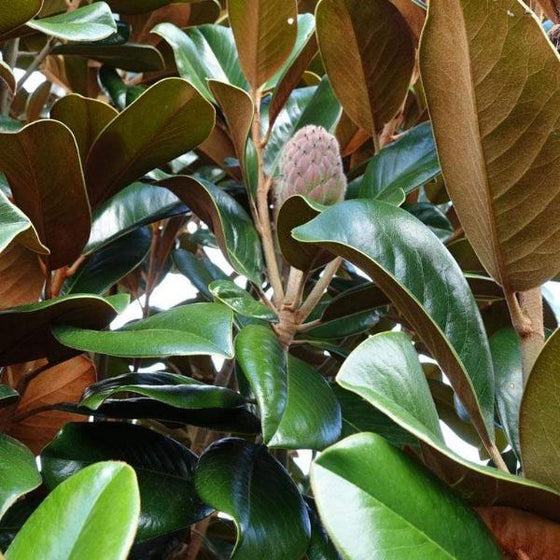


Images Depict Mature Plants
Teddy Bear Magnolia
Magnolia grandiflora 'Southern Charm' Plant Patent #13049
Teddy Bear Magnolia is one of those trees I really like for homeowners who want Southern Magnolia beauty without taking on Southern Magnolia size. You still get the glossy green leaves, the velvety brown undersides, the fragrant white blooms, and that rich evergreen presence, but in a tree that fits more comfortably into smaller yards, tighter screens, and patio-adjacent planting. For anyone looking for a compact evergreen magnolia that feels polished, useful, and just plain beautiful all year long, this is a very easy tree to recommend.

15% OFF SITEWIDE SALE
Use Code 'PRIMETIME15' At Checkout
📦 Free shipping on orders over $99.
Delay shipping by leaving us a message at Checkout.
Share:


Compact Southern Magnolia Beauty with Evergreen Foliage and Fragrant White Blooms
A Compact Southern Magnolia with Big Evergreen Presence
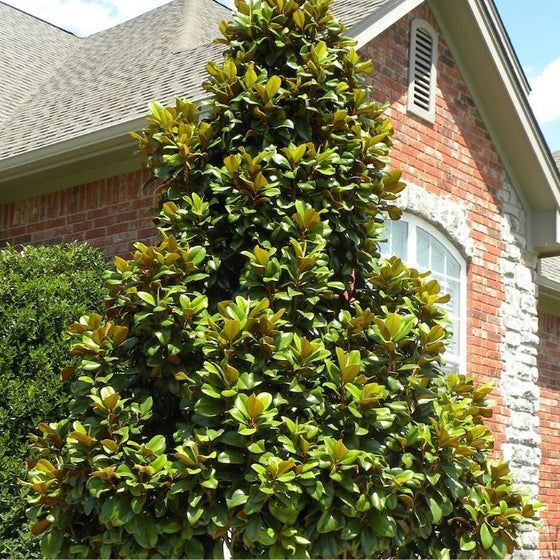
Teddy Bear Magnolia is an excellent choice for homeowners who want the rich evergreen look and fragrant white flowers of a Southern Magnolia in a more compact, landscape-friendly form. This tree keeps the glossy dark green leaves, warm brown fuzzy undersides, and classic magnolia character people love, but it stays tighter and more upright than many larger Southern Magnolia selections. That makes it especially appealing for smaller front yards, side-yard screens, patios, and foundation-adjacent planting where space is at a premium.
Its evergreen habit is one of its strongest advantages. Even when it is not flowering, Teddy Bear Magnolia keeps the landscape looking full, polished, and structured through every season. The dense branching and lustrous foliage bring weight and elegance to the garden, helping beds and borders feel established all year rather than fading into the background once summer flowers are gone.
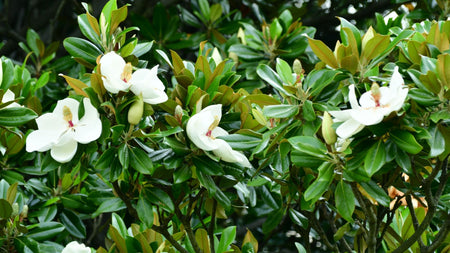
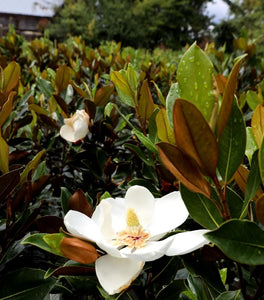
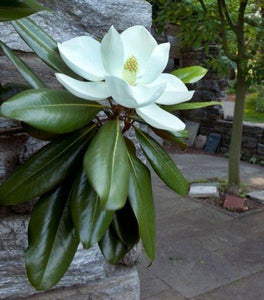
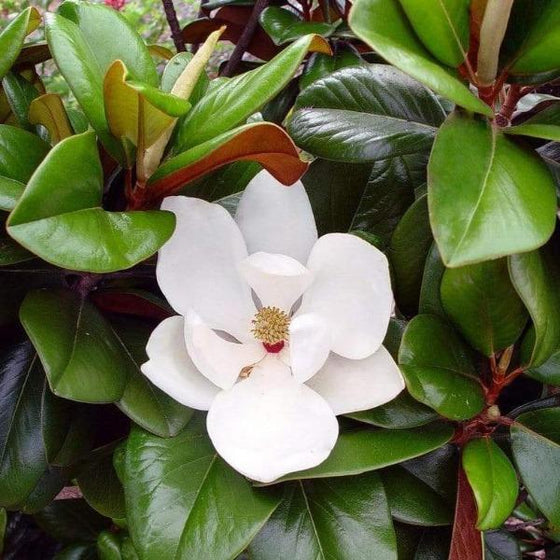
The foliage itself is highly ornamental. The leaves are broad, dark green, and glossy on top, with velvety reddish-brown undersides that add extra depth and movement when the branches shift in the wind. That two-toned effect gives the tree visual richness even without flowers, which is one reason it works so well as both a specimen and a screen.
For homeowners who want a compact evergreen flowering tree with true Southern Magnolia character, Teddy Bear Magnolia offers a very practical balance of beauty, structure, and manageability.
Fragrant White Blooms Bring Classic Magnolia Charm Through the Warm Season
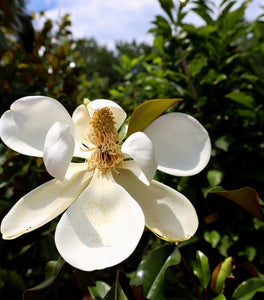
Teddy Bear Magnolia produces large white flowers that bring the unmistakable charm of Southern Magnolia bloom to a more compact tree. The flowers are fragrant, elegant, and substantial enough to make a real impression, especially when planted where they can be enjoyed up close near patios, porches, windows, or entryways. They deliver the classic magnolia look without requiring the towering scale of an older, full-size magnolia.
One of the most appealing things about Teddy Bear Magnolia is its bloom season. Rather than offering only a brief flower moment, it tends to bloom from late spring into summer and can continue with intermittent flowers beyond the first flush. That longer bloom window gives homeowners more ornamental value and makes the tree feel active and rewarding across a broader stretch of the growing season.
The flowers contrast beautifully against the evergreen foliage, which makes them stand out even more clearly. The creamy white petals feel bright and clean against the deep green canopy, while the velvety brown leaf undersides add another layer of richness behind the blooms. That combination gives the tree a lush, finished look that works beautifully in ornamental landscapes.
For anyone wanting a fragrant white flowering tree that keeps earning its space after the bloom season, Teddy Bear Magnolia is a very satisfying choice. It offers magnolia elegance with stronger year-round usefulness than many deciduous flowering trees.
A Strong Fit for Smaller Yards, Screens, and Decorative Evergreen Planting
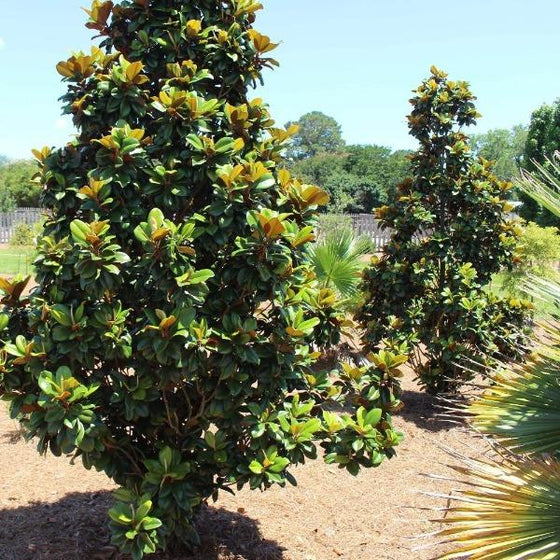
Teddy Bear Magnolia works especially well in landscapes where a homeowner wants an evergreen tree that can do more than one job. It is a strong specimen tree for smaller lawns and entry gardens, but it also performs beautifully in rows as a soft, ornamental privacy screen. Because it stays relatively narrow and upright, it is easier to use along side yards, property edges, and tighter foundation zones than many larger Southern Magnolia types.
Its mature size is one of its biggest advantages. Teddy Bear Magnolia typically grows into a compact, small tree rather than a towering evergreen canopy. That makes it far easier to place in residential design, where every plant has to justify its footprint. Homeowners can enjoy a true magnolia presence without stepping immediately into the scale challenges that come with many standard Southern Magnolias.
This is also a very effective tree for layered landscape design. It can anchor a mixed border, provide evergreen contrast behind flowering shrubs and perennials, or soften the corner of a house with glossy foliage and a naturally tidy pyramidal silhouette. In larger containers while young, it can even serve as a decorative evergreen accent before transitioning into the ground later on.
For homeowners looking for a compact magnolia that screens, anchors, and flowers beautifully, Teddy Bear Magnolia is a smart long-term choice. It offers many functions without sacrificing the ornamental quality for which magnolias are known.
Easy-Care Evergreen Growth with the Right Site and Spacing
Teddy Bear Magnolia performs best in full sun to part shade and in moist, well-drained soil. It appreciates steady moisture during establishment and benefits from deep watering during prolonged dry periods once rooted in. Like most magnolias, it prefers a site that does not stay waterlogged and that does not swing through repeated drought. Good drainage and consistent moisture are the foundation of long-term success.
One of the practical advantages of this cultivar is that it usually needs very little pruning. Its natural habit is dense, upright, and attractive, so most maintenance is limited to removing damaged branches or making light shaping cuts after flowering if needed. Heavy pruning is rarely necessary and usually takes away from the clean, compact form that makes the plant so useful.
Its smaller size also makes long-term care easier. Homeowners can place it in spots where a standard Southern Magnolia might eventually outgrow the design, and that makes it a more approachable choice for everyday landscapes. It is especially helpful for people who want the evergreen richness and bloom power of magnolia without taking on a giant tree.
For gardeners who want an evergreen flowering tree with a manageable footprint and a straightforward care routine, Teddy Bear Magnolia is a rewarding option. Give it sun, moisture, drainage, and enough room to mature, and it will provide years of fragrance, foliage, and evergreen structure.
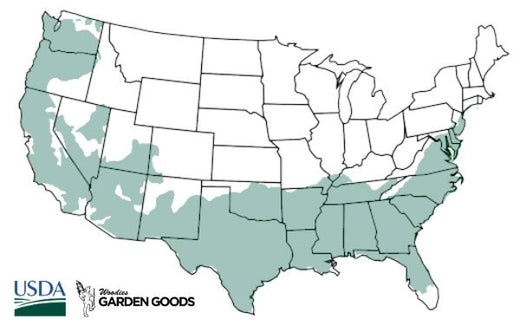
| Hardiness Zone: | 7-9 |
|---|---|
| Mature Height: | 15 to 20 Feet |
| Mature Width: | 8 to 12 Feet |
| Sunlight: | Full sun to part shade |
| Bloom Time / Color | White, very fragrant |
| Soil Condition: | Moist, well-drained, slightly acidic to neutral soil |
| Water Requirements: | Medium; regular water during establishment, then deep water during prolonged dry periods |
| Wildlife Value | Evergreen cover for birds and seasonal pollinator value |
| Resistance (deer/disease/drought/etc.) | Evergreen, heat tolerant, somewhat drought tolerant once established, not suited to waterlogged soil |
| Landscape Uses | Specimen tree, privacy screen, evergreen accent, foundation planting, patio-area focal point, narrow border planting |
How to Care for Teddy Bear Magnolia
Before you purchase a Teddy Bear Southern Magnolia, be sure to read the recommended care instructions to keep your plant happy and healthy.

How should I plant Teddy Bear Magnolia?
Plant Teddy Bear Magnolia in full sun to part shade in moist, well-drained soil. Dig a hole about twice as wide as the root ball and no deeper than the root ball itself, then set the tree so the root flare sits level with or slightly above the surrounding soil. Backfill with native soil, water deeply, and apply mulch around the base to help conserve moisture and regulate soil temperature. Choose a location with enough room for the mature height and spread, especially if you are using it as a screen or as a specimen near a patio, walkway, or entry garden.
-v1773954457659.png?89x84)
How often should I water Teddy Bear Magnolia after planting?
Water Teddy Bear Magnolia deeply right after planting, then keep the soil evenly moist during the first growing season. It performs best when the roots do not dry out for long stretches while the tree is establishing. Once established, continue watering during prolonged hot or dry weather. Deep watering is better than frequent shallow watering, and steady moisture helps support healthier foliage, stronger flowering, and better overall performance.
-v1773954484462.png?90x89)
When should I fertilize Teddy Bear Magnolia?
Fertilize Teddy Bear Magnolia in early spring if the soil is lean or growth has been weak. A balanced slow-release fertilizer or a light topdressing of compost is usually enough to support healthy evergreen growth and flower production. Avoid overfertilizing, especially with overly rich feeding programs, because this tree generally performs best with moderate nutrition instead of aggressive growth forcing. In many landscapes, moisture, mulch, and good soil matter more than heavy fertilizer use.

When and how should I prune Teddy Bear Magnolia?
Prune Teddy Bear Magnolia only as needed and usually after the main flowering period. That timing helps preserve future bloom while allowing you to remove damaged branches or make light shaping cuts. Keep pruning selective and minimal. The natural compact pyramidal form is one of the tree’s strongest assets, so most of the time the goal is refinement rather than major reshaping.