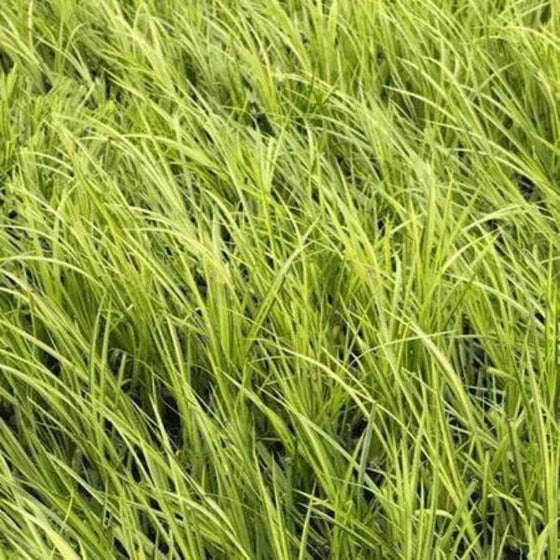
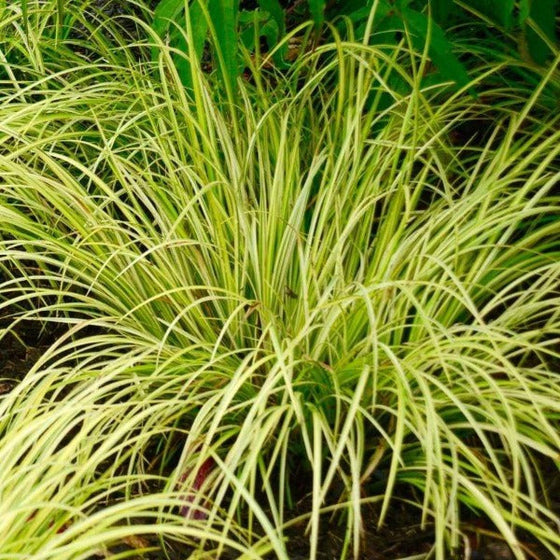


Images Depict Mature Plants
Acorus Ogon
Acorus gramineus 'Ogon'
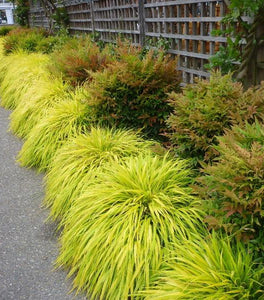
Acorus Ogon is one of my favorite problem-solving plants for damp areas because it offers bright golden foliage where many plants either struggle or go unnoticed. Golden Variegated Sweet Flag is especially useful along pond edges, in rain gardens, and in mixed containers where you need a low, glowing texture. I also like that Golden Dwarf Sweet Flag stays compact, resists deer, and brings a clean, grass-like look without behaving like an aggressive ornamental grass.

20% OFF SITEWIDE SALE
Use Code 'OCTOBER20' At Checkout
📦 Free shipping on orders over $99.
Delay shipping by leaving us a message at Checkout.
Share:


Golden Variegated Foliage for Moist Gardens and Pond Edges
Bright Golden Texture for Wet Soil and Shade.
Acorus Ogon, also known as Golden Variegated Sweet Flag and Golden Dwarf Sweet Flag, is a compact foliage perennial grown for its narrow, arching leaves striped in bright yellow and green. The plant forms a graceful tuft with a grass-like texture that adds a glowing golden glow to garden beds, containers, water features, and shaded planting pockets. Its color is especially useful in darker areas where green foliage can disappear, helping brighten the landscape without relying on flowers.
A Dwarf Sweet Flag with Clean, Compact Growth.
Golden Dwarf Sweet Flag stays low and tidy, typically forming a clump about 6 to 12 inches tall and wide. It's fine, arching foliage gives it the look of a miniature ornamental grass, though it is botanically a sweet flag rather than a true grass. The compact size makes it easy to use along path edges, between larger perennials, at the front of borders, or tucked into containers where a soft spilling texture is needed.
Excellent for Rain Gardens, Pond Edges, and Moist Borders.
Golden Variegated Sweet Flag is especially valuable in consistently moist to wet soil. Use it around ponds, streams, fountains, rain gardens, drainage swales, and low areas that stay damp. It can also be used in shallow water plantings or bog-style gardens where the crown is not buried too deeply. In ordinary garden beds, it performs best when soil moisture is steady, and the plant is not allowed to dry out for long periods.
Semi-Evergreen Color with Low-Maintenance Appeal.
Acorus Ogon is semi-evergreen in many climates and can provide useful foliage color throughout much of the year, especially in mild-winter areas. In colder regions, some winter browning may occur, but the plant refreshes with new growth in spring. Maintenance is simple: remove tired or damaged foliage in late winter or early spring and keep the soil evenly moist during dry weather. Its foliage may release a pleasant, sweet, or citrus-like fragrance when bruised.
Deer-Resistant Foliage for Problem-Solving Planting Designs.
Acorus Ogon is a smart choice for gardeners who need a deer-resistant, moisture-loving groundcover or edging plant. It slowly spreads by rhizomes to form a dense, well-behaved mat, but it is not typically considered aggressive. Use it as a golden accent with hostas, ferns, carex, iris, ligularia, heuchera, astilbe, and other moisture-loving perennials. It is also excellent in mixed containers where its bright foliage can spill softly over the edge.
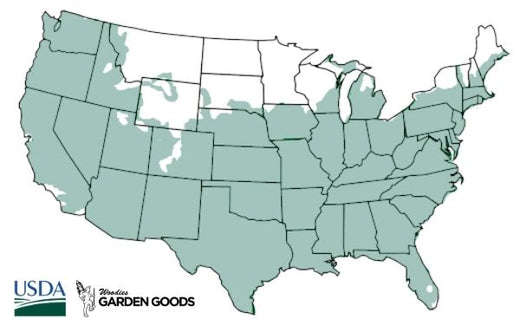
| Hardiness Zone: | 5-11 |
|---|---|
| Mature Height: | 6 to 12 Inches |
| Mature Width: | 6 to 12 Inches |
| Sunlight: | Full sun to part shade; afternoon shade preferred in hot climates |
| Soil | Moist to wet, average to humusy, well-drained to boggy soil |
| Water | Moderate to high; keep soil consistently moist to wet |
| Bloom Time / Color | Inconspicuous; grown primarily for foliage |
| Foliage: | Semi-evergreen; may remain evergreen in mild climates; Narrow, arching, yellow-and-green variegated, grass-like leaves |
| Ornamental Features | Golden variegated foliage, compact dwarf habit, soft arching texture, year-round foliage interest in mild climates |
| Wildlife Value | Provides low cover and texture near moist garden habitats |
| Resistance | Deer resistant; wet soil tolerant; erosion-control value in moist sites |
| Landscape Uses | Rain gardens, pond edges, water gardens, containers, moist borders, shaded edges, groundcover, pathway edging, wet low spots |
How to Care for Acorus Ogon
Before you buy Acorus 'Ogon' make sure to read about the recommended care instructions to keep this Golden Variegated Sweet Flag Plant healthy and thriving.

How should I plant Acorus Ogon?
Plant Acorus Ogon in full sun to part shade where the soil stays consistently moist. In hot climates, choose a location with afternoon shade to help protect the golden variegated foliage from scorching. This plant is especially useful in rain gardens, pond edges, water gardens, stream banks, wet borders, and containers. Set the plant so the crown sits level with the surrounding soil surface, then backfill gently and water thoroughly. If planting in a bog garden or near a pond, keep the crown shallow rather than deeply submerged. Space plants about 8 to 12 inches apart when using Golden Variegated Sweet Flag as an edging plant or low groundcover.

How often should I water Acorus Ogon after planting?
Water Acorus Ogon deeply after planting and keep the soil consistently moist while the plant establishes. Unlike many drought-tolerant perennials, Golden Dwarf Sweet Flag prefers steady moisture and should not be allowed to dry out for long periods. Container-grown plants may need frequent watering, especially during warm weather. Once established, Acorus Ogon continues to perform best in moist to wet soil. It can tolerate boggy areas and the edges of water features, but it should not be left completely dry. If the leaf tips begin browning during hot weather, check soil moisture first and water deeply as needed.

When should I fertilize Acorus Ogon?
Fertilize Acorus Ogon lightly in early spring as new growth begins. A gentle slow-release fertilizer or a topdressing of compost is usually enough to support healthy foliage color and steady growth. Plants growing in rich, moist soil often need very little supplemental feeding. Avoid heavy fertilization, which can encourage soft growth and reduce the plant’s tidy, compact appearance. For container-grown Golden Variegated Sweet Flag, refresh the potting mix as needed and use a light spring feeding to support bright foliage through the growing season.

When and how should I prune Acorus Ogon?
Prune Acorus Ogon in late winter or early spring by removing brown, tired, or winter-damaged foliage before fresh growth begins. Use clean scissors or pruners and trim only the unattractive leaves or lightly shear the clump if needed. This refreshes the plant and encourages a cleaner spring appearance. During the growing season, remove any browned tips or damaged blades as needed. In mild climates where the foliage remains attractive, very little pruning is required. Avoid cutting the plant back too severely during hot, dry periods unless it is receiving consistent moisture.