

How to Choose the Best Privacy Trees For Your Landscape
Published On: Jun 18, 2020
Updated On: May 5, 2026
Share:
Privacy in the landscape isn't just about blocking a view. It's about creating a yard that feels calm, comfortable, and protected. The right privacy trees can screen neighbors, soften road noise, reduce wind, frame outdoor living spaces, and make your property feel more complete.
But the best privacy tree depends on your space. A narrow side yard needs a very different plant than a wide property line. A formal hedge calls for a different look than a natural mixed screen. The goal is to match the tree to the job.
Start With the Kind of Privacy You Need
Before choosing a tree, decide what problem you're solving. Do you need a tall evergreen wall? A narrow screen along a fence? A windbreak across an open yard? A softer, more natural buffer?
If you need fast growth, consider large evergreens like Thuja Green Giant, Leyland Cypress, or Murray Cypress. If you need a tight, narrow hedge, Emerald Green Arborvitae or American Pillar Arborvitae may be a better fit. If you want a more natural or deer-resistant screen, consider mixing in hollies, junipers, cryptomeria, magnolia, or other broadleaf evergreens.
Great Privacy Tree Options to Consider
Thuja Green Giant is one of the best choices for a fast-growing privacy screen where you have room. It grows quickly, fills in densely, and works well for property lines, large backyards, and windbreaks.

Leyland Cypress is another fast-growing classic for large-scale screening. It creates a tall, soft green wall quickly, but it needs space and good airflow to stay healthy long term.
Murray Cypress is similar in use to Leyland Cypress but is often valued for its strong growth and improved landscape durability. It's a good choice for fast privacy where you want a large evergreen screen.
Emerald Green Arborvitae is ideal for smaller yards and formal hedges. It stays narrower than larger privacy trees, making it useful along fences, patios, and property lines where space is limited.
American Pillar Arborvitae is a strong option for very tight spaces. It grows upright and narrow, making it useful for side yards, narrow screens, and areas where you need height without width.
Nellie Stevens Holly is an excellent broadleaf evergreen for privacy. It brings glossy foliage, dense branching, and red berries when pollinated. It's a great choice when you want a screen that feels less like a conifer wall and more like a refined landscape planting.
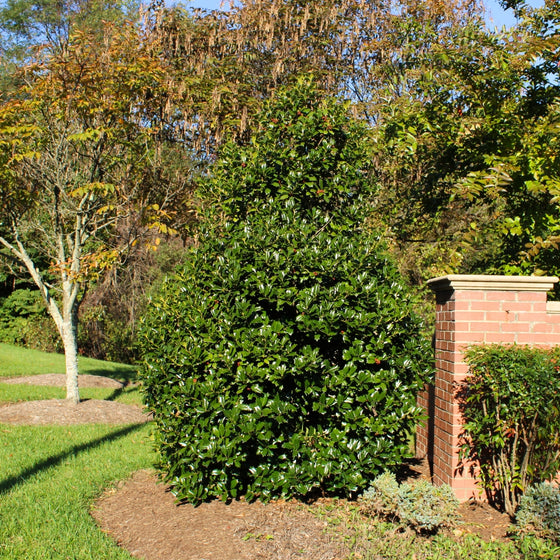
American Holly offers classic evergreen structure, wildlife value, and a strong year-round presence. It works well in natural screens, woodland edges, and mixed privacy plantings.
Oakland Holly and Dragon Lady Holly are good choices for narrower evergreen screens where you want glossy foliage and a formal look. They can be used near foundations, along property lines, or as vertical accents.
Cryptomeria Yoshino and Cryptomeria Radicans bring a softer, feathery texture and fast evergreen growth. They are excellent for creating natural-looking privacy screens with a less rigid feel than arborvitae.

Eastern Red Cedar is a tough native evergreen that works well for windbreaks, wildlife habitat, and naturalized screens. It is especially useful where durability matters.
Spartan Juniper, Blue Point Juniper, and Wichita Blue Juniper are strong choices for narrower privacy or screening accents. Junipers handle sun, heat, and dry conditions well once established, and many offer excellent deer resistance.
Southern Magnolia can make a beautiful broadleaf evergreen screen in warmer regions. Its large glossy leaves, fragrant white flowers, and stately form make it ideal where privacy and ornamental beauty are equally important.
Sweetbay Magnolia is a softer, more natural option for privacy in moist soils or rain-garden-adjacent plantings. It offers fragrant flowers, attractive foliage, and a graceful habit.
Evergreen vs. Mixed Privacy Screens
Evergreen trees are the backbone of most privacy plantings because they provide year-round coverage. But the strongest, most beautiful screens often include more than one type of plant.

A mixed privacy screen might include tall evergreens in the back, flowering shrubs in the middle, and perennials or ornamental grasses at the front. This gives you privacy, seasonal color, pollinator value, and a more natural look.
For example, you might use Thuja Green Giant or Cryptomeria as the main screen, then layer Nellie Stevens Holly, viburnum, or clethra in front. Add grasses or perennials at the base to soften the planting and make it feel like part of the landscape instead of a wall.
Match the Tree to the Space
The most common mistake in privacy planting is choosing a tree solely by height. Width matters just as much.

If you only have 4 to 6 feet of planting width, choose narrow trees like Emerald Green Arborvitae, American Pillar Arborvitae, or upright hollies. If you have 10 to 15 feet or more, larger trees like Green Giant, Leyland Cypress, Murray Cypress, or Cryptomeria become realistic options.
Always think about mature size. A tree that looks perfect today can become a maintenance problem if it was planted too close to a fence, driveway, house, or walkway.
Spacing Matters
Spacing determines how quickly your screen fills in and how healthy it stays over time. Planting too close provides faster initial coverage, but it can lead to root competition, poor airflow, and long-term stress.
As a general guide:
- Emerald Green Arborvitae: 3–4 feet apart
- American Pillar Arborvitae: 2.5–4 feet apart
- Thuja Green Giant: 5–6 feet apart for a dense screen, 8–10 feet for a natural look
- Leyland Cypress: 8–12 feet apart
- Murray Cypress: 8–12 feet apart
- Nellie Stevens Holly: 6–8 feet apart
- Cryptomeria: 8–12 feet apart
- Junipers: spacing depends on variety, but many upright forms work well 4–6 feet apart
For windbreaks, consider a staggered double row. This slows the wind more effectively and creates a deeper, more natural buffer.
Care During the First Few Growing Seasons
The first two to three years are critical. Privacy trees need time to establish roots before they can grow strongly above ground.

Water deeply and consistently during the first growing season. A slow soak is better than frequent shallow watering. The goal is to encourage roots to move outward into the surrounding soil.
Mulch each tree with a 2–3-inch layer, keeping the mulch away from the trunk. Mulch helps conserve moisture, regulate soil temperature, and reduce weed competition.
Avoid heavy fertilizing right after planting. Focus first on root establishment. Once the trees are settled, a balanced slow-release fertilizer in spring can support growth if needed.
Water evergreens well in fall before the ground freezes. Many winter-browning problems occur because trees go into winter too dry.
Woodie's Take
The best privacy screen is not always the fastest-growing tree. It's the right tree in the right place.
Use Green Giant, Leyland, Murray, or Cryptomeria when you have room and need fast coverage. Use Emerald Green or American Pillar when the space is tight. Use hollies, magnolias, junipers, and Eastern Red Cedar for more character, wildlife value, or a mixed natural screen.
Privacy should feel like part of the landscape, not just a row of trees. Plant with enough space, care for the trees well in the first few seasons, and think in layers. Do that, and you're not just blocking a view.
You're building comfort, beauty, and a yard that feels like home.