

Images Depict Mature Plants
Teddy Bear Magnolia
Magnolia grandiflora 'Southern Charm' Plant Patent #13049
I've always appreciated Southern Magnolias for their beautiful flowers and substantial evergreen foliage, but I've also seen how easily a full-sized magnolia can overwhelm a residential landscape. That's why I particularly like Teddy Bear Magnolia for homeowners who want traditional Southern Magnolia beauty in a more manageable tree. The glossy dark green leaves are attractive enough on their own, but what really gets my attention is the rich, velvety reddish-brown covering on the undersides of the foliage. It adds a distinctive texture that looks beautiful throughout the year. Then, when those large, fragrant white flowers begin opening, the tree becomes even more impressive. I especially recommend Teddy Bear Magnolia as a specimen tree near a patio, front entrance, or as part of an ornamental evergreen privacy screen. One thing I always emphasize is giving it enough room to develop its natural pyramidal shape. Although it's compact compared with traditional Southern Magnolias, it's still a substantial tree at maturity. Plant it in a sunny location with well-drained, slightly acidic soil, keep it adequately watered while establishing, and avoid unnecessary pruning. For gardeners who want year-round evergreen beauty combined with spectacular summer flowers, Teddy Bear Magnolia is one of my favorite compact Southern Magnolia selections.
$111.96 with code SAVINGS20 at checkout Save $27.99
FREE Ground Shipping on orders over $49.99
This weekend only - ends Mon 11/23 at 12 PM ET
📦 Free shipping on orders over $99.
Delay shipping by leaving us a message at Checkout.
Share:


Teddy Bear Magnolia – Compact Evergreen Beauty with Fragrant White Flowers
Teddy Bear Magnolia Trees Bring Southern Elegance to Smaller Landscapes
Teddy Bear® Magnolia (Magnolia grandiflora 'Southern Charm') delivers the timeless beauty of a Southern Magnolia in a compact, upright evergreen tree that fits beautifully into residential landscapes. Known for its dense branching, glossy dark green foliage, and magnificent white flowers, Teddy Bear Magnolia offers all the ornamental qualities gardeners love about traditional Southern Magnolias without requiring nearly as much space. Its naturally pyramidal form creates an attractive landscape focal point, while its substantial evergreen foliage provides color and structure throughout the year. For homeowners who want a flowering evergreen tree that combines elegance with practicality, Teddy Bear Magnolia is an exceptional choice.
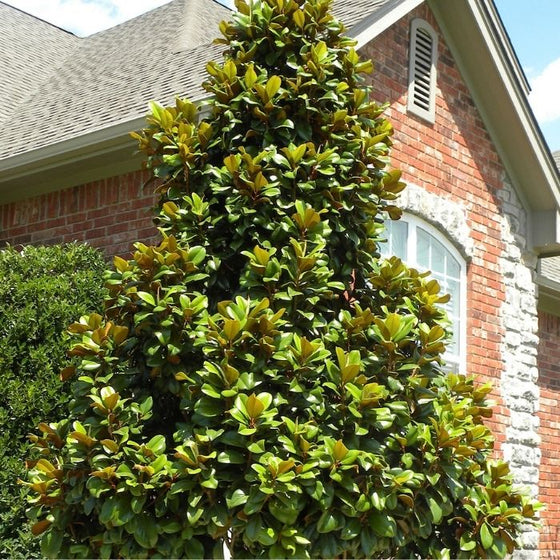
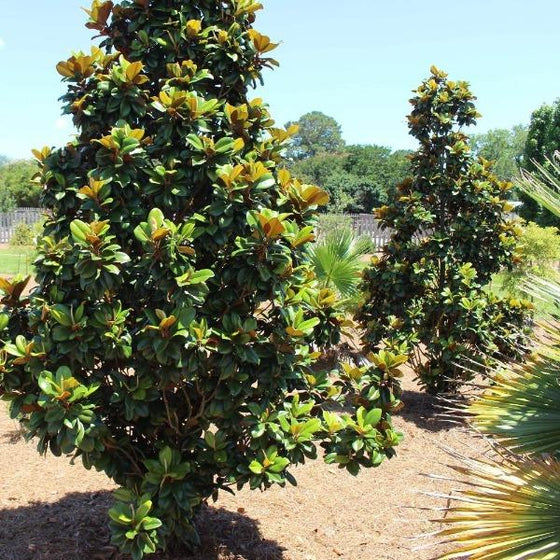
One of the greatest advantages of Teddy Bear Magnolia is its manageable mature size. Typically reaching 16 to 20 feet tall and approximately 10 to 12 feet wide, this beautiful evergreen is considerably smaller than traditional Southern Magnolias, which can eventually become massive landscape trees. Its compact growth habit makes it especially useful in front yards, courtyard gardens, decorative borders, and residential landscapes where larger magnolias would overwhelm the available space. Teddy Bear Magnolia also works beautifully as a specimen tree or incorporated into mixed evergreen plantings. Its naturally attractive shape requires relatively little pruning, allowing gardeners to enjoy its elegant appearance without the maintenance associated with more formal landscape trees.
Enjoy Large, Fragrant White Magnolia Flowers Throughout Summer on this dwarf Magnolia tree
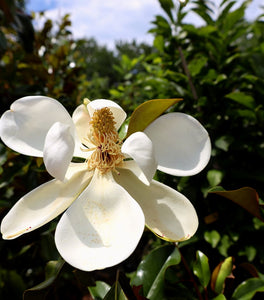
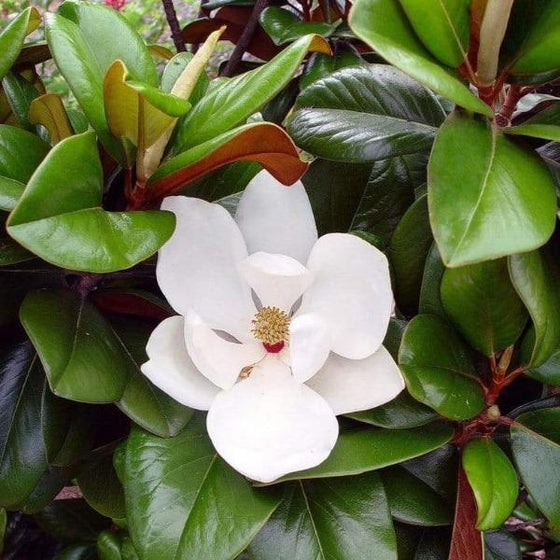
Few flowering evergreen trees can compete with the beauty of Teddy Bear Magnolia when its magnificent white blossoms begin opening against the deep green foliage. This exceptional Southern Magnolia produces large, creamy-white flowers measuring approximately 6 to 8 inches across, creating a dramatic display that immediately captures attention. The blossoms feature the classic cup-shaped appearance associated with Southern Magnolias, opening into broad, elegant flowers with a rich, sweet fragrance. Flowering generally begins during the warmer months, with blooms appearing primarily in summer and sometimes continuing intermittently into fall. The contrast between the brilliant white flowers and glossy evergreen leaves makes Teddy Bear Magnolia particularly striking.
The wonderfully fragrant flowers make Teddy Bear Magnolia an excellent choice for planting near patios, outdoor seating areas, walkways, and garden entrances where their fragrance can be appreciated. Unlike many spring-flowering trees that provide only a brief display, Teddy Bear Magnolia can produce flowers over an extended period during favorable growing conditions. Individual flowers are substantial enough to make a beautiful impression even when only a few are open. Their creamy-white petals create an elegant appearance that complements both traditional Southern landscapes and contemporary garden designs. For homeowners searching for fragrant white flowering trees with year-round ornamental appeal, Teddy Bear Magnolia combines spectacular summer flowers with the lasting beauty of an evergreen.
Glossy Evergreen Foliage with Beautiful Velvety Brown Undersides
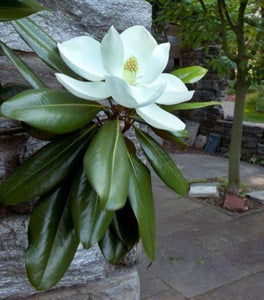
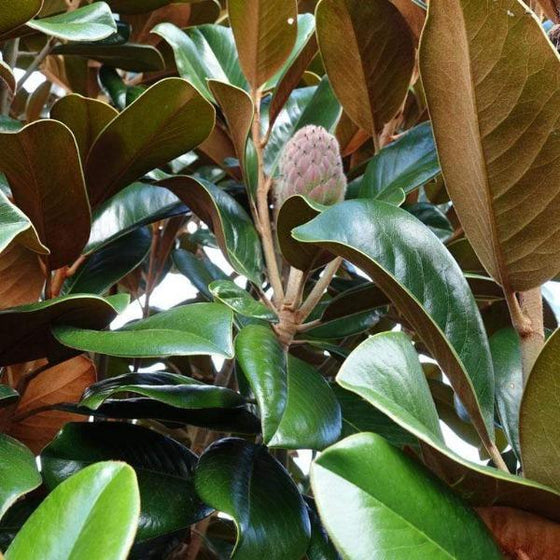
Teddy Bear Magnolia is just as attractive when it isn't flowering, thanks to its exceptionally ornamental evergreen foliage. Its thick, glossy dark green leaves create a lush appearance throughout the year, providing a rich backdrop for flowering shrubs, colorful perennials, and ornamental grasses. The leaves are broad and substantial, giving this compact tree the distinctive tropical-inspired appearance associated with Southern Magnolias. Their smooth, polished upper surfaces reflect sunlight beautifully, while the dense branching creates a full, attractive silhouette. This combination makes Teddy Bear Magnolia particularly valuable in landscapes where maintaining visual interest throughout winter is an important consideration.
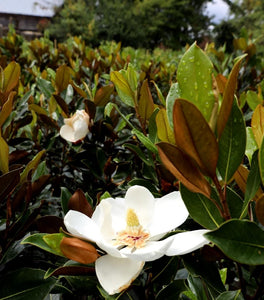
Perhaps the most distinctive characteristic of Teddy Bear Magnolia is the soft, velvety reddish-brown covering on the undersides of its leaves. This fuzzy texture is responsible for the cultivar's memorable name and creates a beautiful two-toned appearance as the branches move in the breeze. The contrast between dark green upper surfaces and warm brown undersides adds depth and texture that distinguishes Teddy Bear Magnolia from many other flowering evergreens. Because the tree retains its foliage throughout winter, these ornamental qualities remain visible long after deciduous trees have lost their leaves. For gardeners who appreciate evergreen trees with distinctive foliage and four-season beauty, Teddy Bear Magnolia offers exceptional visual interest even outside its flowering season.
Create Beautiful Evergreen Privacy Screens with Teddy Bear Magnolia
Teddy Bear Magnolia is an excellent choice for homeowners who want a compact evergreen privacy tree with ornamental flowers. Its naturally dense branching and upright pyramidal growth habit create substantial foliage coverage, making it useful for screening neighboring properties, defining outdoor living spaces, and adding privacy around patios and garden areas. Unlike narrowly columnar evergreens, Teddy Bear Magnolia develops a fuller, more substantial shape that offers attractive visual screening while maintaining a refined appearance. Its glossy leaves and beautiful summer flowers also make it considerably more ornamental than many traditional privacy trees, allowing it to serve both functional and decorative purposes.
When planted in a row, Teddy Bear Magnolia can create an elegant flowering evergreen privacy screen that provides year-round coverage without the towering dimensions of traditional Southern Magnolias. Its moderate growth rate and compact habit make it particularly useful for larger residential borders and property lines where homeowners want a softer alternative to formal hedging. For screening applications, allow sufficient space for the trees to develop their mature width while maintaining appropriate air circulation. Teddy Bear Magnolia also works beautifully as a single specimen planted near a property entrance or incorporated into an evergreen foundation design where adequate room is available. Its combination of privacy, fragrant flowers, and evergreen foliage makes it an outstanding multipurpose landscape tree.
Easy-Care Teddy Bear Magnolia Trees for Full Sun and Partial Shade
Teddy Bear Magnolia is a relatively easy-care evergreen tree when planted in the right location. It performs best in full sun to partial shade, with abundant sunlight encouraging dense branching and healthy flower production. This cultivar prefers fertile, slightly acidic, well-drained soil that retains enough moisture to support healthy root development without remaining waterlogged. Incorporating organic matter into suitable planting areas and applying mulch around the root zone can help maintain consistent soil moisture. Teddy Bear Magnolia is hardy in USDA Growing Zones 7 through 9, making it especially well suited to landscapes throughout the southeastern United States and other regions with relatively mild winters.
During the first several growing seasons, regular watering is important for establishing a strong root system. Once established, Teddy Bear Magnolia can tolerate brief periods of drought, although it performs best when adequate moisture is available during extended dry weather. Applying a two- to three-inch layer of organic mulch helps conserve moisture and protect the roots from temperature extremes. Fertilization is generally best handled in early spring when necessary, using an appropriate slow-release fertilizer for acid-loving plants. Teddy Bear Magnolia typically requires very little pruning because its naturally compact growth habit maintains an attractive appearance. Remove damaged branches as needed, and perform any significant shaping after the main flowering period. With appropriate planting conditions and basic maintenance, this evergreen magnolia provides dependable beauty for many years.
A Stunning Evergreen Specimen Tree for Patios, Gardens, and Entryways
Teddy Bear Magnolia is particularly valuable as a specimen tree for smaller residential landscapes where homeowners want an impressive ornamental feature without planting a full-sized Southern Magnolia. Its symmetrical growth habit, glossy evergreen foliage, and large fragrant flowers create an elegant focal point that complements a variety of architectural styles. Plant it in a front lawn to establish a welcoming landscape centerpiece, or incorporate it into a mixed planting bed surrounded by flowering shrubs and colorful perennials. Its dark green foliage provides an attractive background for hydrangeas, gardenias, azaleas, and other ornamental plants that thrive in similar growing conditions. The warm brown undersides of its leaves also complement natural stone, brick, and decorative hardscape features.
For homeowners interested in creating a sophisticated outdoor environment, Teddy Bear Magnolia offers year-round landscape structure and seasonal flowering beauty in a single tree. Its compact mature dimensions make it easier to incorporate into courtyards, larger patio gardens, and decorative property borders than many traditional Southern Magnolia varieties. Young trees can also be grown in sufficiently large containers, although long-term in-ground planting generally provides better growing conditions and allows the tree to develop its full potential. Whether used as a dramatic specimen, an ornamental privacy screen, or an evergreen accent near an outdoor living area, Teddy Bear Magnolia combines classic Southern charm with a more manageable growth habit, making it one of the most appealing compact evergreen flowering trees available.
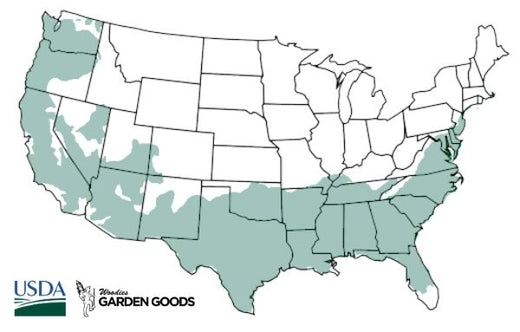
| Hardiness Zone: | 7-9 |
|---|---|
| Mature Height: | 15 to 20 Feet |
| Mature Width: | 8 to 12 Feet |
| Sunlight: | Full Sun to Partial Shade |
| Bloom Time / Color | Summer; Intermittent Flowers May Continue into Fall: Creamy White |
| Soil Condition: | Fertile; Slightly Acidic; Moist but Well-Drained |
| Water Requirements: | Regular During Establishment; Moderate Once Established |
| Wildlife Value | Flowers Visited by Pollinating Insects; Evergreen Shelter for Birds |
| Resistance (deer/disease/drought/etc.) | Generally Deer Resistant; Browsing Possible |
| Landscape Uses | Specimen Trees; Evergreen Privacy Screens; Ornamental Borders; Entryway Plantings; Courtyards; Large Containers |
How to Care for Teddy Bear Magnolia
Before you purchase a Teddy Bear Southern Magnolia, be sure to read the care instructions to keep your plant happy and healthy.

How should I plant Teddy Bear Magnolia?
Teddy Bear® Magnolia (Magnolia grandiflora 'Southern Charm') grows best in full sun to partial shade and fertile, well-drained, slightly acidic soil. Choose a location that provides adequate room for the tree's mature dimensions of approximately 16 to 20 feet tall and 10 to 12 feet wide. Dig a planting hole approximately twice as wide as the root ball but no deeper than its original depth. Carefully remove the tree from its container, loosen any circling roots, and position it so the root flare sits at or slightly above the surrounding soil level. Backfill with native soil, gently firming it to eliminate large air pockets. After planting, water thoroughly to settle the soil around the roots. Apply a two- to three-inch layer of organic mulch around the planting area, keeping it several inches away from the trunk. Mulching helps conserve moisture, regulate soil temperatures, and reduce competition from weeds. Teddy Bear Magnolia is particularly attractive as a specimen tree, ornamental privacy screen, or evergreen accent near patios and entryways. For screening applications, allow approximately 8 to 12 feet between trees, adjusting spacing according to the desired coverage and available space.

How often should I water Teddy Bear Magnolia after planting?
Newly planted Teddy Bear Magnolia trees require consistent soil moisture during their first growing seasons to establish a healthy root system. Water deeply immediately after planting and continue watering whenever the upper few inches of soil begin to dry. During hot summer weather, newly installed trees may require watering several times per week, particularly in sandy soils or exposed locations. The goal is to maintain evenly moist soil without allowing the root zone to remain saturated. Deep, thorough watering is preferable to frequent, shallow irrigation, as it encourages roots to grow into the surrounding soil. Once established, Teddy Bear Magnolia develops moderate drought tolerance, although it performs best with consistent moisture during extended periods of heat or dry weather. Established trees generally require less frequent supplemental watering, but irrigation may still be beneficial during prolonged drought. Monitor the soil rather than relying entirely on a fixed watering schedule. Excessively wet conditions can contribute to root problems, so proper drainage remains essential. Maintaining a layer of organic mulch around the root zone helps reduce moisture fluctuations and supports healthy evergreen foliage throughout the year.

When should I fertilize Teddy Bear Magnolia?
The best time to fertilize Teddy Bear Magnolia is early spring, before the main period of new growth begins. This allows the tree to utilize available nutrients as temperatures warm and active growth resumes. A balanced, slow-release fertilizer formulated for acid-loving trees and shrubs can be beneficial when soil fertility is inadequate. However, established trees growing in healthy, fertile soil may require little supplemental feeding. A soil test is the most reliable way to determine whether additional nutrients are necessary and whether the soil pH is appropriate for healthy magnolia growth. When fertilizing, follow the manufacturer's recommended application rates and distribute the product evenly over the root zone rather than concentrating it against the trunk. Water thoroughly after application if instructed by the product label. Avoid excessive nitrogen fertilization, which can encourage vigorous foliage growth without necessarily improving flower production. Teddy Bear Magnolia generally benefits more from good soil structure, consistent moisture, and proper mulching than from frequent heavy feeding. Yellowing foliage or poor growth should prompt an evaluation of drainage, soil pH, and root health before additional fertilizer is applied.

When and how should I prune Teddy Bear Magnolia?
Teddy Bear Magnolia naturally develops a compact, dense, pyramidal growth habit, so extensive pruning is rarely necessary. The best time for optional shaping is generally after the main flowering period, allowing gardeners to enjoy the seasonal blossoms before making corrective cuts. Remove dead, damaged, or crossing branches whenever necessary, using clean, sharp pruning tools. When making larger cuts, prune just outside the branch collar to encourage proper wound closure. Avoid removing large portions of the canopy, as this can disrupt the tree's naturally attractive form. For homeowners growing Teddy Bear Magnolia as an ornamental privacy screen, light selective pruning can help maintain a balanced appearance while preserving the dense evergreen foliage. Avoid severe topping or repeated heavy shearing, which can damage the tree's natural structure and reduce flowering. Lower branches may be retained to create a fuller evergreen appearance near the ground, particularly when privacy is a priority. If a more tree-like form is desired, lower branches can be removed gradually as the plant matures. In most landscapes, minimal pruning produces the healthiest and most attractive Teddy Bear Magnolia.