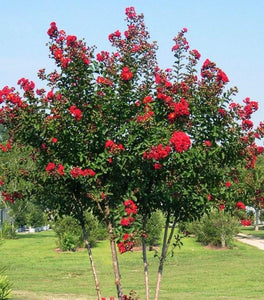
Images Depict Mature Plants
Sioux Crape Myrtle
Lagerstroemia indica × fauriei 'Sioux'
Sioux is a crape myrtle I like for homeowners who want strong pink summer color without planting one of the biggest varieties. The dark pink blooms have plenty of presence, the fall color adds another good moment, and the mature bark adds winter value once the tree has some age. I would give it full sun, good airflow, and enough room to become a small flowering tree. Prune it with restraint in late winter, and please do not top it into stubs—the natural structure is part of what makes a crape myrtle worth growing.

15% OFF SITEWIDE, USE CODE 'FALLPLANT15'
📦 Free shipping on orders over $99.
Delay shipping by leaving us a message at Checkout.
Share:


Sioux Crape Myrtle Delivers Dark Pink Summer Blooms and Easy Landscape Color
Dark Pink Blooms for the Heat of Summer
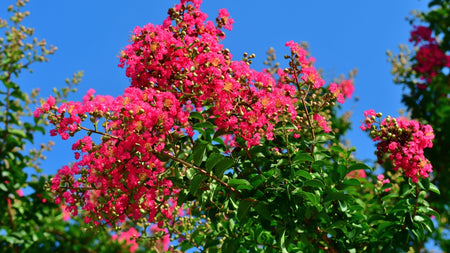
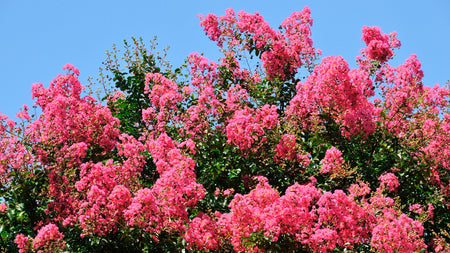
Sioux Crape Myrtle is a beautiful summer-flowering ornamental tree known for its dark-pink flower clusters, long bloom season, and dependable landscape performance. When many spring-flowering trees have finished, Sioux brings fresh color into the hottest part of the season with showy crepe-paper-like blooms.
The flowers appear in large panicles at the tips of new growth, creating a bright pink display from mid to late summer. This makes Sioux an excellent choice for front yards, lawn islands, driveway beds, patio plantings, sunny borders, and curb appeal landscapes where summer color is just as important as spring bloom.
A Medium-Sized Crape Myrtle With Strong Design Value
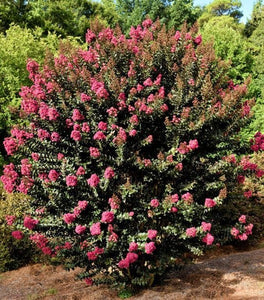
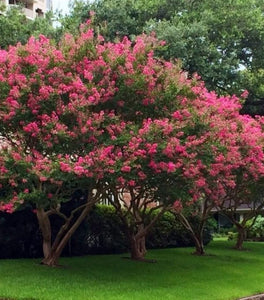
Sioux Crape Myrtle is a medium-sized selection that typically matures around 15 to 20 feet tall and 10 to 15 feet wide. That puts it in a useful size range for homeowners who want a true ornamental tree without planting one of the largest crape myrtles.
Its oval to upright-rounded habit works well as a specimen tree, multi-stemmed accent, small shade tree, or flowering anchor in mixed shrub beds. It can also be trained as a small standard tree to show off the trunk and bark. Give it room to mature naturally, and avoid placing it where flowers may drop onto cars, walkways, or light-colored hardscapes.
Mildew Resistance and Better Garden Performance
Sioux is one of the disease-resistant crape myrtle hybrids developed at the U.S. National Arboretum. It was selected to combine summer bloom, improved mildew resistance, and attractive ornamental qualities in a manageable, intermediate form.
That disease resistance is a major advantage, especially compared with older crape myrtle selections that can struggle with powdery mildew in humid climates. Still, good care matters. Plant Sioux in full sun with good airflow, avoid overhead watering when possible, and give the canopy room to dry after rain.
Fall Color, Peeling Bark, and Winter Interest
Sioux Crape Myrtle is not just a summer-blooming tree. After flowering, the green foliage can turn to attractive red, burgundy, or purple tones in fall, adding another season of interest. As the tree matures, smooth peeling bark adds texture and winter character.
That multi-season value makes Sioux a strong choice for homeowners who want more than a one-note flowering tree. The bloom is the main event, but the fall foliage and bark help the tree stay useful after the flowers fade. Plant it where the trunk structure is visible, especially in winter.
Full Sun, Good Drainage, and Proper Pruning
Sioux Crape Myrtle performs best in full sun with well-drained soil. At least 6 hours of direct sun is important, but more sun usually means better bloom, stronger growth, and cleaner foliage. Once established, Sioux is drought-tolerant and can handle heat, humidity, urban conditions, and a range of soil types.
Prune in late winter or early spring before new growth begins because crape myrtles bloom on new wood. Remove dead, damaged, crossing, crowded, or weak branches, and lightly shape the tree if needed. Avoid severe topping, often called “crape murder,” because it creates weak shoots, ruins the natural branch structure, and reduces the tree’s long-term beauty.
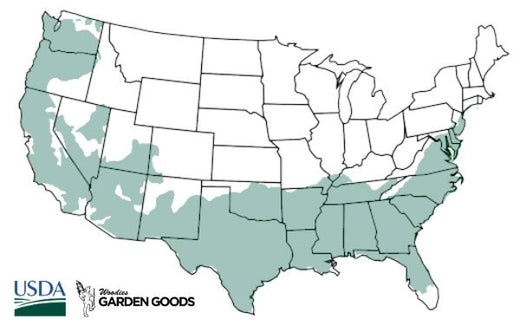
| Hardiness Zone: | 7-9 |
|---|---|
| Mature Height: | 15 to 20 Feet |
| Mature Width: | 10 to 15 Feet |
| Sunlight: | Full sun; 6 or more hours of direct sunlight per day |
| Soil Condition: | Adaptable to clay, loam, sand, acidic, and slightly alkaline soils when drainage is good |
| Water Requirements: | Regular moisture during establishment; average moisture once established |
| Bloom Time / Color | Summer; dark pink flower panicles, often July to September depending on climate |
| Foliage | Green summer foliage with red, burgundy, purple, or purple-red fall color |
| Ornamental Features | Dark pink summer flowers, long bloom season, showy fall color, peeling bark, multi-stem form, mildew resistance |
| Wildlife Value | Flowers may attract bees, butterflies, and other pollinators |
| Resistance (deer/disease/drought/etc.) | Good powdery mildew resistance; good drought tolerance once established; deer browsing can occur |
| Landscape Uses | Specimen trees, front yards, patios, sunny borders, driveway beds, lawn islands, street plantings, parking lot islands, mixed shrub borders |
How to Care for Sioux Crape Myrtle
Once you buy a Sioux Crape Myrtle Tree, make sure to read about the care instructions that are recommended to keep this plant healthy and thriving.

How should I plant Sioux Crape Myrtle?
Plant Sioux Crape Myrtle in full sun with well-drained soil. Choose a location with at least 6 hours of direct sun per day, though more sun usually leads to better bloom and stronger growth. Avoid deep shade, soggy soil, and cramped spaces with poor airflow. Dig a hole two to three times wider than the root ball and about the same depth as the container. Set the root flare at or slightly above soil level, backfill with native soil, water deeply, and mulch the root zone with 2 to 3 inches of mulch, keeping it away from the trunk.

How often should I water Sioux Crape Myrtle after planting?
Water Sioux Crape Myrtle deeply after planting and keep the root zone evenly moist during the first growing season. Newly planted trees need consistent moisture while roots establish, especially during heat, wind, drought, or full-sun exposure. Once established, Sioux Crape Myrtle is drought tolerant and can handle hot summer conditions. It will still bloom and grow better with occasional deep watering during extended dry spells. Water at the base rather than over the foliage to help reduce disease pressure.

When should I fertilize Sioux Crape Myrtle?
Fertilize Sioux Crape Myrtle in early spring if growth is weak or the soil is poor. Use a balanced, slow-release tree and shrub fertilizer, or lightly topdress the root zone with compost. In good soil, crape myrtles often need very little fertilizer. Avoid overfertilizing, especially with high-nitrogen fertilizer, because it can push leafy growth at the expense of flowers. Do not fertilize late in the season because tender growth may be more vulnerable to winter damage. Sun, drainage, and pruning are more important than heavy feeding.

When and how should I prune / cut back Sioux Crape Myrtle?
Prune Sioux Crape Myrtle in late winter or early spring before new growth begins. This timing works well because Sioux blooms on new wood. Remove dead, damaged, crossing, crowded, weak, or inward-growing branches first, then lightly shape the tree if needed. Avoid severe topping or cutting the tree back to thick stubs. That practice creates weak shoots, awkward structure, and a less attractive tree over time. Instead, thin selectively, remove basal suckers as needed, and keep the natural multi-stem or small-tree form intact.