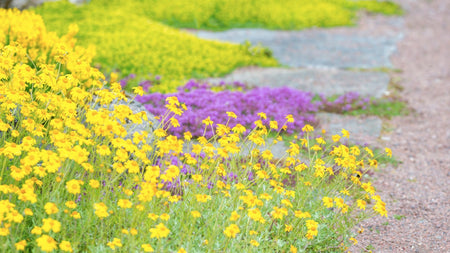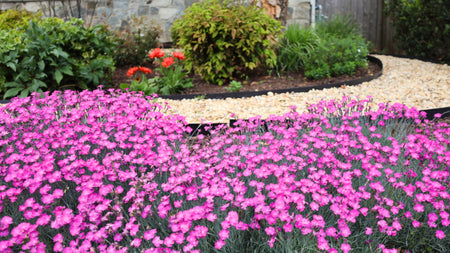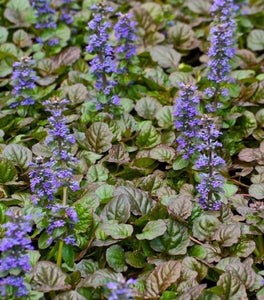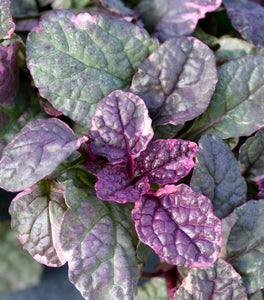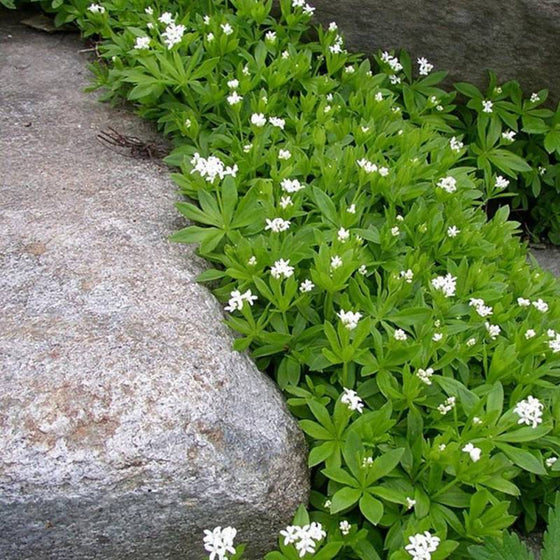


Images Depict Mature Plants
Sweet Woodruff
Galium odoratum
Sweet Woodruff is one of those shade groundcovers that earns its keep when you give it the right spot. It softens bare soil under trees, brings white spring flowers into darker garden corners, and has that sweet, fragrant foliage gardeners love. Use it where spreading is welcome, keep it out of hot dry sun, and it becomes a beautiful woodland-style carpet.

15% OFF SITEWIDE SUMMER SALE
Use Code HELLOSUMMER15 at Checkout!
📦 Free shipping on orders over $99.
Delay shipping by leaving us a message at Checkout.
Share:Recommended Add-Ons



A Fragrant Shade Groundcover with White Spring Flowers
Soft Green Coverage for Shady Woodland Gardens
Sweet Woodruff is a low-growing perennial groundcover valued for its fragrant foliage, bright green whorled leaves, and delicate white spring flowers. It forms a soft carpet in shaded garden spaces, making it a natural choice beneath trees, around shrubs, along woodland paths, and in part-shade borders where traditional sun-loving plants struggle.
This plant brings a light, airy texture to shade gardens. The foliage appears in neat whorls along slender stems, creating a fresh green look that blends beautifully with hostas, ferns, hellebores, astilbe, brunnera, heuchera, and spring bulbs. For gardeners who want a woodland-style groundcover with seasonal bloom and fragrance, Sweet Woodruff is a classic choice.
White Star-Shaped Flowers and Fragrant Foliage
In mid to late spring, Sweet Woodruff produces clusters of small, star-shaped white flowers above the foliage. The blooms brighten shady areas without looking heavy or overly formal, giving the planting a soft, naturalized appearance.
The foliage is also fragrant, especially when crushed or dried. This sweet scent is one of the reasons Sweet Woodruff has long been valued in herb gardens and woodland plantings. In the landscape, the fragrance is subtle, but the plant’s combination of fresh green leaves and white spring bloom gives it strong seasonal charm.
Ideal Beneath Trees, Shrubs, and Shade Borders
Sweet Woodruff is especially useful as a groundcover beneath deciduous trees and open-canopied shrubs where it can receive spring light before the canopy fills in. It also works well along shaded paths, in woodland gardens, under hydrangeas, around hellebores, and in naturalized shade beds.
Plant it in groups for quicker coverage, or allow it to spread gradually into a soft living carpet. Sweet Woodruff is best used where spreading is welcome, since happy plants can naturalize over time. It is not the right choice for small, tightly controlled beds unless occasional edging or thinning is part of the maintenance plan.
Low Maintenance, Pollinator Friendly, and Shade Adapted
Sweet Woodruff is a low-maintenance groundcover when planted in the right location. It performs best in shade to part shade with moist, well-drained soil and organic matter. Once established, it can handle some dry shade, especially beneath trees, but it looks best when soil moisture is reasonably consistent.
The spring flowers may attract bees and other small pollinators. Sweet Woodruff is also commonly considered resistant to heavy browsing, though deer resistance can vary by site and season. Its biggest advantage is its ability to fill shaded spaces with fragrance, flowers, and soft green coverage.
Easy Care with Shade, Moisture, and Occasional Thinning
Plant Sweet Woodruff in part shade to full shade with moist, well-drained soil. Incorporating compost or leaf mold can help mimic the woodland conditions it prefers. Avoid hot, exposed, dry locations where the foliage may scorch or decline.
Water regularly after planting until the roots establish. Once the planting has filled in, maintenance is simple. Edge or thin the patch as needed to keep it within bounds, divide large clumps in spring or fall if growth becomes crowded, and remove tired foliage in late winter or early spring before new growth appears.
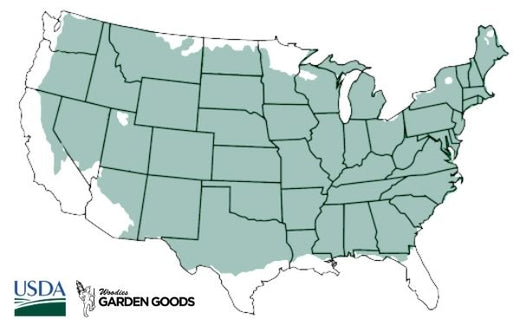
| Hardiness Zone: | 4-8 |
|---|---|
| Mature Height: | 6 to 12 inches |
| Mature Width: | 12 to 24 Inches |
| Sunlight: | Part shade to full shade; tolerates morning sun in cool climates with moisture |
| Soil | Moist, humus-rich, well-drained soil; tolerates average woodland soil |
| Water | Water regularly after planting; prefers consistent moisture; may tolerate dry shade once established |
| Bloom Time / Color | Mid to late spring; small white star-shaped flowers |
| Ornamental Features | Fragrant foliage, white spring flowers, spreading groundcover habit, woodland texture |
| Wildlife Value | Spring flowers may attract bees and small beneficial pollinators |
| Resistance | Generally low-maintenance and shade tolerant; may be deer resistant; not ideal for hot dry sun |
| Landscape Uses | Shade groundcover, woodland gardens, under trees, under shrubs, naturalized beds, path edges, spring bulb plantings, shade borders |
How to Care for Sweet Woodruff
Be sure to read our planting instructions to ensure healthy and happy Sweet Woodruff Plants for years to come!
-v1745348751165.png?92x91)
How should I plant Sweet Woodruff?
Plant Sweet Woodruff in part shade to full shade with moist, well-drained soil. Choose a woodland-style location beneath trees, around shrubs, along shaded paths, or in a protected shade border where the plant can spread gradually. Dig a hole about as wide as the root ball and just as deep. Set the plant level with the surrounding soil, backfill gently, and water thoroughly. Space plants about 12 inches apart for quicker coverage, or farther apart if you want the planting to fill in more slowly.
-v1745348796073.png?89x84)
How often should I water Sweet Woodruff after planting?
Water Sweet Woodruff deeply after planting, then keep the soil evenly moist while roots establish. During the first growing season, check the soil regularly and water when the top few inches begin to dry. Established Sweet Woodruff prefers consistent moisture, especially in spring and early summer. It may tolerate some dry shade once established, but long dry periods can cause thinning, browning, or summer dormancy in stressful sites.
-v1745348818195.png?90x89)
When should I fertilize Sweet Woodruff?
Sweet Woodruff usually needs little fertilizer when planted in good woodland-style soil. A light layer of compost, leaf mold, or shredded leaves in spring can help maintain organic matter and support healthy growth. Avoid heavy fertilizer, especially high-nitrogen feeding. Rich feeding is usually unnecessary and may encourage spreading growth. Good soil moisture, shade, and organic mulch are more important than frequent fertilizing.

When and how should I prune Sweet Woodruff?
Sweet Woodruff does not need regular pruning, but it can be edged or trimmed if it spreads beyond its intended space. Use clean shears or a garden spade to define the edge of the planting. Remove old or tired foliage in late winter or early spring before new growth begins. If a patch becomes too dense or starts crowding nearby plants, thin or divide it in spring or fall.
11. ALT TEXT PROMP