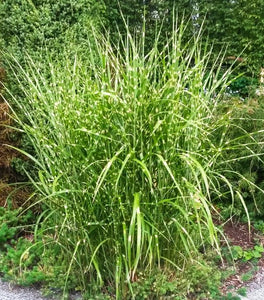
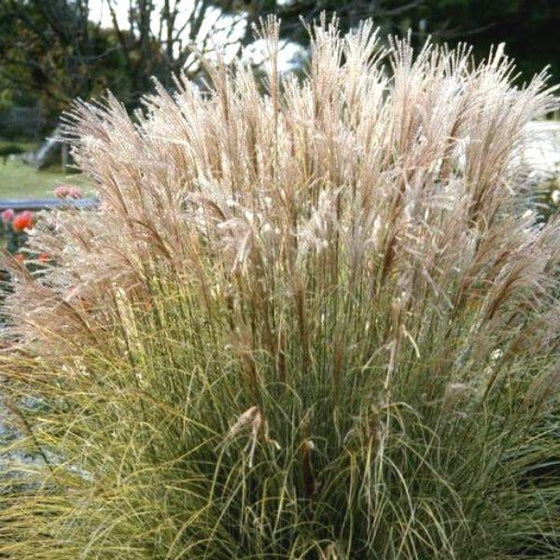
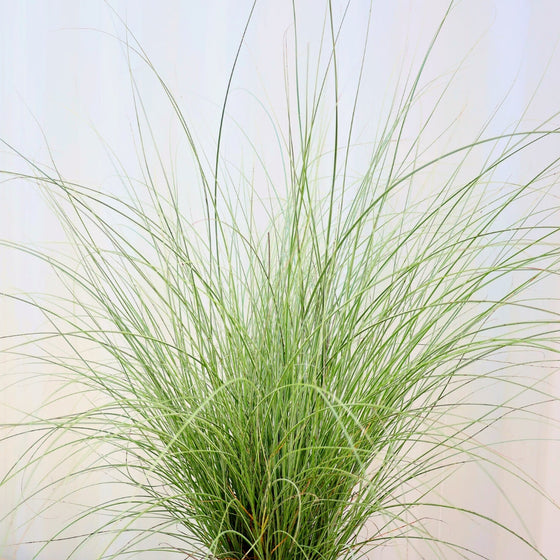


Images Depict Mature Plants
Morning Light Miscanthus
Miscanthus sinensis 'Morning Light'
Morning Light Miscanthus is the maiden grass to use when you want elegance more than bulk. The fine white margins give the whole plant a soft silver glow, especially when the sun hits it from behind. I like it near patios, along sunny borders, and in foundation beds where the texture can be appreciated up close. Give it full sun, do not overfeed it, and let it stand through winter before cutting it back in early spring.

15% OFF SITEWIDE SALE
Use Code 'PRIMETIME15' At Checkout
📦 Free shipping on orders over $99.
Delay shipping by leaving us a message at Checkout.
Share:Recommended Add-Ons



A Refined Variegated Maiden Grass with a Silvery Glow
Fine White-Edged Foliage That Catches the Light
Morning Light Miscanthus is an elegant variegated maiden grass grown for its narrow green blades edged in fine white margins. Botanically known as Miscanthus sinensis ‘Morning Light’, this ornamental grass has a soft silver-green appearance from a distance and glows beautifully when backlit by morning or late-afternoon sun.
The foliage is finer and more luminous than many other Miscanthus varieties, making it especially useful where you want movement and texture without a heavy look. Use Morning Light near patios, walkways, foundation beds, sunny borders, and mixed perennial gardens where the fine variegation can be appreciated.
A Graceful Grass with Rounded, Upright Form
Morning Light Miscanthus forms a dense, rounded clump with upright-arching stems and leaves. Its shape is graceful and fountain-like, giving the garden structure while still feeling soft and natural.
This is a strong choice for homeowners who like the fine texture of Gracillimus but want a brighter, more variegated look. Morning Light works well as a specimen grass, a repeated border accent, a foundation texture, a low screen, or an elegant backdrop for sun-loving perennials.
Late-Season Plumes for Fall and Winter Interest
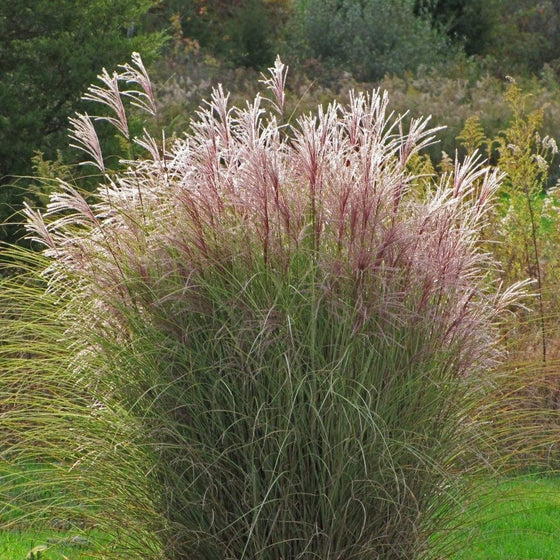
In late summer and fall, Morning Light Miscanthus can produce airy plumes that emerge in pink, red, or bronze tones before maturing to silver. The plumes rise above the foliage, adding soft texture, height, and movement late in the season.
Flowering can vary by region, sunlight, and length of growing season. Even in seasons with lighter bloom, the white-edged foliage, rounded form, fall color, and winter texture make Morning Light valuable from summer through winter.
Seasonal Color and Long-Lasting Structure
As temperatures cool, the foliage often shifts into yellow, orange, gold, or beige-tan tones before drying for winter. Left standing, the clump provides movement, texture, and structure after frost.
This winter presence helps sunny beds look intentional even after flowering perennials have gone dormant. Cut back the dried foliage in late winter or early spring, before new shoots begin to emerge.
Low Maintenance, Sun Loving, and Deer Resistant
Plant Morning Light Miscanthus in full sun for the strongest habit, best color, and most reliable plume production. It adapts to average, well-drained soil and becomes drought-tolerant once established, although regular watering during the first growing season helps the plant root in properly.
Morning Light is generally considered deer-resistant and low-maintenance. Avoid heavy fertilizing, which can encourage floppy growth. Because Miscanthus can reseed or be restricted in some regions, check local guidance before planting, especially near natural areas.

| Hardiness Zone: | 5-9 |
|---|---|
| Mature Height: | 4 to 6 Feet |
| Mature Width: | 3 to 4 Feet |
| Sunlight: | Full sun preferred; tolerates light part shade |
| Soil | Average, medium moisture, well-drained soil; adaptable once established |
| Water Requirements: | Water regularly after planting; average moisture once established; drought tolerant once established |
| Bloom Time / Color | Late summer to fall; pink, red, bronze, or coppery plumes aging toward silver |
| Ornamental Features | White-edged variegated foliage, silvery glow, fine texture, rounded habit, late-season plumes, fall color, winter structure |
| Wildlife Value | Dried stems and clumps provide seasonal cover and winter texture |
| Resistance | Generally deer resistant; low maintenance; drought tolerant once established |
| Landscape Uses | Specimen grass, foundation planting, sunny border, mass planting, low screen, perennial backdrop, container accent in large pots, winter interest planting, cottage garden, modern landscape |
How to Care for Morning Light Miscanthus
Before you buy Morning Light Miscanthus, be sure to read the recommended care instructions to keep your plant happy and healthy for years to come!

How Do I Plant Miscanthus Morning Light?
To plant Miscanthus 'Morning Light,' begin by selecting a location that offers full sun to partial shade, as this grass thrives in bright light but can tolerate some shade. It prefers well-drained soil, although it can adapt to various soil types, including clay, loam, and sandy soils. Start by loosening the soil to a depth of 12-18 inches, ensuring it is well-aerated. Dig a hole that is twice as wide and as deep as the root ball, and place the plant in the hole so the top of the root ball is level with the surrounding soil. Backfill the hole with soil, firm it gently around the base, and water thoroughly to help the plant settle in. Adding a layer of mulch around the base helps retain moisture and suppress weeds. When planting multiple Miscanthus 'Morning Light' grasses, space them about 3 to 4 feet apart to allow for their mature spread and upright growth. Water regularly during the first growing season to establish a strong root system. Once established, this ornamental grass is drought-tolerant, requiring minimal additional watering. It's important to plant it in an area with good drainage to prevent root rot, particularly in areas prone to heavy rainfall. Miscanthus 'Morning Light' is a low-maintenance choice that provides height, texture, and movement to garden beds, borders, or as a stunning specimen plant.

How Do I Water Miscanthus Morning Light?
Watering Miscanthus 'Morning Light' correctly is essential, especially during the first growing season, to help the plant establish strong roots. Initially, keep the soil consistently moist by watering deeply once or twice a week, depending on weather conditions and rainfall. The goal is to ensure that the top 2-3 inches of soil remain damp, but not waterlogged. Water at the base of the plant, and avoid overhead watering to reduce the risk of fungal issues. This deep watering method encourages root development, allowing the grass to better tolerate dry conditions once established. Mulching around the base can help retain moisture and reduce the need for frequent watering. Once Miscanthus 'Morning Light' is established, it becomes more drought-tolerant and requires less frequent watering. In most cases, rainfall will be sufficient to meet its moisture needs, especially in well-drained soil. However, during prolonged dry periods or extreme heat, it’s beneficial to water the plant occasionally to prevent stress and maintain its lush appearance. Be sure to check the soil moisture regularly during hot weather to keep the grass healthy and ensure its signature silver-green foliage and graceful plumes remain vibrant throughout the season. Proper watering not only promotes healthy growth but also enhances the plant’s drought-tolerant characteristics, making it a low-maintenance option for your landscape.

How Do I Fertilize Miscanthus Morning Light?
To fertilize Miscanthus 'Morning Light,' apply a balanced, slow-release fertilizer, such as a 10-10-10 formula, in early spring as new growth begins. Spread the fertilizer evenly around the base of the plant, but avoid placing it directly on the crown to prevent burning. After applying the fertilizer, water the area thoroughly to help the nutrients penetrate the soil and reach the roots. This spring feeding provides the essential nutrients Miscanthus 'Morning Light' needs to support its lush, silver-green foliage and graceful plumes throughout the growing season. For ongoing care, you can also amend the soil with organic matter, such as compost or well-rotted manure, to improve soil fertility and structure. Avoid over-fertilizing, as too much nitrogen can lead to excessive foliage growth and reduce flowering. Miscanthus 'Morning Light' is a low-maintenance grass that typically requires minimal feeding once established, but an annual spring application of fertilizer will ensure its continued health and vibrant appearance. With proper fertilization, this ornamental grass will thrive, adding height, texture, and beauty to your landscape.

How Do I Prune Miscanthus Morning Light?
Pruning Miscanthus 'Morning Light' is essential for maintaining its health and appearance. The best time to prune is in late winter or early spring, before new growth begins. Using clean, sharp pruning shears or hedge trimmers, cut the old foliage down to about 3-6 inches above the ground. This removes the dried leaves and plumes from the previous season, allowing fresh new growth to emerge. Be sure to wear gloves, as the leaves can be sharp. By cutting back the old growth, you promote air circulation and give the plant space to rejuvenate, ensuring it remains vibrant throughout the growing season. During the growing season, light pruning is generally not necessary, but you can remove any damaged or dead foliage as needed to keep the plant looking tidy. Avoid heavy pruning during the growing season, as it may disrupt the natural form and flowering of Miscanthus 'Morning Light.' Regular annual pruning keeps the plant from becoming too large and helps maintain its graceful, upright shape. Proper pruning ensures that this ornamental grass continues to provide texture, movement, and visual interest in your garden year after year.