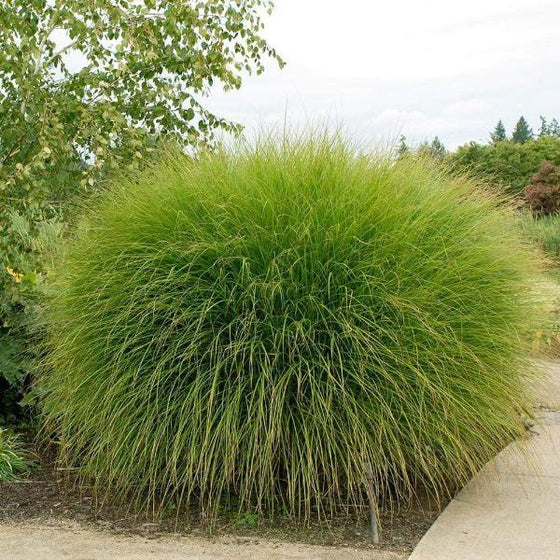
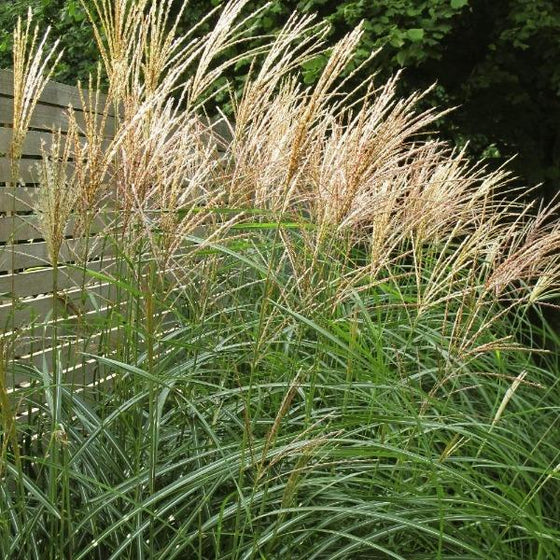
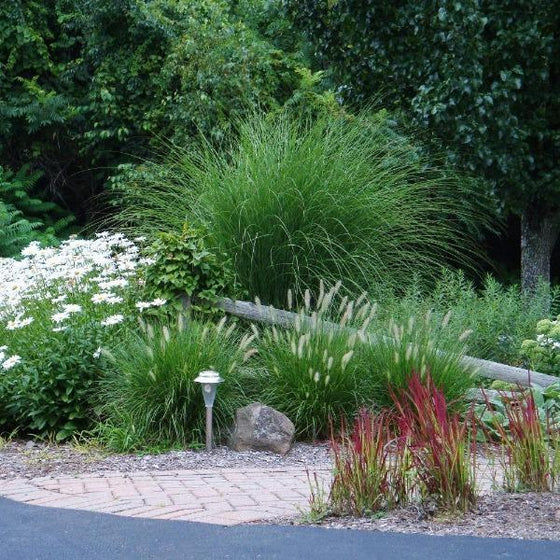



Images Depict Mature Plants
Gracillimus Miscanthus
Miscanthus sinensis ‘Gracillimus
Gracillimus Miscanthus is the classic maiden grass when you want height, movement, and a refined texture. It is taller and more dramatic than Adagio, but still softer than many screening plants. I like it as a backdrop, a sunny property-line grass, or a specimen where the fine foliage can move in the breeze. Give it full sun, do not overfeed it, and cut it back before spring growth starts.

15% OFF SITEWIDE SALE
Use Code 'PRIMETIME15' At Checkout
📦 Free shipping on orders over $99.
Delay shipping by leaving us a message at Checkout.
Share:



A Classic Fine-Textured Maiden Grass for Sun and Structure
Graceful Arching Foliage with Fine Texture
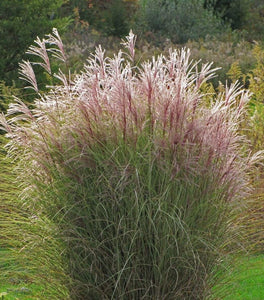
Gracillimus Miscanthus is one of the most classic maiden grasses for adding height, movement, and fine texture to sunny landscapes. Botanically known as Miscanthus sinensis ‘Gracillimus’, this warm-season ornamental grass forms a graceful fountain of narrow green leaves with bright white midribs.
The foliage has a softer, more refined look than many larger ornamental grasses, while still giving the garden strong structure. Use Gracillimus where you want height and movement without a stiff or heavy appearance, such as sunny borders, foundation beds, property lines, large perennial gardens, and naturalistic plantings.
Late-Season Plumes for Fall and Winter Interest
In late summer to fall, Gracillimus Miscanthus can produce silky flower plumes that emerge with purple, copper, or reddish tones before aging to silvery white. The plumes rise above the foliage, adding height, softness, and movement to the late-season garden.
Flowering can vary by climate and growing season, especially in cooler regions where blooms may be later or less consistent. Even when plume production is lighter, the fine-textured foliage and fall color make Gracillimus valuable as a long-season landscape plant.
A Taller Grass for Screens, Backdrops, and Specimens
Gracillimus is taller than compact maiden grasses like Adagio, commonly reaching 4–7 feet tall with a mature spread of about 3–5 feet. This size makes it useful as a specimen grass, a soft privacy screen, a back-of-border accent, or a repeating vertical element.
Plant it where the mature clump has room to arch naturally. Gracillimus pairs well with coneflowers, black-eyed Susan, sedum, Russian sage, catmint, salvia, asters, hardy hibiscus, switchgrass, little bluestem, and compact evergreens.
Fall Color and Winter Structure
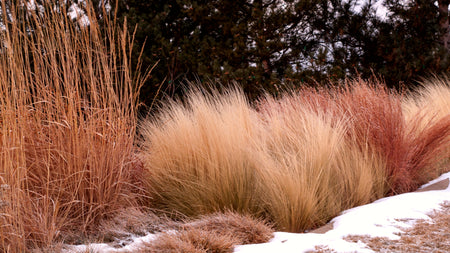
The narrow foliage often shifts to yellow, gold, tan, or bronze tones in fall before drying for winter. Left standing, the dried clump and plumes provide movement, texture, and structure after frost.
This winter presence is one of the main reasons gardeners love Miscanthus. Gracillimus helps sunny beds look intentional beyond the main bloom season, then starts fresh again after a late-winter or early-spring cutback.
Low Maintenance, Sun Loving, and Deer Resistant
Plant Gracillimus Miscanthus in full sun for the strongest habit and best plume production. It adapts to average, well-drained soil and becomes drought-tolerant once established, although consistent moisture during the first season helps it root in properly.
Gracillimus is generally considered deer-resistant and low-maintenance. Cut the clump back in late winter or early spring before new growth begins. Because Miscanthus can reseed or be restricted in some regions, check local guidance before planting, especially near natural areas.
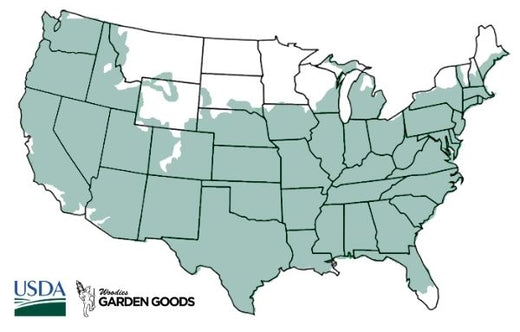
| Hardiness Zone: | 5-9 |
|---|---|
| Mature Height: | 4 to 7 Feet |
| Mature Width: | 3-4 Feet |
| Sunlight: | Full sun preferred; tolerates light part shade |
| Soil | Average, medium moisture, well-drained soil; adapts to clay, loam, and sandy soils when drainage is adequate |
| Water Requirements: | Water regularly after planting; average moisture once established; drought tolerant once established |
| Bloom Time / Color: | Late summer to fall; purple-tinged, coppery, or reddish plumes aging to silver-white |
| Ornamental Features | Fine-textured foliage, fountain-like habit, late-season plumes, fall color, winter structure, graceful movement |
| Wildlife Value | Dried stems and clumps provide seasonal cover and winter texture |
| Resistance | Generally deer resistant; low maintenance; drought tolerant once established; tolerant of urban conditions once established |
| Landscape Uses | Specimen grass, privacy screen, sunny border, foundation planting, back-of-border texture, mass planting, property line planting, perennial backdrop, winter interest planting, cottage garden, modern landscape |
How to Care for Gracillimus Miscanthus
Be sure to read our planting instructions to ensure a healthy and happy Gracillimus Miscanthus for years to come!
-v1745198428785.png?92x91)
How should I plant Gracillimus Miscanthus?
Plant Gracillimus Miscanthus in full sun with average, well-drained soil. Choose a site where the clump has room to mature and arch naturally, such as a sunny border, foundation bed, back of a perennial garden, property line, low screen, or open landscape bed. Dig a hole about twice as wide as the root ball and just as deep. Set the crown level with the surrounding soil, backfill with native soil, and water thoroughly. Space plants about 3–5 feet apart, depending on whether you want individual specimens or a fuller screening effect.
-v1745198433603.png?89x84)
How often should I water Gracillimus Miscanthus after planting?
Water Gracillimus Miscanthus deeply after planting, then keep the soil evenly moist while roots establish. During the first growing season, water when the top few inches of soil begin to dry, especially during hot or windy weather. Once established, Gracillimus Miscanthus is drought tolerant and usually needs little supplemental water except during extended dry periods. Good watering during the first season helps the clump establish faster and improves long-term performance.
-v1745198461786.png?90x89)
When should I fertilize Gracillimus Miscanthus?
Gracillimus Miscanthus usually needs little fertilizer in average garden soil. A light spring application of compost or a balanced slow-release fertilizer is enough for most landscapes. Avoid heavy high-nitrogen fertilizer, which can encourage floppy growth and reduce the strong fountain-like habit. Full sun, proper spacing, and good drainage are more important than frequent feeding.

When and how should I prune Gracillimus Miscanthus?
Cut Gracillimus Miscanthus back in late winter or early spring before new growth begins. Use sharp shears, hedge trimmers, or pruners to cut the dried foliage down to about 4–6 inches above the ground. Leave the foliage standing through winter if you want texture, movement, and seasonal structure. Because Gracillimus is a warm-season grass, be patient in spring; new growth often appears later than cool-season grasses.