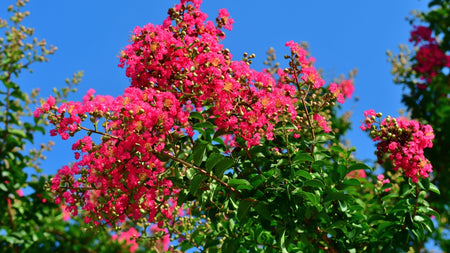
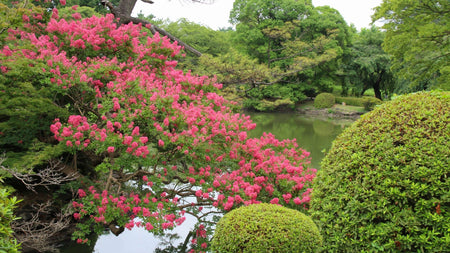
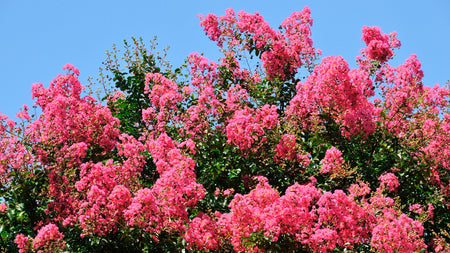
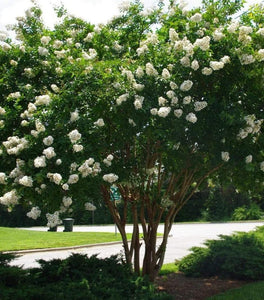
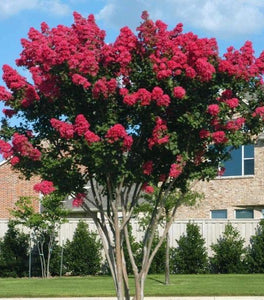
Images Depict Mature Plants
Double Feature® Crape Myrtle
Lagerstroemia indica 'Whit IX' USPP 23559
Double Feature Crape Myrtle is a great choice when you want bold red crape myrtle color but not a full-size tree. The reblooming, seedless habit is the real advantage because the plant keeps pushing flowers instead of wasting energy on seed capsules. I like it as a sunny foundation accent, flowering hedge, or specimen shrub where that 6–8 foot rounded size makes sense.

15% OFF SITEWIDE SALE
Use Code 'PRIMETIME15' At Checkout
📦 Free shipping on orders over $99.
Delay shipping by leaving us a message at Checkout.
Share:

A Red Reblooming Crape Myrtle Shrub with Compact Summer Color
Ruby-Red Flowers That Keep the Show Going
Double Feature® Crape Myrtle is a semi-dwarf reblooming crape myrtle grown for its ruby-red summer flowers, compact, rounded habit, and long bloom season. This colorful deciduous shrub brings the classic summer flower power of crape myrtle into a smaller, more manageable size for residential landscapes.
Unlike many crape myrtles that pause after the first bloom cycle while seed capsules form, Double Feature is valued for producing little to no seed and reblooming on the same flower panicles. That means more energy goes into color instead of seed, helping the plant deliver a long-lasting display from summer into fall.
Wine-Red New Growth and Strong Seasonal Color
Before the flowers arrive, Double Feature Crape Myrtle adds interest with small wine-red new leaves that mature to green. This early foliage color helps the plant stand out in the landscape even before bloom season begins.
By summer, ruby-red flower clusters cover the shrub, creating a bold color statement in sunny borders, foundation plantings, patio gardens, and mixed shrub beds. The combination of red new growth and red flowers gives Double Feature a richer, more layered look than a standard green-leaf crape myrtle.
A Semi-Dwarf Crape Myrtle for Smaller Landscapes
Double Feature typically matures around 6–8 feet tall and wide, making it easier to use than larger crape myrtle trees. Its dense, rounded habit works well as a specimen shrub, flowering hedge, informal screen, foundation accent, or colorful backdrop for perennials.
Use it where you want summer color without committing to a full-size crape myrtle tree. It can also be trained lightly into a small tree form by removing lower branches, but its natural strength is as a full, rounded flowering shrub.
Heat Tolerant, Sun Loving, and Low Maintenance
Double Feature Crape Myrtle performs best in full sun, where it develops the strongest flowering, richest color, and best disease resistance. It grows in average, medium-moisture, well-drained soil and handles heat well once established.
This variety is also known for strong resistance to powdery mildew, a common issue on older crape myrtle varieties. Like most crape myrtles, it is drought-tolerant once established, but regular watering during the first season helps build the root system and support better flowering.
Easy Care Without Heavy Pruning
Plant Double Feature in full sun with room for its mature spread. Water regularly after planting, mulch to conserve soil moisture, and fertilize lightly in spring if growth is weak. Avoid heavy late-season fertilizing, which can encourage tender growth before cold weather.
Pruning should be simple. Remove dead, damaged, crossing, or winter-injured stems in late winter or early spring, then lightly shape if needed. Avoid severe topping, often called “crape murder,” because Double Feature already has a compact shrub form and does not need hard cutting to bloom well.
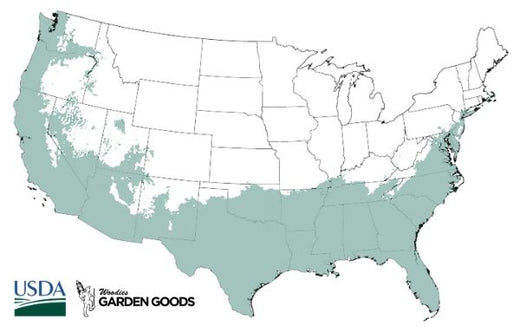
| Hardiness Zone: | 7-10 |
|---|---|
| Mature Height: | 6 to 8 Feet |
| Mature Width: | 6 to 8 Feet |
| Sunlight: | Full Sun |
| Soil: | Average, medium-moisture, well-drained soil; adaptable once established |
| Water: | Water regularly after planting; drought tolerant once established |
| Bloom Time / Color: | Late June to fall; ruby-red flowers |
| Foliage: | Small wine-red new growth maturing to green; fall color may vary |
| Ornamental Features: | Ruby-red blooms, reblooming habit, wine-red new growth, compact rounded form, long summer-to-fall color |
| Wildlife Value: | Flowers may attract pollinators; dense shrub form can provide seasonal cover |
| Resistance: | Heat tolerant; drought tolerant once established; powdery mildew resistant; deer browsing is usually limited |
| Landscape Uses: | Specimen shrub, flowering hedge, foundation planting, patio shrub, mixed border, informal screen, mass planting, large container, small trained accent tree |
How to Care for Double Feature® Crape Myrtle
Be sure to read our planting instructions to ensure a healthy and happy Double Feature Crape Myrtle plant for years to come!
-v1745853776002.png?92x91)
How should I plant Double Feature Crape Myrtle?
Plant Double Feature Crape Myrtle in full sun with well-drained soil. Choose a location with enough room for the shrub to mature to about 6–8 feet tall and wide. Full sun is important for the best flower color, strongest bloom production, and overall plant performance. Dig a hole about twice as wide as the root ball and just as deep. Set the top of the root ball level with the surrounding soil, backfill with native soil, and water thoroughly. Apply mulch around the root zone, keeping mulch several inches away from the main stems.
-v1745853807688.png?89x84)
How often should I water Double Feature Crape Myrtle after planting?
Water Double Feature Crape Myrtle deeply after planting, then keep the root zone evenly moist while the plant establishes. During the first growing season, water when the top few inches of soil begin to dry, especially during hot, dry, or windy weather. Once established, Double Feature is drought tolerant and heat tolerant, but deep watering during extended dry periods helps support better foliage, flower production, and overall vigor. Avoid constantly soggy soil.
-v1745853861638.png?90x89)
When should I fertilize Double Feature Crape Myrtle?
Fertilize Double Feature Crape Myrtle in early spring if growth is weak or soil fertility is low. Use a balanced slow-release shrub fertilizer or a compost topdressing to support healthy growth and flowering. Avoid overfertilizing with high-nitrogen products. Too much nitrogen can encourage leafy growth at the expense of flowers. In most average soils, full sun, proper watering, and good drainage are more important than heavy feeding.

When and how should I prune Double Feature Crape Myrtle?
Prune Double Feature Crape Myrtle in late winter or early spring before new growth begins. Remove dead, damaged, crossing, or winter-injured stems, then lightly shape the shrub if needed. Avoid severe topping. Double Feature naturally forms a compact rounded shrub and does not need hard pruning to bloom. Light pruning preserves its shape, supports airflow, and keeps the plant looking full and natural.