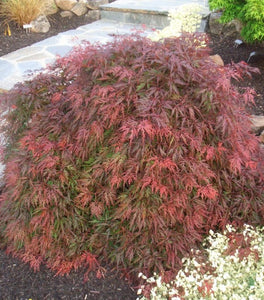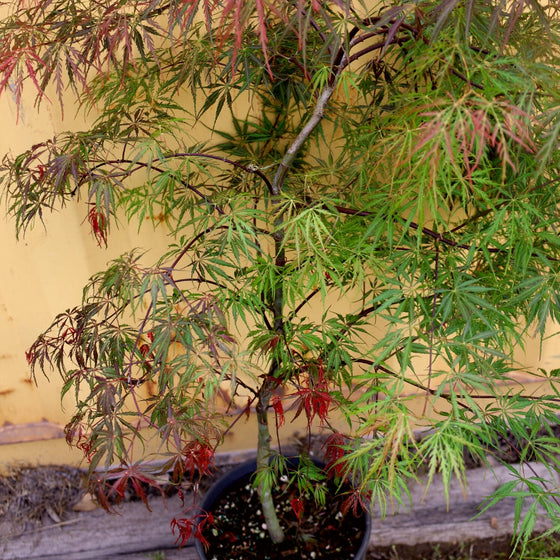
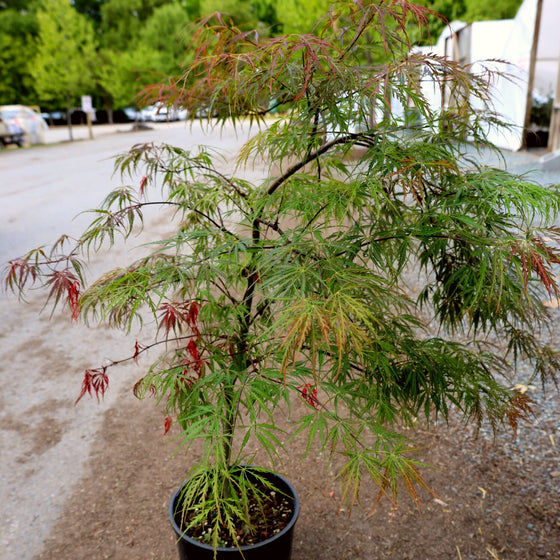
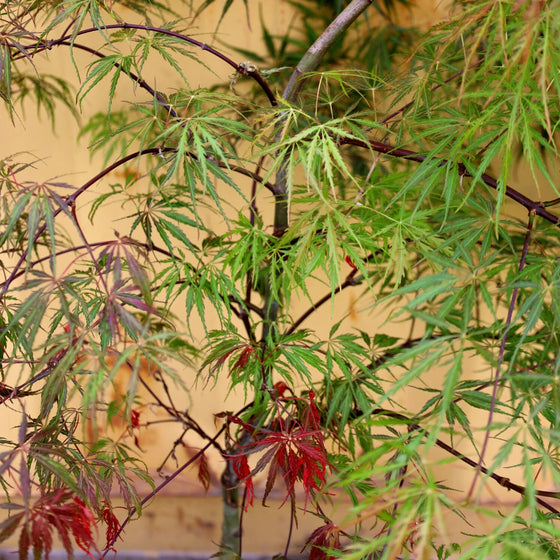


Images Depict Mature Plants
Inaba Shidare Japanese Maple
Acer palmatum var. dissectum 'Inaba Shidare'
Inaba Shidare is one of my favorite Japanese maples when a landscape needs color and movement at the same time. I like it because the purple-red foliage stays strong through the season, the weeping form feels elegant without being stiff, and the bright red fall color gives the tree one more big moment before winter. It is a beautiful choice for patios, raised beds, and focal-point plantings where the branching can really be appreciated.

Save Up to 25% On Your Order! Limited Time Only!
Discount Applied Automatically At Checkout
📦 Free shipping on orders over $99.
Delay shipping by leaving us a message at Checkout.
Share:

Cascading Red Laceleaf Beauty With Brilliant Fall Color
A Graceful Red Laceleaf Maple With Flowing Form
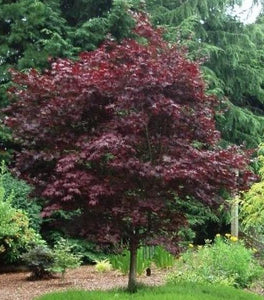
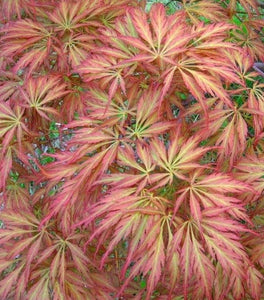
Inaba Shidare Japanese Maple is one of the most striking laceleaf Japanese maples for homeowners who want rich color and graceful movement in one tree. Its finely cut foliage emerges deep purple in spring, matures to purple-red through summer, and then turns bright red in fall. That strong color progression gives the tree real presence from the beginning of the season through autumn.
Its shape is just as important as its color. Rather than growing stiffly upright, Inaba Shidare forms a broad, mounded canopy with branches that spill downward in a waterfall-like effect. That flowing, cascading structure gives the tree softness and drama at the same time, making it especially effective where the branch form can be appreciated from the side or slightly above.
Rich Purple-Red Foliage That Holds Through the Season
One of the biggest reasons to choose Inaba Shidare is its foliage color. Many red laceleaf maples are loved for spring color, but this cultivar keeps strong purple-red tones through the growing season before shifting into brighter red in fall. That gives homeowners a tree that continues to make an impact long after spring has passed.
This consistent red foliage makes it especially useful in designs that need contrast and depth. It pairs beautifully with evergreen backdrops, stone features, dark mulch, chartreuse foliage, and lighter flowering perennials. Whether used as a specimen or planted among layered garden elements, it adds richness and movement without feeling heavy.
A Weeping Ornamental Tree for Small Gardens and Focal Points
Inaba Shidare Japanese Maple is an excellent choice for homeowners who want a statement tree without giving up too much space. It stays within a manageable size range and develops a broad, cascading form that works beautifully in island beds, foundation corners, raised planters, slopes, patio gardens, and focal-point plantings near walkways or seating areas.
Because of the way it spreads and drapes, it is especially effective where the form can be shown off. Planting it near a retaining wall, in an elevated bed, or beside a path helps highlight the tree's layered branching and gives it room to do what it does best. For smaller landscapes that need a true specimen plant, Inaba Shidare brings a lot of character in a refined footprint.
A Strong Choice for Patios, Water Features, and Designed Spaces
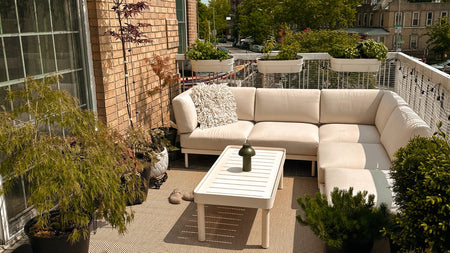
One of the most useful things about Inaba Shidare is how naturally it fits into more intentional garden design. Its cascading shape works beautifully near ponds, water features, stonework, and garden seating, where the fine foliage and draping habit can soften surrounding lines. It also looks especially beautiful on slopes or raised areas where the branches can spill outward and downward naturally.
This is the kind of tree that helps a planting feel thoughtful and finished. Instead of simply filling a space, it adds structure, texture, and mood. For homeowners who want an ornamental tree that feels artistic without being difficult, Inaba Shidare Japanese Maple is a very strong choice.
Easy Elegance With the Right Placement
Inaba Shidare Japanese Maple performs best in moist, well-drained soil and usually appreciates some protection from the harshest afternoon conditions in hotter climates. In cooler regions, it can handle more sun, while in warmer areas, filtered light or morning sun with afternoon protection often helps preserve leaf quality and overall appearance.
Like many Japanese maples, it does not need aggressive maintenance. Once established in the right place, it becomes a dependable ornamental tree with excellent texture, strong seasonal beauty, and relatively simple care. For homeowners who want a red laceleaf Japanese maple with a graceful weeping form and standout fall color, Inaba Shidare remains one of the best choices available.
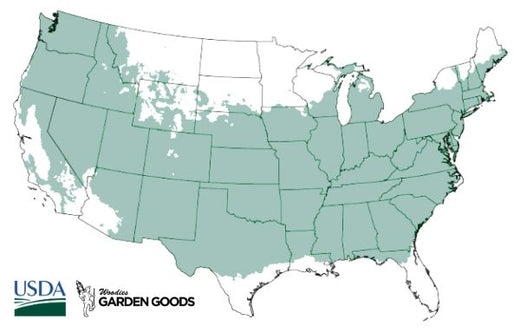
| Hardiness Zone: | 5-8 |
|---|---|
| Mature Height: | 6 to 10 feet |
| Mature Width: | 6 to 10 feet |
| Sunlight: | Full sun to partial shade; best with protection in hotter climates |
| Bloom Time / Color | Small reddish spring flowers; grown mainly for foliage |
| Soil | Moist, well-drained, slightly acidic soil |
| Water Requirements: | Regular moisture during establishment; keep evenly moist but not soggy |
| Ornamental Features | Finely cut purple-red foliage, cascading weeping habit, brilliant red fall color |
| Wildlife Value | Primarily ornamental landscape value |
| Resistance (deer/disease/drought/etc.) | Low-maintenance when properly sited; may be damaged by late spring frosts |
| Landscape Uses | Specimen tree, patio garden, slope planting, rock garden, near ponds or water features |
How to Care for Inaba Shidare Japanese Maple
Be sure to read our planting instructions to ensure a healthy and happy Inaba Shidare Japanese Maple Tree for years to come!
-v1745672333472.png?92x91)
How should I plant Inaba Shidare Japanese Maple?
Plant Inaba Shidare Japanese Maple in well-drained soil where it has room to develop its broad, cascading habit. Dig a hole two to three times as wide as the root ball but no deeper than the root ball itself, and set the tree so the root flare sits at or slightly above grade. Choose a location where the branches can spread and drape naturally without being crowded by foundations, walls, or larger shrubs. Inaba Shidare looks especially good in elevated beds, on slopes, near pathways, or beside water features where the weeping form can be fully appreciated. If possible, give it a spot where the layered branching can be viewed from more than one angle.
-v1745672369536.png?89x84)
How often should I water Inaba Shidare Japanese Maple after planting?
Water deeply right after planting and keep the soil evenly moist during the establishment period. Deep watering is more helpful than frequent shallow watering because it encourages stronger root development and helps the tree settle in more successfully. Once established, Inaba Shidare still prefers steady moisture but should never sit in soggy soil. Mulch helps regulate soil temperature and moisture, especially during hot or dry weather. In periods of drought, extra watering may be needed to keep the foliage looking fresh and healthy.
-v1745672391865.png?90x89)
When should I fertilize Inaba Shidare Japanese Maple?
Inaba Shidare Japanese Maple usually does not need heavy feeding. In most landscapes, a light application of balanced slow-release fertilizer in spring is enough if the tree appears to need support. Good soil, proper watering, and mulch are often more important than frequent fertilization. Too much fertilizer can encourage overly soft growth and take away from the refined habit that makes laceleaf Japanese maples so appealing. A modest approach is generally best for a tree grown mainly for form, texture, and foliage beauty.

When and how should I prune Inaba Shidare Japanese Maple?
Inaba Shidare Japanese Maple usually needs only light pruning. Remove dead, damaged, or crossing branches and preserve the tree’s natural cascading structure rather than trying to force it into a tighter outline. If shaping is needed, use a restrained approach. The goal is to maintain the graceful, layered habit that gives the tree its character. Most of the time, less pruning produces a better and more natural-looking specimen.