
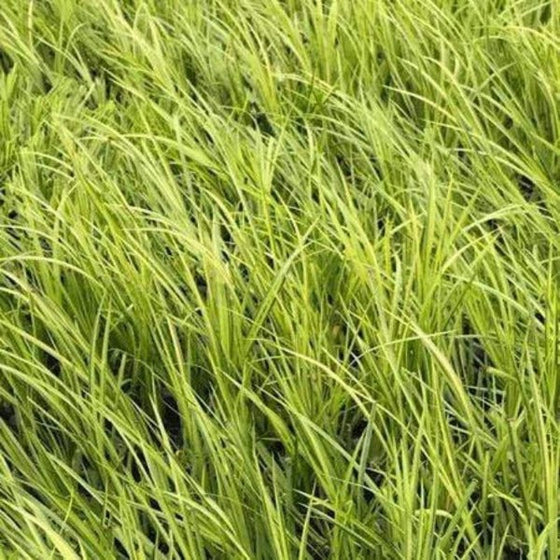
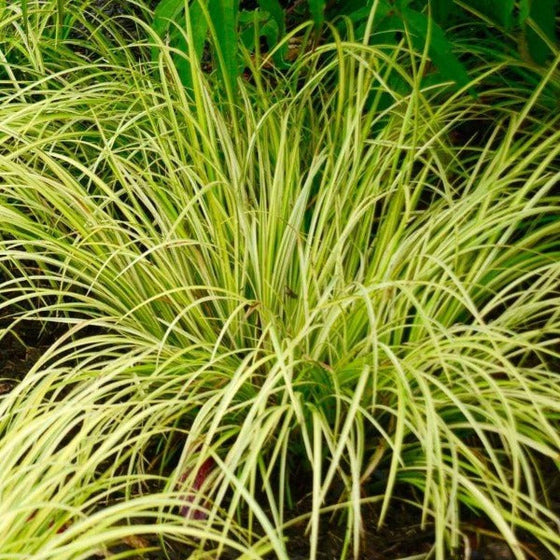


Images Depict Mature Plants
Golden Variegated Sweet Flag
Acorus gramineus 'Ogon'
Here's a plant I'd recommend whenever someone has a damp garden area that needs a little color. Golden Variegated Sweet Flag has these beautiful yellow-and-green striped leaves that really brighten a planting, especially around ponds or in partially shaded borders. What I particularly appreciate is that it thrives in consistently wet soil, something you certainly can't say about most ornamental grasses. I like planting several together along a pond edge, where the arching foliage softens the rocks and creates a beautiful transition into the surrounding garden. It's also a great companion for Japanese Iris, Astilbe, and moisture-loving ferns. One thing I always emphasize is don't let this plant dry out. Even after it's established, Golden Variegated Sweet Flag wants reliable moisture, and those golden leaves can develop brown tips when the soil gets too dry. Another interesting feature is the light fragrance released when the foliage is bruised. If you're looking for a compact, colorful groundcover that handles wet soil and doesn't require constant trimming, this is a plant I would definitely consider.
$17.56 with code SAVINGS20 at checkout Save $4.39
📦 Free shipping on orders over $99.
Delay shipping by leaving us a message at Checkout.
Share:


Golden Variegated Sweet Flag – Brilliant Golden Foliage for Moist Gardens and Pond Edges
Golden Variegated Sweet Flag Brightens Moist Gardens With Brilliant Golden Foliage
Golden Variegated Sweet Flag is one of those plants that can instantly brighten an area of the garden that might otherwise look dark or uninteresting. Its narrow, golden-yellow leaves accented with attractive green stripes create a colorful display that stands out beautifully against dark mulch, natural stone, and surrounding green foliage. Also known as Acorus Ogon, this compact perennial develops graceful, arching clumps that resemble miniature ornamental grass. Unlike many landscape plants that depend on flowers for seasonal color, Golden Variegated Sweet Flag provides its greatest ornamental value through its beautiful foliage. The warm yellow tones can make shaded garden beds appear brighter and help create attractive transitions between water features, paths, and perennial plantings.
What makes Golden Variegated Sweet Flag especially useful is its ability to combine outstanding foliage color with a preference for consistently moist growing conditions. Many popular golden ornamental grasses struggle when their roots remain wet, but this plant is naturally adapted to moisture-rich environments. It performs beautifully along pond edges, streams, shaded garden borders, and other locations where the soil remains reliably damp. Its small mature size also allows homeowners to enjoy colorful foliage without dedicating a large planting area to a single plant. For gardeners looking for a low-growing golden accent that thrives in moist soil, Golden Variegated Sweet Flag offers a beautiful and practical solution.
An Excellent Golden Groundcover for Pond Edges and Wet Soil
One of the most valuable characteristics of Golden Variegated Sweet Flag is its remarkable tolerance for moist, boggy, and occasionally submerged growing conditions. This perennial grows naturally from creeping rhizomes and thrives where the root zone remains consistently moist. It can be used along water garden margins, beside streams, and in landscape beds that receive reliable moisture. Properly established plants can even tolerate shallow standing water approximately 3–4 inches deep, making them particularly useful for ornamental pond plantings. This separates Golden Variegated Sweet Flag from many traditional ornamental grasses that deteriorate in saturated soil. Its bright foliage also provides an attractive contrast to dark water, river stones, and other features commonly found in water gardens.
Although the plant appreciates wet conditions, it is not necessary to grow Golden Variegated Sweet Flag directly in a pond. It performs very well in consistently moist garden soil that contains organic matter, including ordinary borders and containers that receive adequate irrigation. The most important requirement is preventing the root zone from becoming excessively dry. Brown leaf tips, wilting, and reduced foliage quality can develop when moisture becomes insufficient. In rain gardens, position it where water is retained long enough to maintain damp conditions between rainfall events; a rain garden that becomes extremely dry for long periods may be unsuitable. With consistent moisture, Golden Variegated Sweet Flag provides attractive ground-level color in places where other ornamental plants may struggle.
Graceful Arching Growth Creates Beautiful Garden Edging and Low Borders
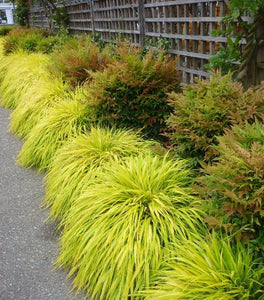
Golden Variegated Sweet Flag develops a compact, arching mound of slender foliage, typically reaching approximately 6–12 inches tall and 10–12 inches wide. The narrow leaves emerge in dense tufts before curving gracefully outward, creating a soft appearance that complements stone pathways, garden borders, and water features. Its naturally low growth makes it especially useful along the edges of planting beds, where taller ornamental grasses might block neighboring plants. The golden coloring provides an attractive contrast with dark green foliage, while the fine leaf texture helps soften hard landscape elements. Because Golden Variegated Sweet Flag remains relatively small, it is also well suited to courtyard gardens, narrow planting strips, and decorative containers.
For a continuous edging effect, plant Golden Variegated Sweet Flag approximately 10–12 inches on-center, allowing adjacent clumps to develop into a soft ribbon of golden foliage. The plant spreads gradually via short, creeping rhizomes and can form an attractive ground cover when growing conditions are favorable. This makes it useful for filling spaces between moisture-loving perennials without creating the tall, spreading habit associated with some larger grasses. In woodland gardens, its foliage looks particularly attractive alongside ferns, Hostas, and other broadleaf plants. For a more formal landscape, repeat small groups along a shaded walkway or the border of a pond. The combination of compact size, graceful shape, and golden foliage makes this perennial remarkably versatile.
Golden and Green Variegated Leaves Provide Color Through Multiple Seasons
The foliage of Golden Variegated Sweet Flag is the reason most homeowners choose this plant. Each narrow leaf features bright golden-yellow coloring with contrasting green stripes, creating an attractive variegated pattern that can seem to glow in the right light. During spring, fresh foliage emerges and quickly develops its characteristic arching habit. The plant continues to produce attractive leaves throughout the summer when adequate soil moisture is available. Although Golden Variegated Sweet Flag can tolerate considerable shade, partial sun often encourages especially attractive foliage color, while protection from intense afternoon heat can be beneficial in warmer climates. Its golden leaves pair beautifully with darker greens, blues, and purples, allowing it to serve as an accent even when surrounding plants are not in bloom.
In mild climates, Golden Variegated Sweet Flag can retain much of its foliage during winter, giving it evergreen or semi-evergreen ornamental value. In colder growing regions, the leaves may become brown, flattened, or damaged as temperatures drop. This is a normal seasonal response, and healthy plants typically develop fresh growth when spring returns. The plant also produces small, greenish-yellow flowers arranged on an inconspicuous spadix, but these flowers are usually hidden among the foliage and contribute little to its overall appearance. Unlike showy flowering perennials, Golden Variegated Sweet Flag is best appreciated for its lasting foliage color, graceful texture, and compact growth habit.
Aromatic Foliage and Deer Resistance Add Practical Landscape Benefits
Golden Variegated Sweet Flag offers an interesting characteristic that many homeowners discover only after growing it: the leaves release a pleasant, sweet or lightly citrus-like aroma when bruised or crushed. The fragrance is generally subtle and is not comparable to the strong scent of a flowering shrub. Instead, it provides an additional sensory feature that makes the plant interesting near garden paths and containers. Its foliage also has a naturally fine texture, creating movement and softness around ponds and other water features. The combination of golden color, delicate texture, and lightly aromatic leaves gives this plant more ornamental character than its modest size might suggest.
Golden Variegated Sweet Flag is also generally considered resistant to deer browsing, although no ornamental plant is completely deer-proof. It can be particularly useful in moist garden areas where deer pressure makes it difficult to maintain more palatable plants. The dense foliage provides some ground-level cover for small garden organisms, but the plant should not be promoted as a major nectar source for pollinators. Its small flowers are not especially showy, and specific butterfly or moth larval-host relationships have not been reliably established for the 'Ogon' cultivar. For homeowners looking for a colorful, moisture-loving plant with relatively few routine maintenance requirements, Golden Variegated Sweet Flag offers a practical combination of attractive foliage and adaptability to various sites.
Golden Variegated Sweet Flag Thrives in Partial Sun and Consistently Moist Soil
Golden Variegated Sweet Flag performs best when planted in full sun to partial shade in consistently moist soil. In cooler climates, the plant can grow successfully with substantial sunlight when enough water is available. In regions with hot summers, morning sun and afternoon shade often provide more comfortable growing conditions and help prevent foliage scorching. It adapts to several soil types, including loam, clay, and sandy soils, provided the root zone receives reliable moisture. Unlike drought-tolerant ornamental grasses, Golden Variegated Sweet Flag should not be planted in dry rock gardens, exposed gravel beds, or other sites with limited irrigation. Consistent water availability is its most important requirement for growth.
Once established, this perennial generally needs little additional maintenance beyond watering during dry periods and occasional foliage cleanup. It is not a heavy feeder and rarely requires substantial fertilizer in healthy garden soil. During late winter or early spring, remove damaged or unattractive leaves before fresh growth appears. Healthy evergreen foliage may remain in place until it naturally declines. Golden Variegated Sweet Flag spreads gradually by rhizomes, so established clumps can be divided if they become crowded or if additional plants are desired. Given suitable growing conditions, this easy-to-maintain perennial offers beautiful golden foliage without frequent pruning, shaping, or complicated seasonal care.
Create Beautiful Pondside and Shade Garden Combinations With Golden Sweet Flag
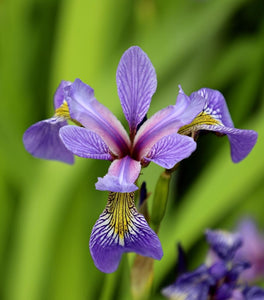
Golden Variegated Sweet Flag becomes even more attractive when paired with plants that appreciate similar moisture conditions. Its bright golden-yellow foliage provides striking contrast against deep green, burgundy, and purple leaves, creating colorful combinations in pond gardens and moist perennial beds. I particularly like combining it with Japanese Iris, moisture-loving Ferns, Astilbe, and compatible Coral Bells. Japanese Iris contributes beautiful seasonal flowers, while ferns add taller, finely divided foliage. Astilbe provides colorful summer flower plumes and broad foliage textures, making it especially effective in partially shaded, moisture-rich soil. The golden leaves of Sweet Flag help brighten these combinations even when neighboring plants are not blooming.
For a more natural water garden, plant Golden Variegated Sweet Flag along the edges of a pond or stream where its arching foliage can soften the transition between water and surrounding stonework. It also looks beautiful in decorative containers on partially shaded patios, provided the potting mix is kept consistently moist. A shallow water-garden container or appropriately designed self-watering planter can be particularly effective. When planting in ordinary garden beds, avoid pairing it with drought-tolerant plants that need the soil to dry between watering. Choosing companions with similar moisture requirements helps create a healthier, easier-to-maintain planting. Whether used as a small accent or repeated along a moist border, Golden Variegated Sweet Flag creates a beautiful, luminous display that adds lasting color and texture to the garden.
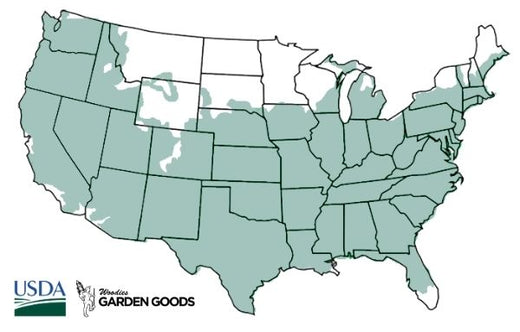
| Hardiness Zone: | 5-9 |
|---|---|
| Mature Height: | 6–12 inches |
| Mature Width: | 10–12 inches; colonies may spread farther over time |
| Sunlight: | Full sun to partial shade; tolerates considerable shade, with afternoon protection beneficial in hot climates |
| Soil | Consistently moist to wet soil; adapts to loam, clay, and sand; tolerates boggy conditions |
| Water | High; maintain consistently moist to wet soil |
| Bloom Time / Color | Late spring to midsummer, generally May–July / Greenish-yellow |
| Foliage: | Golden-yellow with green variegation |
| Ornamental Features | Bright golden-yellow and green striped foliage, fine arching leaves, compact growth, aromatic foliage, attractive low groundcover |
| Wildlife Value | Small invertebrates may shelter in foliage |
| Resistance | Deer, wet soil, shallow standing water, heavy shade, and occasional erosion-prone moist sites; not drought tolerant |
| Landscape Uses | Pond edges, water gardens, rain gardens, moist borders, shaded groundcovers, containers, stream banks, bog gardens, pathway edging |
How to Care for Golden Variegated Sweet Flag
Before you buy Golden Variegated Sweet Flag, make sure to read the care instructions to keep this Plant healthy and thriving.

How should I plant Golden Variegated Sweet Flag?
Plant Golden Variegated Sweet Flag in full sun to partial shade with consistently moist or wet soil. A location receiving gentle morning sunlight and afternoon shade is particularly suitable in warmer climates. The plant is ideal for pond edges, moist perennial borders, and areas where the soil remains damp throughout the growing season. Before planting, remove weeds and loosen the surrounding soil so the roots can spread into the planting area. Unlike many ornamental grasses, Golden Variegated Sweet Flag tolerates boggy conditions and can grow with shallow water approximately 3–4 inches deep around the planting area. For conventional garden beds, provide a moisture-retentive soil that does not dry excessively. Dig a planting hole approximately twice as wide as the root ball and no deeper than its height. Carefully remove the plant from its container and loosen any tightly circling roots. Place the crown at the appropriate soil or water level for the intended planting method and backfill gently. Water thoroughly after planting. For groundcover or edging applications, space individual plants approximately 10–12 inches apart. Apply a light organic mulch between plants to help conserve moisture, keeping it away from the crown. When planting in a pond, use a suitable aquatic planting container or prepared shallow-water bed that prevents the potting medium from washing away.

How often should I water Golden Variegated Sweet Flag after planting?
Golden Variegated Sweet Flag requires consistently moist to wet soil throughout the growing season. Unlike drought-tolerant ornamental grasses, it should not be allowed to dry out completely between watering sessions. Immediately after planting, water thoroughly and continue checking soil moisture frequently. Plants grown in ordinary garden beds may require supplemental irrigation several times per week during hot or dry weather, depending on soil conditions. The goal is to maintain reliable moisture throughout the root zone. Brown leaf tips, wilting foliage, and reduced growth can indicate that the soil has become too dry. Locations receiving natural moisture, such as pond margins and damp garden beds, generally require less additional watering. Once established, Golden Variegated Sweet Flag remains a moisture-loving perennial rather than becoming drought tolerant. Continue providing water during dry periods, especially when the plant grows in containers or exposed garden beds. Container-grown specimens may require daily moisture checks during hot summer weather because potting mixes can dry quickly. In suitable aquatic planters, shallow standing water can help maintain the moisture the plant prefers. Avoid allowing water-garden containers to dry completely. An organic mulch layer can help conserve moisture in ordinary beds. Consistent watering is the most important part of maintaining healthy, colorful Golden Variegated Sweet Flag foliage.

When should I fertilize Golden Variegated Sweet Flag?
Golden Variegated Sweet Flag generally requires little supplemental fertilizer when grown in reasonably fertile soil. If the plant is growing vigorously and producing attractive yellow-and-green foliage, additional feeding may not be necessary. When soil testing or obvious nutrient deficiency indicates a need, apply a modest amount of balanced, slow-release fertilizer in early spring as fresh growth begins, following the product label. Plants growing in containers may benefit from carefully measured feeding when nutrients in the potting mix become depleted. For aquatic plantings, use only fertilizer products specifically appropriate for water gardens and follow their instructions to avoid releasing excess nutrients into the water. Avoid heavy or repeated fertilization, since excess nutrients can encourage unnecessary growth and contribute to water-quality problems near ponds. Fertilizer cannot correct problems caused by inadequate moisture, excessive heat, or winter damage. If leaves develop brown tips, check moisture levels before assuming the plant needs feeding. Golden Variegated Sweet Flag normally performs well with appropriate soil conditions, reliable moisture, and minimal nutrient supplementation. For most homeowners, maintaining consistent water availability and healthy growing conditions is more important than a frequent fertilization schedule.

When and how should I prune Golden Variegated Sweet Flag?
Golden Variegated Sweet Flag requires very little pruning because it naturally maintains a compact, arching form. The best time for routine cleanup is late winter or early spring before fresh growth becomes vigorous. In colder climates, some foliage may turn brown or become flattened during winter. Remove these damaged leaves with clean pruning shears or scissors to make room for new golden growth. In milder climates, healthy foliage may remain attractive throughout winter and does not need to be removed simply because the growing season has ended. Unlike woody flowering shrubs, Golden Variegated Sweet Flag is maintained primarily for its foliage, so pruning is not timed to preserve a showy floral display. During the growing season, remove individual leaves that have become scorched, broken, or unattractive. Avoid repeatedly cutting the entire plant back unless a substantial portion of the foliage is damaged. As clumps mature, the underground rhizomes gradually spread and may eventually fill the available planting area. If the planting becomes crowded, lift and divide healthy sections in spring, then replant them in consistently moist soil. Division is also an effective way to create additional plantings. With occasional seasonal cleanup and adequate moisture, Golden Variegated Sweet Flag maintains a neat, attractive appearance without regular shearing or intensive maintenance.