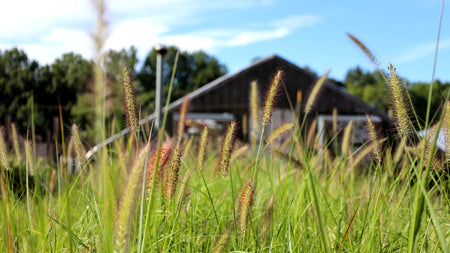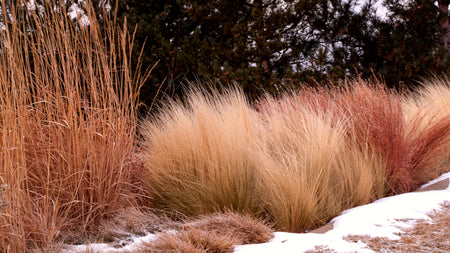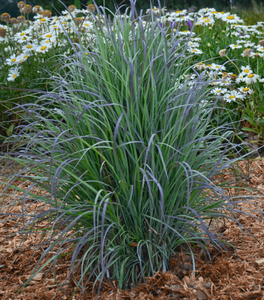


Images Depict Mature Plants
Prairie Dropseed
Sporobolus heterolepis
There's a good reason Prairie Dropseed has become one of the most respected native ornamental grasses for residential landscapes. It has this beautiful fountain-shaped growth habit that looks refined enough for a formal garden but still fits perfectly into a natural prairie-style planting. What really gets my attention is the fine green foliage, the unusual fragrance of its late-summer flowers, and the brilliant golden-orange color it develops in fall. You don't find that combination in many ornamental grasses. I particularly like using Prairie Dropseed in groups along sunny walkways or mixing it with Purple Coneflowers, Black-Eyed Susans, and Little Bluestem. The fine foliage softens everything around it without becoming too large or aggressive. One thing I always explain to gardeners is that Prairie Dropseed can be slow to establish, so don't expect it to double in size immediately after planting. Give it time to develop a good root system, keep it watered during that first growing season, and avoid overfertilizing it. Once it gets established, it's remarkably drought tolerant, long-lived, and easy to maintain. For someone who wants a native grass that looks beautiful throughout the seasons and doesn't require a lot of attention, Prairie Dropseed is one of the best choices I can recommend.
$23.96 with code SAVINGS20 at checkout Save $5.99
📦 Free shipping on orders over $99.
Delay shipping by leaving us a message at Checkout.
Share:Recommended Add-Ons


Prairie Dropseed – Graceful Native Foliage, Fragrant Flowers, and Beautiful Golden Fall Color
Prairie Dropseed Brings Graceful Native Beauty to Sunny Landscapes
Prairie Dropseed is one of the most attractive native ornamental grasses for homeowners who want something that looks natural without making the landscape feel untidy. Its narrow, threadlike green leaves form a graceful fountain-shaped mound that adds beautiful texture and movement throughout the growing season. Unlike tall ornamental grasses that can dominate smaller gardens, Prairie Dropseed develops a dense, rounded clump that fits comfortably into perennial borders, walkway plantings, and naturalistic landscapes. The fine foliage arches outward from the center of the plant, creating an elegant, flowing appearance that softens surrounding flowers, shrubs, and hardscape features. Whether planted individually or repeated throughout a larger garden, Prairie Dropseed offers an unusually refined look for a native grass.
One of the things that makes this grass especially useful is its ability to fit into both traditional residential landscapes and more natural prairie-inspired designs. Its compact, clump-forming growth habit provides structure without spreading aggressively through underground runners. The green foliage creates a beautiful contrast against flowering perennials, while its soft texture helps balance plants with larger leaves or upright flowering stems. As the growing season progresses, Prairie Dropseed develops delicate fragrant flowers, followed by attractive autumn color and winter texture. For homeowners interested in native plants, low-maintenance landscapes, and natural ornamental beauty, Prairie Dropseed provides an exceptional combination of elegance, durability, and lasting garden interest.
Fragrant Late-Summer Flowers Add an Unexpected Sensory Experience
One of the most distinctive features of Prairie Dropseed is something you might not expect from an ornamental grass: its late-summer flowers produce a noticeable fragrance. During August, September, and sometimes into October, slender stems rise above the foliage and develop delicate, openly branched flower panicles. These airy flowers display subtle pink, bronze, and tan coloration, creating a soft haze above the green leaves. Rather than producing the dense, showy plumes associated with Fountain Grass or Muhly Grass, Prairie Dropseed develops fine flower clusters that seem to float over the foliage. Their delicate structure allows sunlight to pass through, making the flowers especially attractive when viewed against darker trees or shrubs.
The fragrance of Prairie Dropseed is often described as resembling coriander, cilantro, buttered popcorn, or warm spices. Different people notice different qualities in the scent, and the intensity can vary with weather conditions and flower maturity. This unusual fragrance is one reason I recommend planting Prairie Dropseed near sunny walkways, patios, and garden seating areas, where homeowners can appreciate the flowers up close. After blooming, the flower panicles gradually develop into small seed heads that may remain attractive through fall and into winter. The combination of fine foliage, delicate flowers, seasonal fragrance, and graceful movement makes Prairie Dropseed particularly interesting for gardeners who appreciate plants that offer more than a single ornamental feature.
Fine Green Foliage Turns Beautiful Golden Orange in Autumn
The foliage of Prairie Dropseed provides outstanding ornamental value even when the plant is not flowering. During spring, fresh green leaves emerge from the base and gradually develop into dense, fountain-shaped mounds of narrow, arching foliage. The leaves are fine enough to create a soft, almost flowing texture, while the dense central crown gives the plant a substantial presence. Mature foliage typically reaches 12 to 18 inches tall, although overall height increases as flower stems develop. Throughout summer, the green clumps create an attractive background for flowering perennials and help connect different plant shapes into a balanced landscape design. Prairie Dropseed is especially effective when repeated in groups because the fine foliage creates a consistent texture without overwhelming surrounding plants.
When autumn arrives, Prairie Dropseed becomes even more attractive. Its green foliage gradually transforms into golden-yellow, orange, bronze, and copper tones, creating a beautiful warm-season finale. The color can be particularly impressive when planted alongside dark green evergreens, purple fall flowers, or native grasses with reddish autumn foliage. As temperatures continue to drop, the foliage fades to tan and straw-colored shades that provide natural winter texture. Prairie Dropseed is a deciduous, warm-season perennial grass, meaning its green foliage becomes dormant during winter rather than remaining evergreen. Many gardeners leave the dried clumps standing until early spring because they provide visual interest after neighboring perennials have disappeared. This combination of summer foliage, golden autumn color, and winter structure gives Prairie Dropseed excellent four-season landscape value.
Prairie Dropseed Creates Elegant Borders, Walkway Edging, and Mass Plantings
Prairie Dropseed is especially valuable for creating soft, attractive landscape borders and repeating patterns of fine foliage. Its naturally rounded growth habit makes it useful along walkways, near patios, and at the front or middle of sunny perennial beds. Unlike larger native grasses, Prairie Dropseed can provide visible structure without blocking the flowers and foliage of neighboring plants. Its mature clumps generally reach approximately 2 to 3 feet wide, creating enough substance to define a planting area while maintaining an attractive, manageable shape. When several plants are positioned along a walkway, their arching foliage forms a graceful edge that complements stone, brick, and other garden materials.
For larger landscapes, I particularly recommend planting Prairie Dropseed in groups of three, five, seven, or more plants. Repeating the rounded clumps creates a beautiful natural rhythm, especially when the delicate flower heads begin moving in the breeze. Space plants approximately 24 to 36 inches on-center, adjusting for the desired density and mature size. Closer spacing creates a more unified groundcover effect, while wider spacing allows the individual fountain-shaped mounds to remain distinct. Prairie Dropseed is equally effective in prairie gardens, native plant borders, naturalized slopes, commercial landscapes, and modern perennial plantings. Its controlled clumping habit also makes it easier to manage than ornamental grasses that spread aggressively through extensive rhizomes.
Drought Tolerance and Long-Lived Growth Make Prairie Dropseed Easy to Maintain
Prairie Dropseed is a wonderful choice for homeowners seeking a durable, drought-tolerant ornamental grass that thrives in full sun. Native to North American prairies and open landscapes, this species is adapted to a wide range of soil conditions, including sandy, rocky, loamy, and moderately heavy clay soils. It performs best where the soil drains adequately and receives plenty of sunlight. Once established, Prairie Dropseed develops a substantial root system that helps it tolerate summer heat, occasional drought, and relatively lean soil conditions. This makes it particularly useful in lower-maintenance landscapes where homeowners want to reduce irrigation without sacrificing attractive foliage and seasonal color.
One important characteristic to understand is that Prairie Dropseed can be slow to establish. Young plants often spend their first growing seasons developing roots before producing substantial top growth. Providing consistent establishment watering and keeping competing weeds under control will help the plants become established successfully. Once mature, Prairie Dropseed is exceptionally long-lived and generally requires very little fertilization. It also has good deer resistance, although browsing can still occur under unusual conditions. Routine maintenance mainly involves removing dormant foliage in late winter or early spring before new shoots emerge. Unlike many short-lived ornamental grasses, established Prairie Dropseed clumps may remain attractive for many years without frequent division. Given appropriate sunlight and drainage, Prairie Dropseed becomes a dependable, low-maintenance foundation for beautiful sunny landscapes.
Prairie Dropseed Supports Wildlife and Beautiful Native Plant Combinations
Prairie Dropseed is a native North American grass that fits naturally into wildlife-friendly gardens, prairie-inspired landscapes, and mixed native perennial borders. Its dense, arching foliage provides cover near the soil surface, while its mature seeds can provide food for small birds and other wildlife. Some native insects also use prairie grasses as habitat or larval food plants, although specific host relationships should be verified rather than assumed for every species. Because Prairie Dropseed is wind-pollinated, its flowers do not serve the same nectar-producing role as Coneflowers, Milkweeds, or other showy flowering perennials. Instead, its ecological contribution comes primarily from foliage structure, seed production, and its role in diverse native plant communities.
Prairie Dropseed looks particularly beautiful when combined with Purple Coneflowers, Black-Eyed Susans, Butterfly Weed, Blazing Star, Goldenrod, and Little Bluestem. These plants share a preference for sunny growing conditions and create attractive combinations of flower color, foliage texture, and seasonal interest. Prairie Dropseed's low, fountain-shaped growth provides an excellent foreground for taller native flowers, while its golden autumn color contrasts beautifully with Little Bluestem's copper-red foliage. In more formal gardens, Prairie Dropseed can be repeated along borders or paired with compact flowering shrubs for a softer landscape appearance. Because the grass remains a controlled clump rather than spreading aggressively, it allows neighboring plants to develop without being rapidly overtaken. For homeowners who want a beautiful native garden with less maintenance, seasonal fragrance, and long-lasting ornamental value, Prairie Dropseed is an excellent plant to include.
6. Quick Facts Table
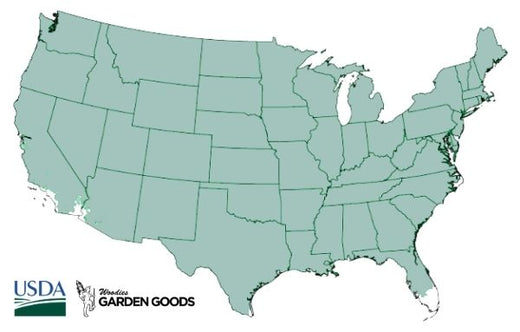
| Hardiness Zone | 3-9 |
|---|---|
| Mature Height: | Foliage approximately 12–20 inches; flowering stems commonly 24–36 inches |
| Mature Width: | Approximately 24–36 inches |
| Sunlight: | Full sun preferred; tolerates light partial shade with potentially reduced flowering and density |
| Water Requirements: | Moderate during establishment; low to moderate once established |
| Soil | Average to dry, well-drained sandy, rocky, loamy, or clay soil; tolerates relatively poor fertility |
| Bloom Time / Color | Late summer to early fall, generally August–October / Pinkish-tan, copper-brown, and greenish-bronze |
| Wildlife Value | Seed-eating birds, including sparrows and other small songbirds; ground-dwelling insects and small wildlife seeking shelter |
| Resistance (deer/disease/drought/etc.) | Deer, Drought once established, Heat, Dry Soil, Clay Soil, Rocky Soil, Black Walnut, Urban Pollution, moderate erosion; not suited to prolonged waterlogging |
| Landscape Uses | Sunny borders, mass plantings, native gardens, prairie gardens, walkways, edging, naturalized slopes, dry gardens, meadow plantings, and large containers |
How to Care for Prairie Dropseed
Before you buy Prairie Dropseed Grass, make sure to read the care instructions to keep this plant healthy and thriving.

How should I plant Prairie Dropseed?
Plant Prairie Dropseed in full sun with average to dry, well-drained soil. Choose a location receiving at least six hours of direct sunlight to encourage dense foliage and abundant flowering. Prairie Dropseed adapts to sandy, rocky, loamy, and moderately heavy clay soils, provided water does not remain standing for extended periods. It is especially effective in sunny borders, native plantings, and areas where its mature fountain-shaped foliage has room to develop. Before planting, remove weeds and loosen compacted soil as necessary. Spring planting is particularly beneficial because it allows the root system to become established before winter. Prairie Dropseed is naturally adapted to relatively lean soils, so extensive fertilization or heavy soil amendment is generally unnecessary. Dig a planting hole approximately twice as wide as the root ball and no deeper than its height. Carefully remove the plant from its container and loosen any tightly circling roots. Position the crown at or slightly above the surrounding soil level, then backfill with the original soil and water thoroughly. For mass plantings and borders, space plants approximately 24–36 inches apart on center. Wider spacing allows each clump to maintain a distinct fountain-shaped appearance, while closer spacing creates a more continuous planting. Apply a light layer of mulch around the root zone during establishment, keeping it away from the crown. Avoid planting too deeply or allowing the crown to remain submerged, since healthy drainage supports long-term growth.

How often should I water Prairie Dropseed after planting?
During its first growing season, Prairie Dropseed requires consistent watering while the root system develops. Water thoroughly immediately after planting, then monitor the soil regularly, especially during hot or dry weather. As a general starting point, approximately 1 inch of water per week, including rainfall, may be appropriate for many garden locations during establishment. Actual needs depend on soil texture, temperature, rainfall, and plant size. Sandy soils may dry quickly and require more frequent attention, while heavier soils retain moisture longer. Water deeply enough to reach the root zone, then allow the soil surface to begin drying before watering again. Avoid constantly saturated conditions, which can interfere with healthy root development. Once established, Prairie Dropseed becomes highly tolerant of occasional drought and generally requires little supplemental irrigation. Its deep, fibrous root system helps it survive periods of limited rainfall, making it well suited to lower-water landscape designs. During prolonged extreme drought, occasional deep watering may improve foliage quality and help maintain plant vigor. Container-grown plants require more frequent moisture checks because their roots have access to a limited amount of soil. Avoid excessive irrigation after establishment, particularly in heavy soils with poor drainage. Prairie Dropseed is much more dependable in relatively dry, sunny conditions than in persistently wet planting sites. Providing moderate establishment moisture followed by appropriately reduced irrigation supports healthy, long-lived growth.

When should I fertilize Prairie Dropseed?
Prairie Dropseed generally requires very little supplemental fertilizer because it is naturally adapted to relatively lean prairie soils. In most residential landscapes, healthy plants can grow successfully without annual feeding. If a soil test identifies a nutrient deficiency, apply a modest amount of balanced, slow-release fertilizer in early spring as new growth begins, following the manufacturer's recommended application rate. A light layer of finished compost may also be appropriate in particularly poor soil, provided it does not interfere with drainage. Prairie Dropseed develops relatively slowly during establishment, but this is a natural characteristic of the species rather than necessarily a sign of nutrient deficiency. Avoid heavy nitrogen applications or attempts to force rapid growth through frequent fertilization. Excessive nutrients can encourage unnecessary leafy growth and reduce the plant's naturally tidy appearance. Overfertilization may also increase competition from weeds in native plantings or meadow-style landscapes. If an established Prairie Dropseed appears weak, first inspect sunlight exposure, soil drainage, and watering practices before applying fertilizer. This grass generally performs best when allowed to grow at its natural pace. For long-term success, prioritize full sunlight, well-drained soil, moderate establishment watering, and minimal fertilization rather than an intensive feeding schedule.

When and how should I prune Prairie Dropseed?
Prairie Dropseed is a warm-season perennial grass that becomes dormant during winter. The best time to perform annual maintenance is late winter or early spring before fresh green shoots begin emerging from the crown. Many homeowners leave the golden-tan foliage and delicate seed heads standing throughout fall and winter because they provide attractive seasonal texture. The dried foliage also contributes shelter for small wildlife. There is generally no need to cut Prairie Dropseed immediately after flowering. Allowing the grass to remain standing through winter preserves its natural appearance and can enhance the beauty of dormant perennial gardens. When spring approaches, gather the old foliage and cut it back to approximately 4–6 inches above the ground, taking care not to damage new shoots. Prairie Dropseed forms a dense crown, so sharp pruning shears or suitable hand tools make cleanup easier. Unlike many ornamental grasses, established Prairie Dropseed usually does not need frequent division because its clumps are long-lived and relatively slow-growing. If division becomes necessary, perform it in spring as growth resumes, but understand that mature clumps can be difficult to separate and may take time to reestablish. Avoid cutting Prairie Dropseed back during summer or early fall, since doing so can interfere with the seasonal flowering display.