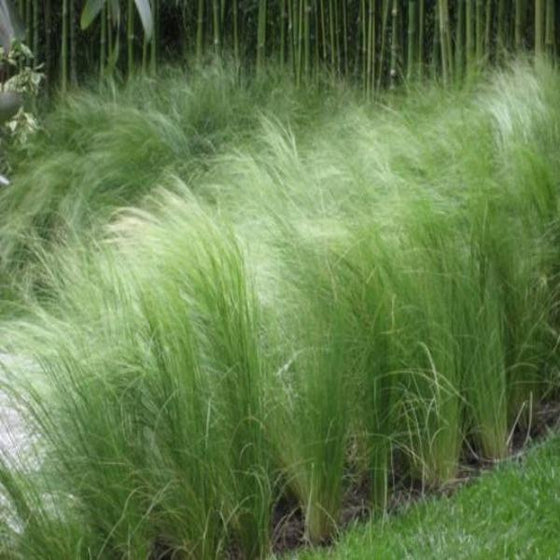
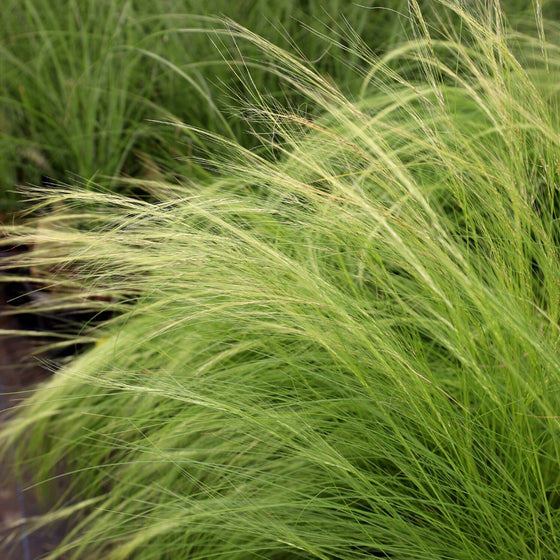
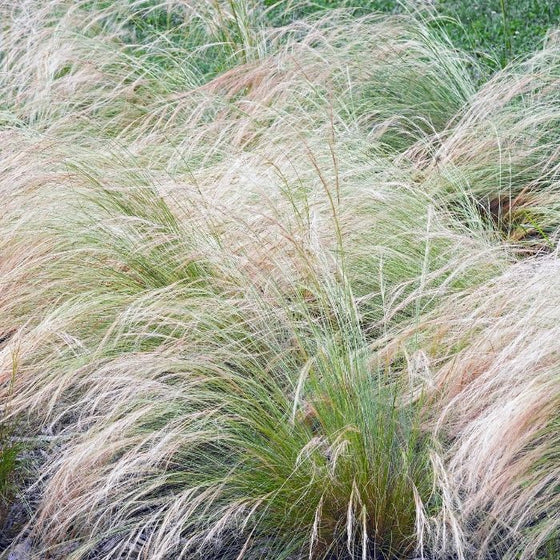


Images Depict Mature Plants
Mexican Feather Grass
Nassella tenuissima
Mexican Feather Grass is all about movement. It softens hard edges, brings a relaxed meadow feel to sunny plantings, and looks especially good with drought-tolerant plants like lavender, salvia, sedum, yarrow, and yucca. I like it best where the soil is lean and drainage is sharp, because that keeps the plant graceful instead of floppy. The one caution is reseeding: in the right climate, it can spread, so use it responsibly and remove seed heads where self-sowing is not wanted.

15% OFF SITEWIDE SALE
Use Code 'PRIMETIME15' At Checkout
📦 Free shipping on orders over $99.
Delay shipping by leaving us a message at Checkout.
Share:



Soft, Wispy Texture for Sunny, Low-Water Landscapes
Silky Movement for Borders, Rock Gardens, and Xeriscapes.
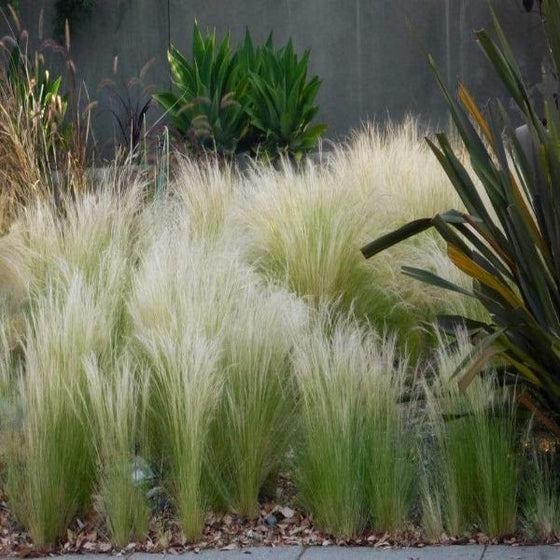
Mexican Feather Grass is prized for its soft, flowing texture and graceful movement in the landscape. Its ultra-fine green blades sway with even the slightest breeze, creating a light, airy effect that softens bold perennials, succulents, shrubs, and hardscape edges. This ornamental grass is especially useful in sunny borders, rock gardens, gravel gardens, modern landscapes, and low-water planting designs where texture is just as important as flower color.
Fine Green Foliage with Golden-Tan Seasonal Plumes.
In spring and early summer, Mexican Feather Grass forms a delicate clump of bright green, thread-like foliage. As the season progresses, silky tan seed heads rise above the plant and catch the light beautifully, giving the grass a shimmering, feather-like appearance. The foliage often turns straw-colored or buff in winter, adding naturalistic texture and movement even after the main growing season has passed.
A Low-Water Grass for Lean, Well-Drained Soil.
Mexican Feather Grass performs best in full sun and well-drained soil. It is especially well-suited to dry, sandy, gravelly, or rocky sites where many more moisture-loving plants would struggle. Once established, it is highly drought-tolerant and requires very little supplemental water. Avoid rich, wet, or heavy clay soils, which can cause weak growth, flopping, or root problems. This plant looks best when not overwatered or overfed.
Deer-Resistant Texture for Easy-Care Plantings.
Mexican Feather Grass is considered deer-resistant, making it a useful choice for sunny gardens where browsing pressure can be a challenge. It is also heat-tolerant and low-maintenance once established, needing only seasonal cleanup to remove tired foliage and manage seed heads if desired. Its fine texture pairs beautifully with lavender, salvia, yarrow, sedum, Russian sage, coneflowers, gaura, agave, yucca, and other drought-tolerant plants.
Important Self-Seeding Note for Responsible Planting.
Mexican Feather Grass can self-seed freely in some climates, especially where winters are mild, and soils remain open or disturbed. This can be useful in meadow-style plantings, but may become unwanted in certain regions. It is not recommended in areas where it is identified as invasive or problematic. To reduce reseeding, remove seed heads before they mature and avoid planting near natural areas where seedlings could escape the maintained landscape.
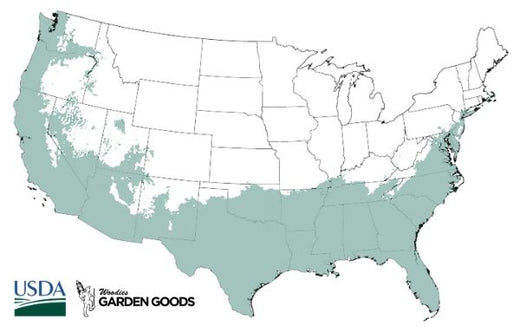
| Hardiness Zone: | 7-10 |
|---|---|
| Mature Height: | 1 to 2 Feet |
| Mature Width: | 1 to 2 Feet |
| Sunlight: | Full sun to part sun; best form and flowering in full sun |
| Soil | Lean, sandy, gravelly, rocky, or well-drained soil |
| Water Requirements: | Moderate during establishment; low water and drought tolerant once established |
| Bloom Time / Color | Late spring to summer; airy tan to silvery-tan plumes |
| Foliage | Semi-evergreen in mild climates, Very fine, thread-like green foliage that turns tan or buff with age and dormancy |
| Ornamental Features | Wispy texture, flowing movement, tan plumes, fine foliage, drought-tolerant form |
| Wildlife Value | Adds habitat texture and movement; seed heads may provide light seasonal interest |
| Resistance | Deer resistant, rabbit resistant, drought tolerant, heat tolerant, poor-soil tolerant |
| Landscape Uses | Xeriscapes, rock gardens, gravel gardens, borders, containers, mass plantings, meadow-style plantings, modern landscapes, low-water gardens |
How to Care for Mexican Feather Grass
Before you buy Mexican Feather Grass, make sure to read about the recommended care instructions to keep this plant healthy and thriving.

How should I plant Mexican Feather Grass?
Plant Mexican Feather Grass in full sun to part sun, choosing a site with excellent drainage. This ornamental grass performs best in lean, sandy, gravelly, or rocky soil and does not need rich garden soil to thrive. Avoid low, wet areas or heavy clay soils that stay soggy after rain, as excess moisture can lead to weak growth or root issues. Dig a hole as deep as the root ball and about twice as wide. Set the plant so the top of the root ball is level with the surrounding soil, backfill with native soil, and water thoroughly after planting. Space plants about 18 to 24 inches apart for a soft drift, border edge, or mass planting. In containers, use a well-drained potting mix and a pot with drainage holes.

How often should I water Mexican Feather Grass after planting?
Water Mexican Feather Grass regularly during the first growing season to help the roots establish. Deep watering once or twice per week is usually better than frequent shallow watering, especially in hot or dry weather. Let the soil begin to dry between waterings, and avoid keeping the root zone constantly wet. Once established, Mexican Feather Grass is very drought-tolerant and usually needs only occasional watering during prolonged dry spells. Container-grown plants may need more frequent watering than in-ground plantings because pots dry out faster. If the plant flops or looks overly lush, reduce watering and avoid fertilizing heavily.

When should I fertilize Mexican Feather Grass?
Mexican Feather Grass usually needs little to no fertilizer. It naturally performs well in lean, low-fertility soils and often looks best when grown without heavy feeding. If your soil is very poor, a light spring application of compost or a mild slow-release fertilizer is enough. Avoid high-nitrogen fertilizer, which can make the plant grow too soft, floppy, or overly lush. For the best texture and natural form, keep fertility modest and focus on sun, drainage, and proper watering.

When and how should I prune Mexican Feather Grass?
Prune Mexican Feather Grass in late winter or early spring before fresh growth begins. Use clean pruners or garden shears to cut back tired foliage to about 3 to 4 inches above the ground, taking care not to damage the crown. This refreshes the plant and allows new green growth to emerge cleanly. If reseeding is a concern in your area, trim off seed heads before they fully mature and disperse. During the growing season, very little pruning is required unless you want to tidy the plant or remove stray stems. Avoid cutting it back hard during the heat of summer unless the plant is being renovated and will receive adequate follow-up care.