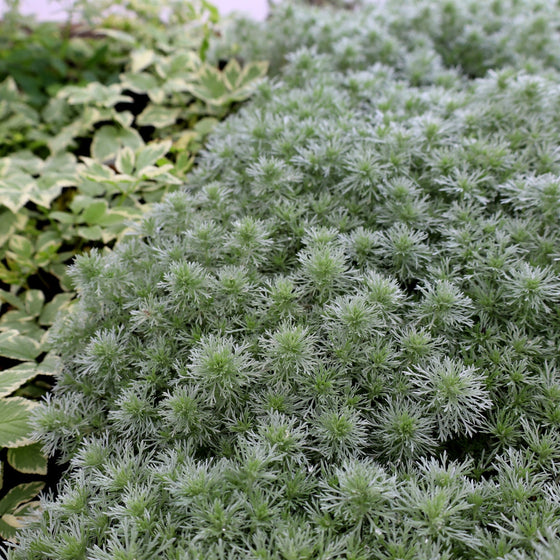
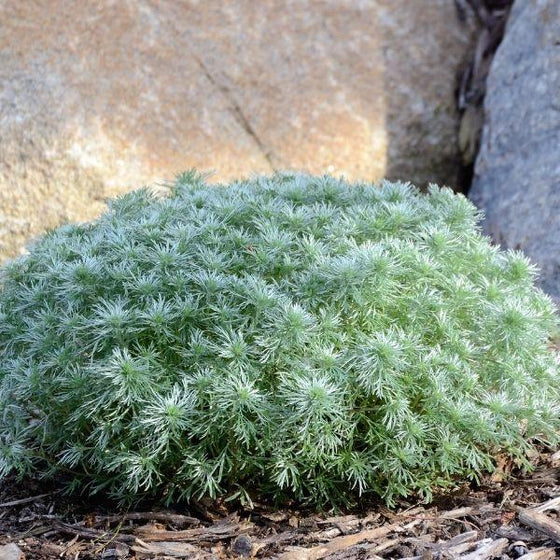
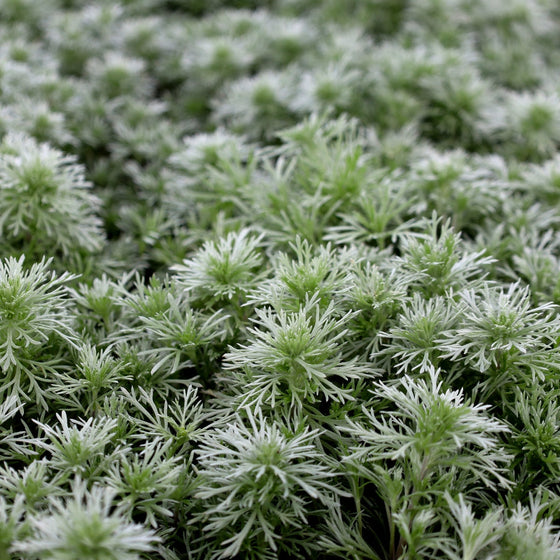
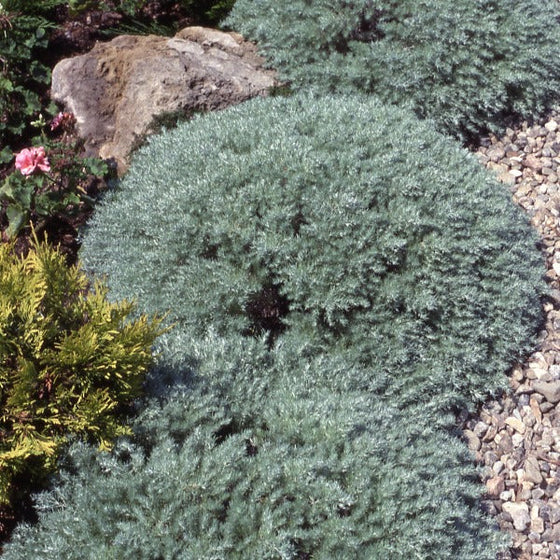


Images Depict Mature Plants
Silver Mound Artemisia
Artemisia schmidtiana 'Silver Mound'
Silver Mound Artemisia is one of the best plants for adding soft silver texture to a hot, sunny border. It is not about flowers; it is about that cool, feathery foliage that makes blues, purples, yellows, and pinks look even better nearby. Give it full sun, lean soil, and excellent drainage, and it becomes an easy deer-resistant edging plant for rock gardens, dry borders, and low-water designs.

Save Up to 25% On Your Order! Limited Time Only!
Discount Applied Automatically At Checkout
📦 Free shipping on orders over $99.
Delay shipping by leaving us a message at Checkout.
Share:Recommended Add-Ons



A Soft Silver Foliage Perennial for Sunny, Dry Garden Texture
Feathery Silver Foliage in a Compact Mound
Silver Mound Artemisia is a compact perennial grown for its soft, finely textured silver foliage and tidy cushion-like shape. The delicate, feathery leaves create a cool silver-gray mound that brightens sunny borders, rock gardens, walkway edges, and low-water planting designs.
This plant is valued almost entirely for foliage rather than flowers. Its silver color provides contrast against green leaves, dark foliage, and bright summer blooms, making it one of the easiest ways to add texture and light to a full sun garden. Use it where a low, rounded, silver accent will help soften edges and tie mixed perennials together.
A Foliage-First Plant with Subtle Seasonal Interest
Silver Mound Artemisia forms a dense, rounded clump of finely divided foliage that looks especially clean in spring and early summer. Its soft texture gives the garden a calming effect, while the silvery color reflects light and makes nearby flowers appear brighter.
The flowers are usually insignificant and are not the main reason to grow this plant. In most landscapes, the best ornamental value comes from maintaining the neat silver mound. A light trim in late spring or after the plant begins to loosen can help refresh the foliage and keep the habit compact.
Perfect for Edging, Rock Gardens, and Dry Sunny Borders
Silver Mound Artemisia is a natural fit for sunny border fronts, rock gardens, gravel gardens, dry slopes, cottage gardens, containers, and low-water perennial beds. Its compact size makes it especially useful along walkways, patios, retaining walls, and the front edge of planting beds.
Plant it in small groups for a repeated silver accent, or use individual plants as soft textural highlights among stronger bloom colors. It pairs beautifully with salvia, catmint, lavender, yarrow, sedum, coneflower, Black Eyed Susan, coreopsis, dianthus, ornamental grasses, and other sun-loving perennials.
Deer Resistant, Rabbit Resistant, and Drought Tolerant Once Established
Silver Mound Artemisia is generally considered deer-resistant and rabbit-resistant, making it useful in sunny landscapes where browsing pressure can limit plant choices. The aromatic, finely divided foliage is usually less appealing to deer and rabbits than that of many softer, leafy perennials.
Once established, this plant is drought tolerant and performs well in lean, dry, well-drained soil. It is a strong choice for hot sunny areas where many moisture-loving perennials struggle. The key is drainage: Silver Mound dislikes wet, heavy, rich, or humid conditions that keep the crown and foliage too damp.
Easy Care with Full Sun, Lean Soil, and Good Drainage
Plant Silver Mound Artemisia in full sun with sharply drained soil. Average, sandy, gravelly, rocky, or lean soil is usually better than rich, heavily amended soil. Too much fertility or moisture can cause the plant to become loose, floppy, or open in the center.
Water regularly after planting until roots establish, then reduce watering. Avoid overhead watering when possible, especially in humid climates. Trim lightly to maintain a tight mound, remove tired foliage as needed, and avoid overwatering during winter or rainy periods.
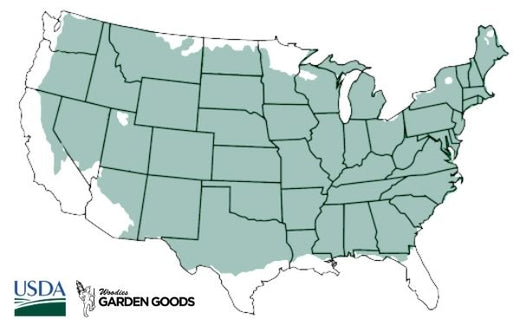
| Hardiness Zone: | 4-8 |
|---|---|
| Mature Height: | 8 to 12 Inches |
| Mature Width: | 12 to 24 Inches |
| Sunlight: | Full sun; may tolerate light shade but best color and habit occur in full sun |
| Soil | Average to poor, sandy, gravelly, rocky, or sharply well-drained soil |
| Water | Water regularly after planting; drought tolerant once established |
| Bloom Time / Color | Summer; small yellowish flowers are usually insignificant |
| Ornamental Features | Silver foliage, compact mounding habit, fine texture, drought-tolerant color contrast |
| Wildlife Value | Grown mainly for foliage; flowers may attract small insects but are not showy |
| Resistance | Generally deer resistant and rabbit resistant; drought tolerant once established; dislikes wet soil and humidity |
| Landscape Uses | Edging, rock gardens, gravel gardens, sunny borders, dry slopes, containers, cottage gardens, low-water beds, silver foliage contrast |
How to Care for Silver Mound Artemisia
After purchasing your Silver Mound Artemisia, be sure to read our recommended care instructions to keep your plant happy and healthy for years to come.

How should I plant Silver Mound Artemisia?
Plant Silver Mound Artemisia in full sun with sharply well-drained soil. Choose a location that drains quickly after rain or watering. Sandy, gravelly, rocky, average, or lean soil is usually better than rich, heavy soil. Dig a hole about as wide as the root ball and just as deep. Set the crown level with the surrounding soil, backfill gently, and water thoroughly. Space plants about 12–18 inches apart for edging or mass planting, or give them more room if you want each mound to stand alone.

How often should I water Silver Mound Artemisia after planting?
Water Silver Mound Artemisia deeply after planting, then keep the soil lightly moist while roots establish. During the first growing season, water when the top few inches of soil feel dry, especially during hot or windy weather. Once established, Silver Mound Artemisia is drought-tolerant and prefers drier conditions over wet soil. Avoid frequent watering, soggy planting sites, and overhead irrigation that keeps the foliage damp.

When should I fertilize Silver Mound Artemisia?
Silver Mound Artemisia usually does not need fertilizer. It performs best in average to lean soil, and rich soil can cause the plant to become loose, floppy, or open in the center. If growth is weak, apply a very light layer of compost in spring. Avoid heavy feeding or high-nitrogen fertilizer. Sun, drainage, and dry conditions are more important than fertility for keeping the plant compact.

When and how should I prune Silver Mound Artemisia?
Prune Silver Mound Artemisia lightly in late spring or early summer if the mound begins to loosen or open in the center. Shearing the plant lightly can refresh the foliage and help maintain a compact, rounded shape. Remove any tired, damaged, or browned foliage as needed during the season. Avoid cutting back into wet or stressed growth during humid weather. In early spring, clean up old foliage before fresh new growth fills in.