

How To Acidify Soil for Acid-Loving Plants
Published On: Jul 24, 2026
Updated On: Jul 28, 2026
Share:
One of the most common questions I hear from gardeners is: "Why isn't my acid-loving plant growing the way it's supposed to?"
The answer often starts below the surface.
While sunlight, watering, and proper planting are all important, soil pH plays a huge role in how well many landscape plants perform. If the soil is too alkaline, some plants struggle to absorb the nutrients they need, even when those nutrients are available. The result can be yellowing leaves, reduced flowering, slower growth, and a plant that simply never seems to thrive.
Fortunately, soil pH is something gardeners can improve.
Whether you're planting blueberries, azaleas, rhododendrons, camellias, or certain hydrangeas, understanding how to acidify your soil can make the difference between a plant that merely survives and one that truly flourishes.

What Does "Acidic Soil" Mean?
Soil pH measures how acidic or alkaline your soil is.
The pH scale runs from 0 to 14:
- Below 7 = Acidic
- 7 = Neutral
- Above 7 = Alkaline
Most garden plants grow well in slightly acidic to neutral soils, but some species naturally evolved in woodland environments where soils are consistently more acidic.
These plants perform best when the soil pH is generally between 4.5 and 6.5, depending on the species.
Why Soil pH Matters
Plants absorb nutrients through their roots.
When the soil pH is outside a plant's preferred range, certain nutrients become unavailable, even if they're present in the soil.
This is why a plant growing in alkaline soil may develop:
- Yellow leaves with green veins (chlorosis)
- Slow growth
- Reduced flowering
- Smaller leaves
- Poor overall vigor
Many gardeners mistakenly assume these symptoms mean the plant needs fertilizer.
Often, the real issue is soil pH.
Plants That Love Acidic Soil
Many of the most beautiful landscape plants thrive in acidic soils.
Some of my favorites include:
Flowering Shrubs
- Azaleas
- Rhododendrons
- Camellias
- Mountain Laurel
- Summersweet (Clethra)
- Virginia Sweetspire (Itea)
- Fothergilla
These shrubs often produce healthier foliage, stronger growth, and heavier flowering when grown in acidic conditions.
Evergreen Shrubs
Several evergreen landscape favorites also appreciate acidic soils.
Examples include:
- Inkberry Holly
- Japanese Pieris
- Leucothoe
- Soft Touch Holly
- Certain hollies
- Distylium
Acidic soil helps maintain rich green foliage and healthy root systems.
Edible Plants
Some of the most productive edible landscape plants actually require acidic soil.
These include:
- Blueberry bushes
- Lingonberries
- Cranberries
Blueberries, in particular, are extremely sensitive to soil pH and generally perform best in soils around 4.5 to 5.5. Without acidic soil, they often struggle to absorb iron and other essential nutrients.

Trees That Appreciate Acidic Soil
Many ornamental trees also prefer slightly acidic conditions.
Examples include:
- Japanese Maples
- Flowering Dogwoods
- Stewartia
- Magnolia
- Sourwood
- American Holly
These trees often develop healthier foliage and stronger overall growth in appropriately acidic soils.
Perennials
Several popular perennials also appreciate acidic conditions.
These include:
- Hellebores
- Ferns
- Heuchera
- Astilbe
- Woodland Phlox
- Tiarella
These woodland plants naturally grow beneath trees where decades of fallen leaves have gradually acidified the soil.
How to Acidify Your Soil
Fortunately, improving soil acidity is usually a gradual and straightforward process.
Start With a Soil Test
Before making any changes, I always recommend testing your soil.
A soil test tells you:
- Your current pH
- Nutrient levels
- Organic matter content
- Recommendations for improvement
It's impossible to know how much adjustment is needed without knowing where you're starting.
Add Organic Matter
One of the simplest ways to improve soil for acid-loving plants is by increasing organic matter.
Materials that naturally help maintain acidic conditions include:
- Pine bark
- Pine fines
- Leaf compost
- Composted hardwood bark
- Well-aged compost
As these materials decompose, they improve soil structure while gradually supporting a more favorable environment for acid-loving plants.
Use Pine Bark Mulch
One of my favorite mulches for acid-loving landscapes is pine bark mulch.
Benefits include:
- Conserves moisture
- Improves soil over time
- Suppresses weeds
- Helps maintain acidic conditions
- Creates a beautiful woodland appearance
While mulch alone won't dramatically change soil pH, it contributes to long-term soil improvement.

Apply Elemental Sulfur
When a greater pH adjustment is needed, elemental sulfur is one of the most effective options.
Soil bacteria gradually convert sulfur into forms that lower soil pH over time.
Because this process is gradual, sulfur should be applied well before expecting dramatic results.
Never apply excessive amounts at one time.
It's much easier — and safer — to lower soil pH gradually than to correct over-acidification.
Choose Acid-Forming Fertilizers
Some fertilizers are formulated specifically for acid-loving plants, like Espoma Holly-tone.
These products help:
- Maintain appropriate soil pH
- Supply essential nutrients
- Support healthy green foliage
Always follow the manufacturer's application recommendations and avoid overfertilizing.
What About Vinegar?
Some gardeners recommend watering with vinegar solutions.
I don't.
While vinegar temporarily lowers soil pH, the effect is short-lived and can potentially damage roots or beneficial soil organisms if used improperly.
Long-term soil improvement comes from building healthy soil — not quick fixes.
Changing Hydrangea Flower Color
One of the most fascinating examples of soil pH affecting plants involves Bigleaf Hydrangeas (Hydrangea macrophylla).
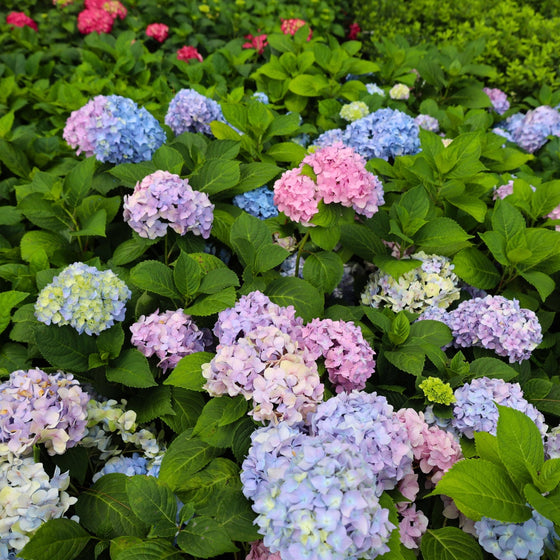
Unlike white hydrangeas or most panicle hydrangeas, many pink and blue mophead and lacecap hydrangeas respond directly to soil chemistry.
In More Acidic Soil
When soil becomes more acidic, and aluminum is available to the plant, many varieties produce:
- Blue flowers
- Lavender-blue blooms
- Violet shades
In More Alkaline Soil
When soil is more alkaline, those same varieties often bloom:
- Pink
- Rose
- Deep pink
This natural color-changing ability is one of gardening's most enjoyable experiments.
Keep in mind that not every hydrangea changes color. White varieties remain white, and panicle hydrangeas such as Limelight, Fire Light®, Little Lime®, and similar cultivars naturally age through shades of green, white, blush, and pink regardless of soil pH.
Plant Acid Lovers Together
One of the easiest ways to simplify maintenance is grouping acid-loving plants together.
Imagine a landscape bed featuring:
- Blueberry bushes
- Azaleas
- Camellias
- Mountain Laurel
- Japanese Pieris
- Hellebores
- Ferns
Since these plants all appreciate similar soil conditions, watering, mulching, and fertilizing become much easier.
This approach creates healthier plants while reducing maintenance.
Patience Pays Off
Changing soil pH doesn't happen overnight.
Healthy soil develops over time.
By improving organic matter, choosing the right mulch, monitoring soil conditions, and making gradual adjustments, you'll create an environment where acid-loving plants can thrive for decades.
Think of soil improvement as a long-term investment rather than a one-time project.
Woodie's Take
One of the biggest lessons gardening has taught me is that the healthiest plants begin with healthy soil.
It's easy to focus on what's happening above ground — the flowers, the foliage, the berries — but the real story is happening below the surface.
When you give acid-loving plants the soil conditions they naturally prefer, everything changes. Blueberries produce heavier crops. Azaleas bloom more abundantly. Camellias develop richer foliage. Hydrangeas reward you with vibrant blooms, and in some cases, you can even influence whether those blooms are shades of pink or blue simply by adjusting the soil.
I've always believed that successful gardening starts by working with nature rather than against it. Improve the soil first, choose plants that are well-suited to your site, and give them the conditions they were meant to grow in.
When you do, your plants will spend less time struggling — and more time showing you just how beautiful they can be.