

Best Privacy Trees for Zones 5–9
Published On: Jun 4, 2026
Updated On: Jul 28, 2026
Share:
Privacy trees are one of the best investments you can make in your landscape.
They do more than block an unwanted view. They soften the wind, reduce noise, create outdoor rooms, provide habitat for birds, and make a property feel established and welcoming. A well-designed privacy planting can increase both the beauty and functionality of your landscape while providing year-round structure and color.
But not every privacy tree performs equally across the country.
Hardiness Zones 5 through 9 cover a tremendous range of climates—from snowy northern winters to hot southern summers. The best privacy tree for Maine may not be the best choice for Georgia. The key is selecting trees that perform well throughout your specific zone while providing the screening, durability, and growth rate you need.
Fortunately, there are several exceptional privacy trees that perform beautifully throughout much of Zones 5 through 9.

What Makes a Great Privacy Tree?
The best privacy trees share several important characteristics:
- Evergreen foliage for year-round coverage
- Dense branching habit
- Good adaptability to different soil conditions
- Strong resistance to pests and disease
- Tolerance of heat, cold, wind, and drought
- Attractive appearance throughout the year
While speed is often the first thing homeowners ask about, long-term performance is just as important. A privacy screen is an investment measured in decades, not seasons.
Thuja Green Giant: The Best Overall Privacy Tree
If there is a single privacy tree that performs well across the widest range of landscapes in Zones 5 through 9, it is Thuja Green Giant Arborvitae.
The Green Giant Arborvitae has become the modern standard for privacy screens because it combines rapid growth with excellent durability. Under favorable conditions, it can grow 3 to 5 feet per year, developing dense, rich green foliage that remains attractive year-round.
Unlike many fast-growing evergreens, Green Giant typically maintains a naturally attractive pyramidal shape and rarely requires extensive pruning.

Why homeowners love it:
- Extremely fast growth
- Excellent deer resistance
- Strong disease resistance
- Adaptable to many soil types
- Tolerates heat, humidity, and cold
- Excellent windbreak performance
Best uses:
- Backyard privacy screens
- Property line plantings
- Windbreaks
- Pool screening
- Large hedges
For most homeowners in Zones 5 through 9, Green Giant is often the safest and most reliable choice.
American Pillar Arborvitae: The Narrow-Space Solution
Not every landscape has room for large evergreens.
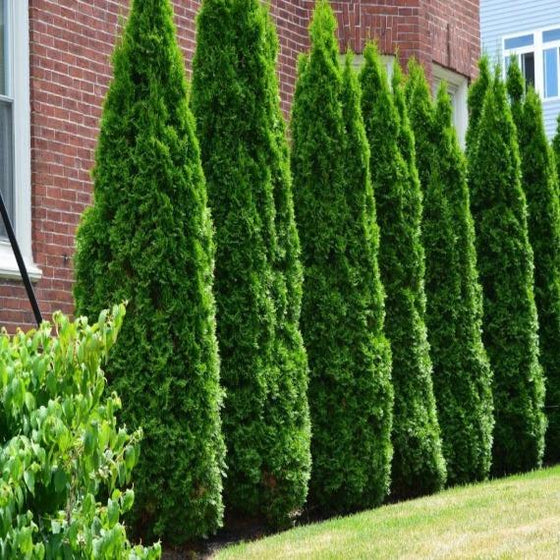
American Pillar Arborvitae was practically designed for modern suburban lots. Its narrow growth habit allows homeowners to create significant privacy without sacrificing valuable yard space.
While many privacy trees eventually consume large sections of the landscape, American Pillar remains remarkably slender while still providing impressive height.
Advantages:
- Fast growth
- Narrow footprint
- Excellent screening capability
- Strong cold tolerance
- Deer resistance
Best uses:
- Side yards
- Fence lines
- Smaller properties
- Urban landscapes
- Narrow screening applications
If your planting area is less than 8 feet deep, American Pillar may be your best option.
Blue Ice Cypress: Privacy with Color
Most privacy screens are green.
Blue Ice Cypress offers something dramatically different.
Its silver-blue foliage adds year-round interest while providing substantial screening. The distinctive color stands out beautifully against traditional landscape plantings and provides contrast that few evergreens can match.
Blue Ice Cypress also handles heat and drought well once established, making it particularly valuable in warmer portions of Zones 7 through 9.

Advantages:
- Striking blue foliage
- Fast growth
- Excellent drought tolerance
- Strong wind resistance
- Unique ornamental value
Best uses:
- Accent privacy screens
- Mixed evergreen plantings
- Property boundaries
- Windbreaks
- Large-scale landscape features
A row of Blue Ice Cypress creates privacy while also becoming a focal point.
Leyland Cypress: Fast Privacy for Large Properties
For decades, Leyland Cypress has been one of America's most popular privacy trees.
Its rapid growth and dense evergreen foliage allow homeowners to quickly establish significant screening. In favorable conditions, Leyland Cypress can grow several feet per year and create a substantial living wall in a relatively short period.

Advantages:
- Extremely rapid growth
- Dense screening
- Excellent wind protection
- Adaptable to many soil types
- Coastal tolerance
Best uses:
- Large properties
- Rural landscapes
- Long property lines
- Windbreak installations
Leyland Cypress performs best when given adequate spacing and airflow. Large landscapes with plenty of room are where it truly shines.
Murray Cypress: Built for Tough Conditions
Murray Cypress combines fast growth with excellent adaptability.
Homeowners often choose Murray Cypress when they want a large privacy screen but also want a tree that can withstand challenging weather conditions.
It develops quickly into a dense evergreen barrier and performs exceptionally well as a windbreak.

Advantages:
- Fast growth
- Excellent cold tolerance
- Dense evergreen coverage
- Strong wind resistance
Best uses:
- Large screens
- Windbreaks
- Open landscapes
- Property boundaries
For homeowners facing harsh weather conditions, Murray Cypress is often an excellent choice.
Cryptomeria Radicans: The Underrated Performer
One of the most overlooked privacy trees is Cryptomeria Radicans.
Its soft, feathery foliage gives it a more natural appearance than many formal privacy trees. The texture adds movement and softness to the landscape while still providing substantial screening.

Advantages:
- Fast growth
- Attractive texture
- Strong adaptability
- Excellent year-round color
- Natural appearance
Best uses:
- Mixed screens
- Woodland edges
- Naturalized landscapes
- Large residential properties
If you prefer a softer, less formal look, Cryptomeria deserves serious consideration.
Eastern Red Cedar: Native and Durable
For gardeners interested in native plants, Eastern Red Cedar remains one of the best options for privacy.
Native throughout much of the eastern United States, it provides year-round screening while supporting local wildlife.

Advantages:
- Native species
- Wildlife habitat value
- Drought tolerance
- Excellent wind resistance
- Adaptable to difficult sites
Best uses:
- Natural screens
- Wildlife plantings
- Rural landscapes
- Windbreaks
Eastern Red Cedar proves that privacy and ecological value can coexist beautifully.
Designing a Better Privacy Screen
One of the biggest mistakes homeowners make is planting a single species across an entire property line.
Instead, consider creating a layered privacy screen. For example:
- Thuja Green Giant for structure
- Blue Ice Cypress for color
- Cryptomeria for texture
- Hollies for density and wildlife value
A mixed screen looks more natural, offers greater pest and disease resistance, and provides far more visual interest.
The First Three Years Matter Most
No privacy tree becomes successful by accident.
The first few growing seasons are critical. Newly planted privacy trees need:
- Deep watering during dry periods
- Proper mulching
- Adequate spacing
- Minimal but consistent care
Many homeowners underestimate how important these early years are. Trees that establish strong root systems early often become dramatically healthier and more resilient later.
Woodie's Take
The best privacy tree is not necessarily the fastest-growing tree.
It's the tree that fits your space, your climate, and your long-term goals.
For most homeowners, Thuja Green Giant remains the gold standard. For narrow spaces, American Pillar Arborvitae is hard to beat. For a unique color, Blue Ice Cypress brings something special. For large properties, Leyland Cypress and Murray Cypress continue to deliver remarkable screening power.
Privacy is about more than blocking a view. It's about creating a landscape that feels comfortable, welcoming, and protected. Plant wisely today, and your trees will provide that feeling for decades to come.