

Top Deer-Resistant Shrubs For Your Yard
Published On: Aug 10, 2026
Share:
If you’ve ever walked outside on a summer morning only to find your favorite shrub chewed down to bare stems, you know just how frustrating deer can be.
Over the years, I’ve heard every version of the same story.
- “They never touched my plants before.”
- “They only ate the expensive ones.”
- “I planted them yesterday, and this morning they were gone.”
The truth is, gardening in areas with high deer populations requires a different approach. While there is no such thing as a completely deer-proof plant, there are many shrubs that deer generally avoid because of their fragrance, texture, or taste. The real secret isn’t simply planting one deer-resistant shrub. It’s designing an entire landscape where deer-resistant plants become the foundation of the garden.
When enough of your landscape is built around plants that deer tend to leave alone, the entire yard becomes less attractive to browsing animals. Here are some of my favorite deer-resistant shrubs that combine beauty, reliability, and outstanding landscape performance.

Start With the Right Expectations
Before we talk about specific plants, it’s important to understand what “deer resistant” really means. A hungry deer doesn’t read plant tags. During periods of drought, severe winters, or unusually high deer populations, almost any plant can be sampled. However, many shrubs are consistently avoided under normal conditions—a pattern documented in resources like Rutgers’ landscape plants rated by deer resistance. These are the plants I rely on when designing landscapes in areas with high deer pressure. Think of deer resistance as stacking the odds in your favor.
Boxwood: The Foundation of a Deer-Resistant Landscape

If I had to choose one shrub that belongs in almost every deer-resistant landscape, it would be Boxwood. Its dense evergreen foliage provides year-round structure, while its naturally refined growth habit fits everything from traditional Colonial homes to contemporary landscapes. Browse our Boxwood shrub collection to find a variety that suits your space.
Boxwoods make excellent:
- Foundation plantings
- Low hedges
- Walkway borders
- Garden rooms
- Formal accents
Perhaps most importantly, they create the framework around which the rest of the landscape develops. A landscape built around Boxwoods immediately gains year-round structure while reducing one of deer’s favorite food sources.
Soft Caress® Mahonia
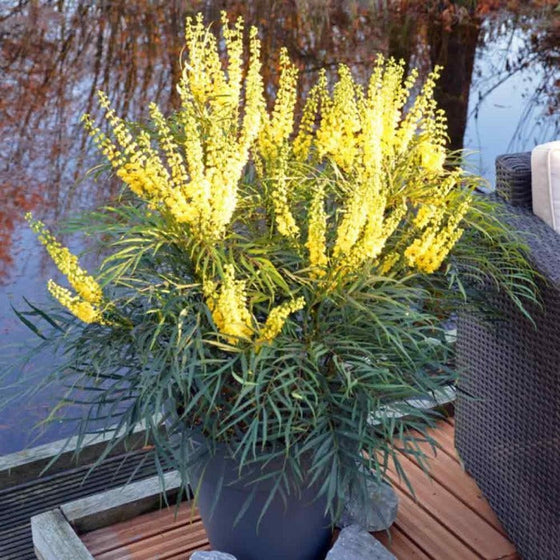
Every time I walk past a mature Soft Caress® Mahonia, I’m reminded how unique this shrub really is. Its fine, bamboo-like evergreen foliage creates a tropical appearance unlike almost anything else hardy enough for Mid-Atlantic landscapes. Bright yellow flowers appear during the cooler months, providing valuable nectar for pollinators when little else is blooming.
Deer generally leave Mahonia alone, making it an outstanding choice for woodland gardens, shaded foundations, and mixed evergreen borders.
Mountain Laurel
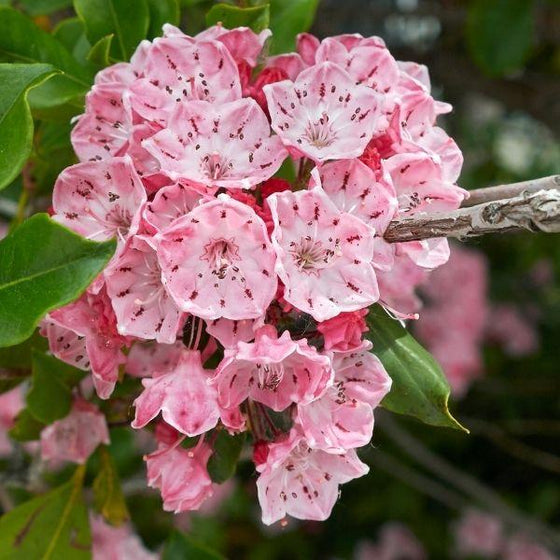
One of America’s finest native shrubs is also one of my favorite deer-resistant plants. Mountain Laurel offers glossy evergreen foliage and some of the most intricate flowers found on any landscape shrub. Whether you choose classic white forms or vibrant pink cultivars like Olympic Fire, Mountain Laurel brings elegance to partially shaded landscapes while generally resisting deer browsing.
It pairs beautifully with:
- Ferns
- Hellebores
- Camellias
- Japanese Pieris
- Woodland phlox
Together, they create a refined woodland garden that remains attractive throughout the year.
Japanese Pieris
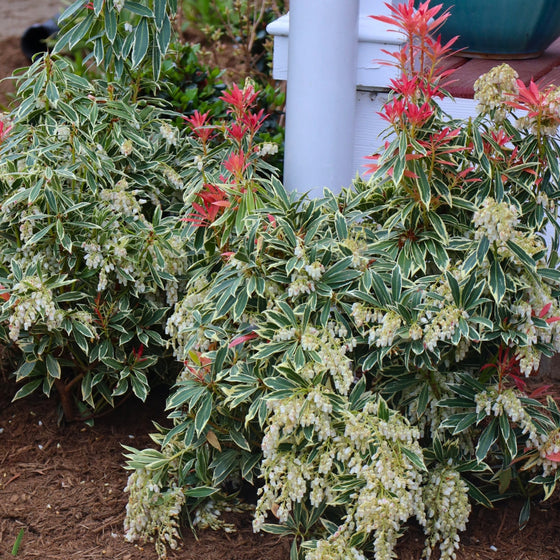
Few shrubs announce spring more gracefully than Japanese Pieris. Delicate chains of bell-shaped flowers appear before many trees leaf out, followed by brilliant bronze or red new growth that matures to deep green. Its evergreen foliage, layered branching, and refined appearance make it one of my favorite shrubs for partially shaded entry gardens. As an added benefit, deer typically leave it alone.
Camellias
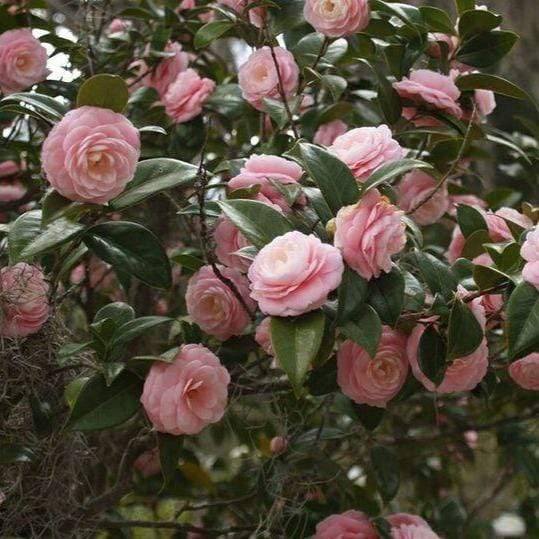
When most gardens begin slowing down, Camellias begin preparing for their moment. Whether you choose fall-blooming or spring-blooming varieties, Camellias provide glossy evergreen foliage and spectacular flowers during seasons when color is often scarce. They create beautiful evergreen structure while generally resisting deer browsing.
In my opinion, every partially shaded landscape deserves at least one Camellia.
Inkberry Holly
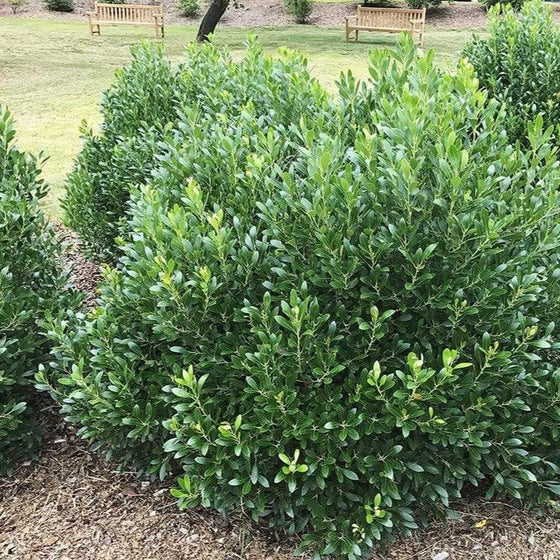
For homeowners looking for a native evergreen alternative to Boxwood, Inkberry Holly is an outstanding choice. Its fine-textured foliage remains attractive throughout the year while providing valuable habitat for birds and beneficial insects.
Because it tolerates pruning well, Inkberry works beautifully as:
- Foundation shrubs
- Informal hedges
- Rain gardens
- Native landscapes
- Property borders
It offers versatility, ecological value, and dependable deer resistance in one attractive package.
Virginia Sweetspire
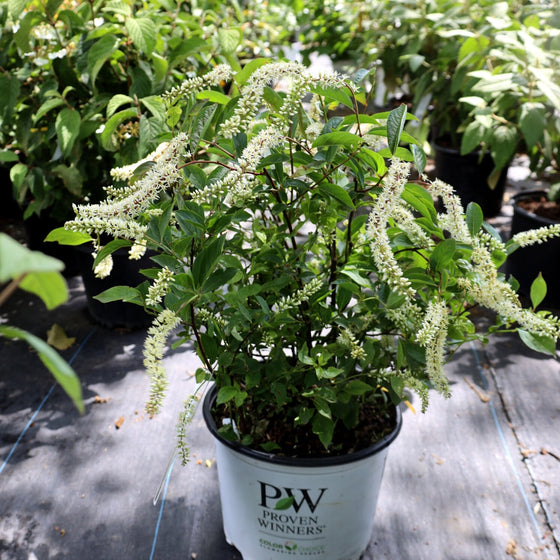
While many gardeners know Virginia Sweetspire for its fragrant spring flowers and incredible burgundy fall color, fewer realize how dependable it can be in deer-prone areas. As a native shrub, it adapts to a wide range of conditions while thriving in both average and moist soils. Its graceful arching branches make it an excellent transition plant between taller shrubs and lower-growing perennials.
Fothergilla
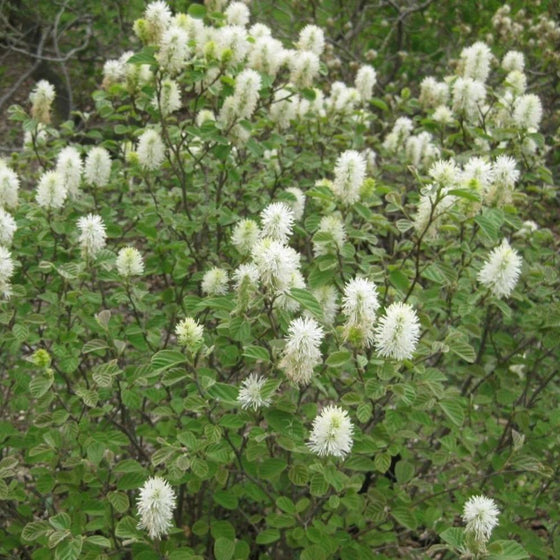
If I had to nominate one shrub that’s still underappreciated, Fothergilla would be high on the list. Bottlebrush-like white flowers appear in early spring before the leaves fully emerge. Summer foliage remains attractive throughout the season before transforming into brilliant shades of orange, yellow, and scarlet in autumn. Combined with its generally good deer resistance, Fothergilla becomes one of the most versatile native shrubs available.
Bluebeard (Caryopteris)

Late summer can be a difficult time to find shrubs in bloom. That’s exactly when Bluebeard begins putting on its show. Clusters of rich blue flowers cover the plant, attracting bees, butterflies, and other beneficial pollinators while deer typically browse elsewhere. Its compact size makes it ideal for sunny borders and pollinator gardens.
Designing a Deer-Resistant Landscape
The biggest mistake many homeowners make is planting one deer-resistant shrub among dozens of deer favorites. Instead, consider creating layers composed primarily of plants deer usually avoid.
- Start with an evergreen structure using Boxwoods, Inkberry, or Soft Caress Mahonia.
- Add flowering shrubs such as Mountain Laurel, Camellias, Virginia Sweetspire, and Fothergilla for seasonal interest.
- Finish with deer-resistant perennials like Lavender, Nepeta, Salvia, Agastache, Russian Sage, ornamental grasses, and many ferns.
By surrounding more vulnerable plants with species deer generally avoid, the overall landscape becomes less inviting. It’s not a guarantee. But it often makes a tremendous difference.
Create Natural Deer Barriers
One design strategy I’ve used successfully for years is placing the most deer-resistant shrubs along the outer edges of the landscape. Think of these plants as the first line of defense.
Evergreen shrubs such as Boxwood, Inkberry Holly, Mahonia, and Mountain Laurel naturally discourage browsing while creating year-round structure. Inside those outer layers, you can incorporate flowering shrubs, ornamental grasses, and carefully selected perennials that may be slightly more susceptible. This layered approach often reduces browsing while creating a landscape with tremendous depth and visual interest.
Don’t Forget Texture
One thing deer consistently teach us is that texture matters. Plants with fragrant foliage, leathery evergreen leaves, or coarse textures are often passed over in favor of tender new growth. That’s one reason combining Boxwoods, Camellias, Mahonia, Inkberry, and Mountain Laurel creates such a dependable foundation. The landscape becomes less appealing before the deer even reach your favorite flowers.

A Landscape That’s Beautiful Every Month
One added benefit of many deer-resistant shrubs is that they provide outstanding four-season beauty. Imagine a landscape featuring:
- Boxwoods providing evergreen structure.
- Mountain Laurel blooming in late spring.
- Camellias flowering in spring and fall.
- Virginia Sweetspire lighting up autumn with brilliant foliage.
- Inkberry Holly maintaining rich green color all winter.
- Fothergilla delivering exceptional spring flowers and spectacular fall color.
The result isn’t simply deer-resistant. It’s beautiful every month of the year.
Woodie’s Take
I’ve learned over the years that the best way to deal with deer isn’t to fight them every evening. It’s to outsmart them from the very beginning.
When I design a landscape, I start with dependable shrubs that deer generally prefer to leave alone. Those plants become the backbone of the garden, creating year-round structure while reducing browsing pressure on the rest of the landscape.
No plant comes with a guarantee, especially when wildlife is involved. A hungry deer can surprise you. But by choosing shrubs like Boxwoods, Soft Caress Mahonia, Mountain Laurel, Japanese Pieris, Camellias, Inkberry Holly, Virginia Sweetspire, Fothergilla, and Bluebeard, you’re stacking the odds in your favor.
The result is more than a landscape that’s less appealing to deer. It’s a landscape that welcomes you. One that greets you with evergreen structure in winter, flowers through spring and summer, rich autumn color, and the peace of mind that comes from knowing your plants were chosen not just for their beauty—but for their ability to thrive where deer are part of everyday life.
To me, that’s smart gardening.