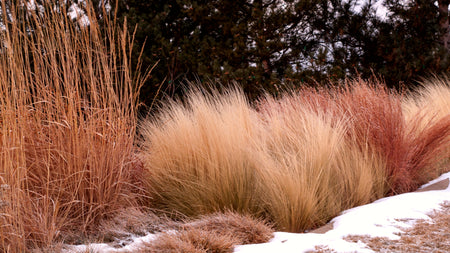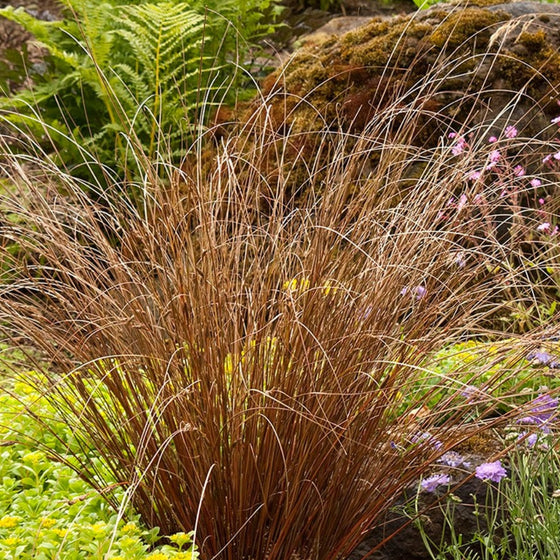
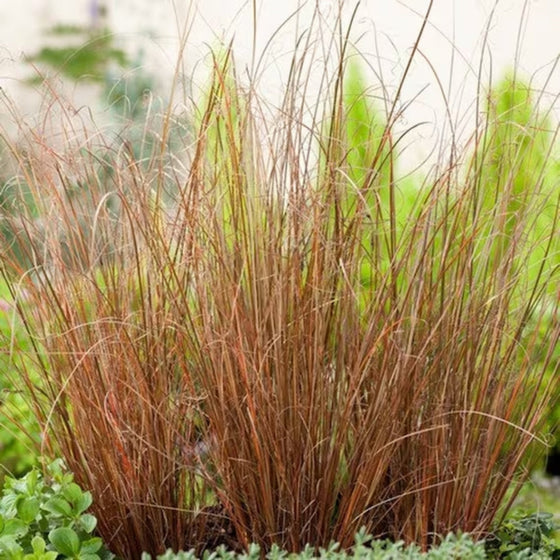
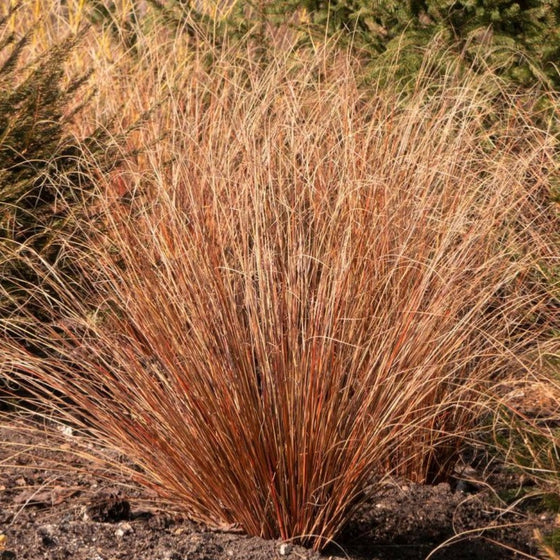


Images Depict Mature Plants
Carex Red Rooster
Carex buchananii ‘Red Rooster,’
Carex Red Rooster is a great plant when you want foliage color that feels modern, textural, and a little unexpected. The copper-bronze blades look best when they are contrasted with green, blue, silver, or gold plants, so I like using it in containers, gravel gardens, and mixed borders where that color can really show. It is also practical for deer-prone landscapes, and once gardeners understand that the brown-bronze color is the feature, not a flaw, it becomes a very useful design plant.

20% Off Sitewide Sale!
Use Code 'ENDOFSEASON20' At Checkout
📦 Free shipping on orders over $99.
Delay shipping by leaving us a message at Checkout.
Share:Recommended Add-Ons


Copper-Bronze Texture for Containers, Borders, and Modern Landscapes
Distinctive Red-Bronze Foliage with Fine Texture.
Carex Red Rooster is a striking ornamental sedge grown for its narrow, fine-textured foliage in shades of copper, bronze, red, and brown. Unlike green ornamental grasses, this plant is prized for its warm, earthy color and sculptural texture. The slender blades form an upright tuft that arches gracefully with age, adding movement and contrast to mixed borders, containers, gravel gardens, and contemporary landscape designs.
A Color-Forward Sedge for High-Contrast Planting Designs.
The best way to use Red Rooster Carex is to place it where its bronze color can be appreciated against contrasting plants or hardscape. It looks especially effective beside blue foliage, silver perennials, golden grasses, dark evergreens, stonework, gravel, and bright green groundcovers. In mulch-heavy beds, the foliage can visually blend into the background, so pairing it with color contrast helps the plant make the strongest impact.
Evergreen to Semi-Evergreen Interest Through the Seasons.
Carex Red Rooster is evergreen to semi-evergreen in suitable climates, providing texture and color long after many perennials have gone dormant. In colder zones or exposed winter locations, some foliage may become tattered and should be cleaned up in early spring. Its cool-season growth habit means it often looks especially fresh in spring and fall, while hot summer conditions may require steady moisture to keep the plant looking its best.
Low-Maintenance Performance in Sun or Part Shade.
Carex Red Rooster grows best in full sun to part shade with moist, well-drained soil. It prefers consistent moisture, especially during establishment, but can tolerate drier conditions once established if drainage is good. In hot climates, afternoon shade may help preserve the foliage and reduce stress. Avoid planting it in constantly soggy soil unless drainage and air circulation are strong, and use containers with drainage holes to prevent waterlogged roots.
Deer-Resistant Texture for Containers and Landscape Beds.
This sedge is a useful choice for deer-prone gardens because its fine, leathery foliage is generally avoided by deer. It works beautifully as a container thriller or texture plant, a border accent, a mass planting, or a foliage contrast near walkways and patios. Use Carex Red Rooster with heuchera, blue fescue, sedum, lavender, coneflowers, black mondo grass, evergreen shrubs, and other colorful perennials to create a layered, designer-style planting.
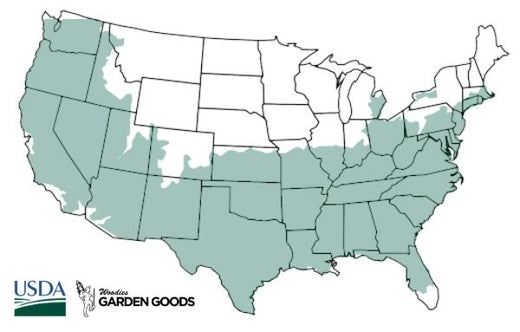
| Hardiness Zone: | 6-9 |
|---|---|
| Mature Height: | 18 to 24 Inches |
| Mature Width: | 12 to 24 Inches |
| Sunlight: | Full sun to part shade; best color in sun with adequate moisture |
| Soil | Moist, organically rich, well-drained soil; adaptable with good drainage |
| Water Requirements: | Moderate during establishment; tolerates some dryness once established |
| Bloom Time / Color | Flowers are not showy; grown primarily for foliage |
| Foliage | Evergreen to semi-evergreen depending on climate and winter exposure; Fine-textured copper, bronze, red-brown, and mahogany-toned blades |
| Ornamental Features | Copper-bronze foliage, upright tufted habit, fine texture, year-round color in mild climates |
| Wildlife Value | Provides fine-textured cover and movement in mixed plantings |
| Resistance | Deer resistant; drought tolerant once established; tolerant of moist soils with good drainage |
| Landscape Uses | Containers, borders, mass plantings, gravel gardens, modern landscapes, pathway edges, mixed perennial beds, foliage contrast plantings |
How to Care for Carex Red Rooster
Be sure to read our planting instructions to ensure a healthy and happy Carex Red Rooster for years to come!

How should I plant Carex Red Rooster?
Plant Carex Red Rooster in full sun to part shade where the soil is moist but well drained. Full sun encourages the strongest color in cooler climates, while part shade or afternoon shade may be helpful in hotter regions. Before planting, loosen the surrounding soil and mix in compost if the site is compacted, sandy, or low in organic matter. Set the plant so the crown sits level with the surrounding soil surface, then backfill gently and water thoroughly. Space plants about 18 to 24 inches apart for mass plantings or closer visual groupings. In containers, use a high-quality potting mix and make sure the pot has drainage holes to prevent waterlogged roots.

How often should I water Carex Red Rooster after planting?
Water Carex Red Rooster deeply after planting and keep the soil evenly moist during the first growing season. Consistent moisture helps the plant establish a strong root system and maintain its upright, fine-textured form. Check container-grown plants more often, since pots dry out faster than in-ground beds. Once established, Carex Red Rooster can tolerate some dryness, but it generally looks best with regular moisture during hot or dry weather. Avoid keeping the soil constantly soggy, especially in heavy clay or poorly drained containers. If foliage begins to look stressed in summer, deep watering and afternoon shade can help improve its appearance.

When should I fertilize Carex Red Rooster?
Fertilize Carex Red Rooster lightly in early spring as new growth begins. A balanced slow-release fertilizer or a thin topdressing of compost is usually enough to support healthy foliage and steady growth. This sedge does not need heavy feeding to maintain its distinctive copper-bronze color. Avoid over-fertilizing with high-nitrogen products, which can encourage soft growth and reduce the plant’s naturally fine, upright texture. In containers, refresh the potting mix as needed and use a gentle spring feeding to support the plant through the growing season.

When and how should I prune Carex Red Rooster?
Prune Carex Red Rooster in late winter or early spring before active growth resumes. Remove tired, damaged, or winter-worn foliage with clean scissors or pruners, cutting back only what is unattractive. In colder climates, the plant may benefit from a light shearing to refresh the clump before new growth appears. During the growing season, minimal pruning is needed. Simply remove damaged blades or sections that look out of place. Because the bronze foliage naturally looks coppery and brown, avoid over-pruning healthy leaves simply because they are not green.