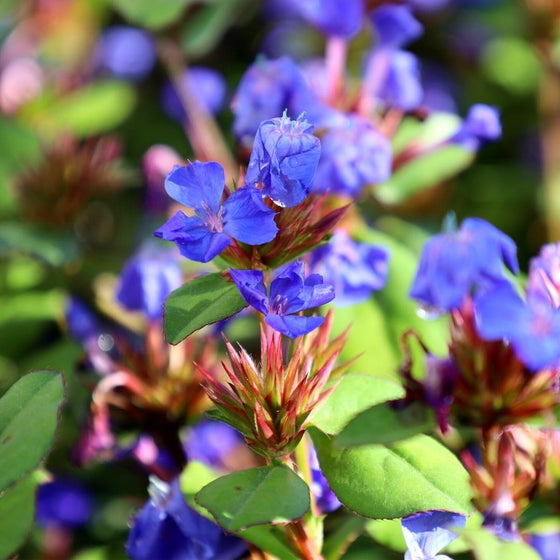
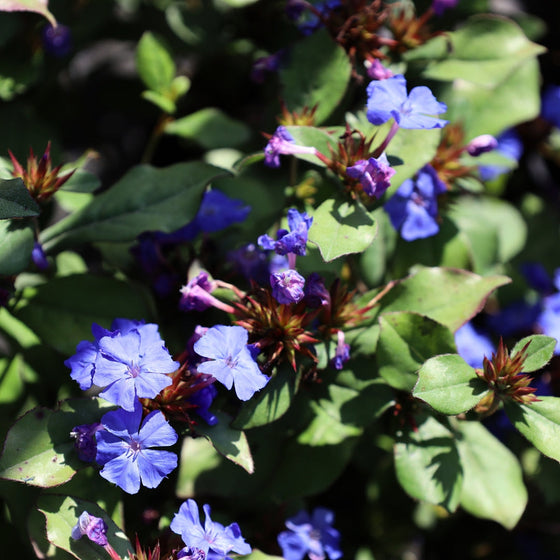
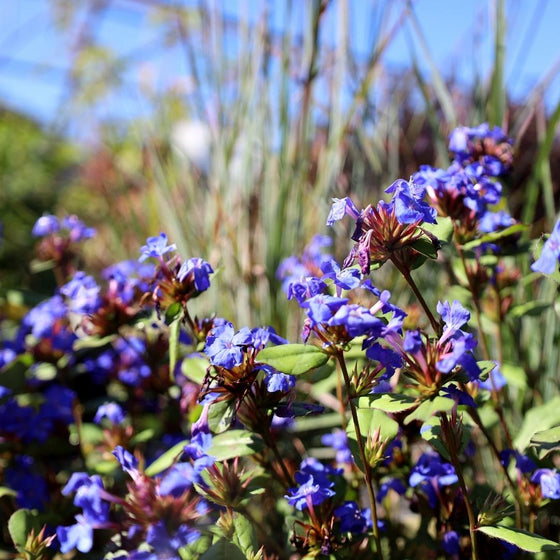
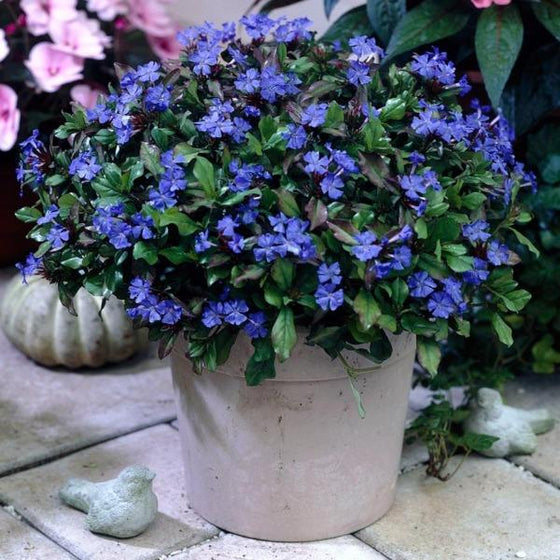


Images Depict Mature Plants
Hardy Plumbago
Ceratostigma plumbaginoides
Hardy Plumbago is a great groundcover when you want something tougher and more colorful than plain green foliage. The blue late-season flowers are a big selling point, but the red-bronze fall foliage is what really makes it stand out. It is especially useful along edges, slopes, and sunny-to-part-shade beds where you want low-maintenance coverage with deer resistance, drought tolerance, and real seasonal interest.

15% OFF SITEWIDE, USE CODE 'FALLPLANT15'
📦 Free shipping on orders over $99.
Delay shipping by leaving us a message at Checkout.
Share:

A Blue-Flowering Groundcover with Late-Season Color and Fall Foliage
True Blue Flowers on a Tough Spreading Groundcover
Hardy Plumbago is a low-growing perennial groundcover valued for its bright blue flowers, spreading habit, and colorful fall foliage. Also known as Blue Leadwort, this hardy perennial forms a mat of glossy green leaves that helps cover bare soil, soften edges, and add a fresh blue flower display from late summer into fall.
Unlike tropical plumbago, Hardy Plumbago is a cold-hardy perennial that dies back in winter and returns from the roots in spring. It is a smart choice for gardeners who want a durable flowering groundcover that offers more seasonal interest than foliage alone. Its combination of blue blooms and red-bronze fall color makes it especially useful in sunny and partly shaded garden spaces.
Late Summer Blue Blooms with Red-Bronze Fall Color
Hardy Plumbago produces small, gentian-blue flowers over a long, late-season bloom period. The flowers appear just as many spring and early-summer groundcovers finish, helping extend color in borders, slopes, and mixed perennial plantings.
As the season cools, the foliage develops bronze, burgundy, and red tones that pair beautifully with the blue flowers. This late-season color combination gives Hardy Plumbago strong ornamental value in fall, especially when planted near golden perennials, ornamental grasses, sedums, asters, and other autumn performers.
Ideal for Edging, Slopes, Walls, and Difficult Garden Spots
Hardy Plumbago works well as a groundcover, edging plant, slope stabilizer, rock garden accent, wall spiller, or underplanting around shrubs and taller perennials. Its spreading habit helps fill open spaces without creating the heavy, woody look of a shrub.
Use it along walkway edges, at the front of borders, on sunny banks, near retaining walls, or in part-shade garden pockets where a low flowering plant is needed. It can also be useful beneath open-canopied shrubs where there is enough light for good flowering. Plant in groups for the best coverage and the strongest late-season color.
Deer Resistant, Pollinator Friendly, and Drought Tolerant Once Established
Hardy Plumbago is generally considered deer resistant, making it useful in landscapes where browsing pressure makes groundcover choices more difficult. Deer resistance can vary by location and season, but this plant is a strong, lower-risk option compared with many softer groundcovers.
The blue flowers attract butterflies and other beneficial pollinators during the late summer and fall bloom window. Once established, Hardy Plumbago can tolerate dry conditions and lean soil, but it performs best where drainage is good. It is a practical choice for gardeners who want low-maintenance coverage with flowers, fall color, and wildlife value.
Easy Care with Sun, Drainage, and Spring Cleanup
Plant Hardy Plumbago in full sun to part shade with well-drained soil. It flowers best with good light, but afternoon shade can be helpful in hot climates. Average, sandy, loamy, rocky, or lean soil is usually fine as long as the site does not stay soggy.
Water regularly after planting until roots establish, then reduce watering. Hardy Plumbago often emerges later in spring than many perennials, so avoid assuming it has failed too early in the season. Cut back old foliage in late winter or early spring before new growth appears, and allow the plant to spread gradually into its space.
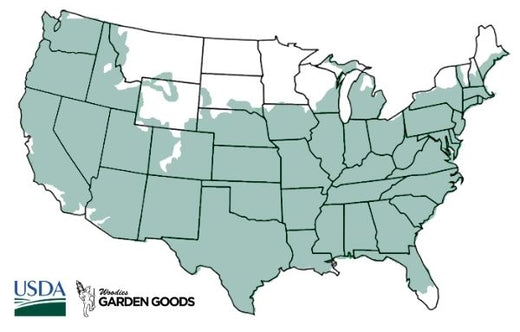
| Hardiness Zone: | 5-9 |
|---|---|
| Mature Height: | 6 to 10 Inches |
| Mature Width: | 12 to 18 Inches |
| Sunlight: | Full sun to part shade; best flowering in full sun to bright part shade |
| Soil | Average, sandy, loamy, rocky, or lean well-drained soil |
| Water | Water regularly after planting; drought tolerant once established |
| Bloom Time / Color | Late summer to frost; gentian-blue flowers |
| Ornamental Features | True blue flowers, red-bronze fall foliage, spreading groundcover habit, late-season bloom |
| Wildlife Value | Attracts butterflies and beneficial pollinators |
| Resistance | Generally deer resistant; drought tolerant once established; tolerant of poor soils; dislikes wet soil |
| Landscape Uses | Groundcover, edging, slopes, rock gardens, retaining walls, sunny borders, part-shade beds, shrub underplanting |
How to Care for Hardy Plumbago
Be sure to read our planting instructions to ensure a healthy and happy Hardy Plumbago plant for years to come!
-v1781193379597.png?92x91)
How should I plant Hardy Plumbago?
Plant Hardy Plumbago in full sun to part shade with well-drained soil. Choose a location where the plant can spread gradually as a groundcover. It is especially useful along edges, slopes, retaining walls, rock gardens, and open areas beneath shrubs where enough light reaches the ground. Dig a hole about as wide as the root ball and just as deep. Set the crown level with the surrounding soil, backfill gently, and water thoroughly. Space plants about 12–18 inches apart for coverage, or slightly closer if you want a fuller groundcover effect sooner.
-v1781193405339.png?89x84)
How often should I water Hardy Plumbago after planting?
Water Hardy Plumbago deeply after planting, then keep the soil lightly moist while roots establish. During the first growing season, water when the top few inches of soil feel dry, especially during hot or windy weather. Once established, Hardy Plumbago is drought tolerant and usually needs little supplemental water in the ground. Avoid constantly wet soil, especially in winter, because good drainage is important for long-term health.
-v1781193428194.png?90x89)
When should I fertilize Hardy Plumbago?
Hardy Plumbago usually needs little fertilizer. It performs well in average to lean soils, and too much fertilizer can encourage soft growth instead of a dense, durable groundcover habit. If growth seems weak, apply a light layer of compost in spring. Avoid heavy feeding, especially in rich or wet soils. Good light, drainage, and proper spacing are more important than frequent fertilizer.

When and how should I prune Hardy Plumbago?
Prune Hardy Plumbago in late winter or early spring before new growth appears. Cut back old foliage close to the ground to make room for fresh spring growth. This plant can emerge late in spring, so mark the planting area and be patient before assuming it did not return. If it spreads beyond its intended space, trim or edge the planting as needed during the growing season.