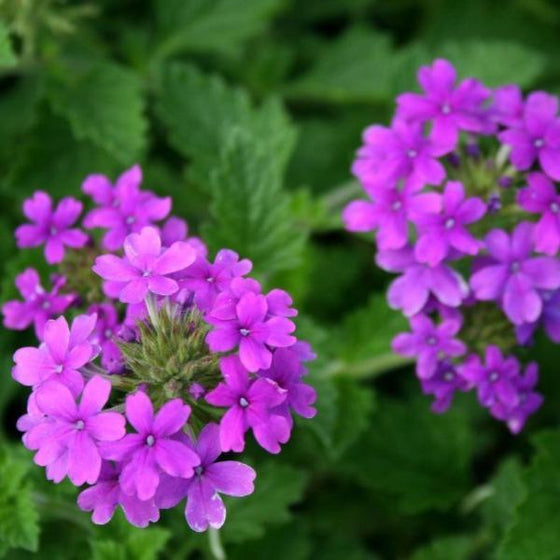
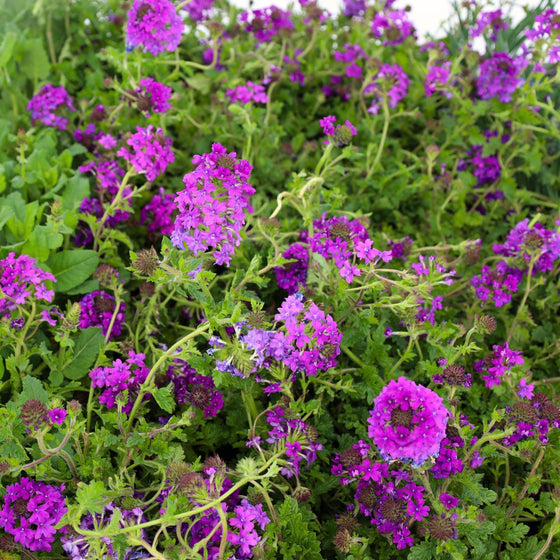
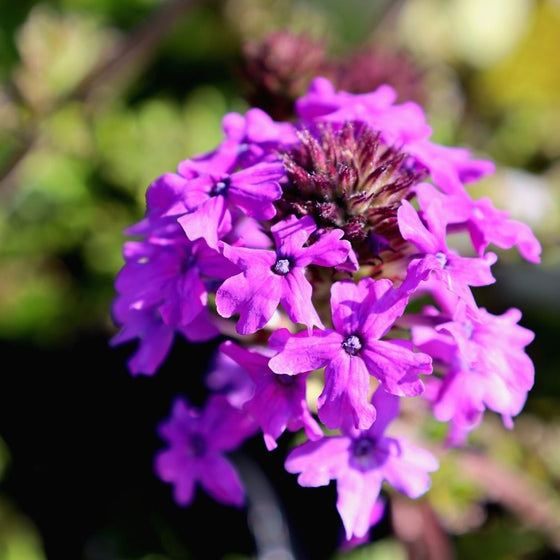
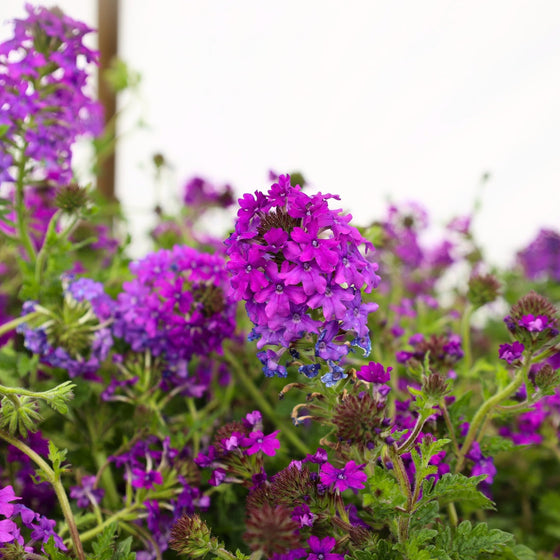


Images Depict Mature Plants
Verbena Homestead Purple
Verbena canadensis ‘Homestead Purple’
Homestead Purple Verbena is a workhorse for sunny color. The purple blooms are bold, the habit is perfect for spilling over containers or covering sunny edges, and the plant handles heat far better than many softer flowering plants. The one thing I would not compromise on is drainage. Give it full sun and well-drained soil, and treat it as a dependable seasonal color plant in colder areas where overwintering is not guaranteed.

15% OFF SITEWIDE SUMMER SALE
Use Code HELLOSUMMER15 at Checkout!
📦 Free shipping on orders over $99.
Delay shipping by leaving us a message at Checkout.
Share:Recommended Add-Ons



A Long-Blooming Purple Verbena for Sunny Borders, Containers, and Groundcovers
Vivid Purple Flowers on a Spreading Verbena
Homestead Purple Verbena is a vigorous, low-growing verbena loved for its rich purple flower clusters and spreading, trailing habit. This warm-season favorite brings bold color to sunny borders, hanging baskets, patio containers, slopes, retaining walls, and garden edges where a low, colorful plant can soften the landscape.
The flowers appear in rounded clusters above deep green foliage, creating a bright purple carpet throughout much of the growing season. In the right conditions, Homestead Purple can bloom from spring into fall, slowing only during periods of extreme heat or stress before rebounding with fresh color.
A Long-Blooming Plant for Heat and Sunshine
Homestead Purple Verbena is at its best in full sun, where it produces the strongest flowering and densest growth. The plant’s trailing stems spread outward and can spill gracefully over container edges or move across open soil as a flowering groundcover.
This is a great choice for homeowners who want color that keeps going. The purple blooms are especially useful for tying together yellow, white, pink, orange, and silver foliage combinations. Use it near walkways, patios, mailbox beds, and entry plantings where the color can be enjoyed up close all season.
Perfect for Containers, Hanging Baskets, Slopes, and Edging
Homestead Purple Verbena is one of the most versatile plants for sunny designs. Use it as a container spiller, hanging basket plant, border edging perennial, slope cover, rock garden accent, or flowering groundcover. Its low habit makes it easy to tuck between taller perennials and shrubs without blocking views.
Pair it with lantana, salvia, coreopsis, coneflower, Black Eyed Susan, yarrow, catmint, lavender, sedum, ornamental grasses, and trailing annuals for a heat-loving display. In containers, combine it with upright thrillers and mounding fillers to create a full, colorful arrangement.
Pollinator Friendly, Heat Tolerant, and Drought Tolerant Once Established
Homestead Purple Verbena attracts butterflies, bees, and other beneficial pollinators with its nectar-rich flowers. The long bloom season makes it especially valuable in pollinator-friendly plantings where steady color and wildlife activity are both priorities.
Once established, this verbena has good heat and drought tolerance, but it still performs best with consistent watering in containers and during extended dry spells. It is also commonly considered deer-resistant, though deer browsing can vary by location and pressure. Good drainage is essential for keeping plants healthy.
Easy Care with Full Sun and Well-Drained Soil
Plant Homestead Purple Verbena in full sun with well-drained soil. Avoid heavy, wet, poorly drained areas, especially in winter, because soggy conditions can shorten the plant’s life. In colder regions, it may be used as a long-blooming annual even if it behaves as a perennial in warmer climates.
Water regularly after planting until established, then water during dry spells as needed. Containers and hanging baskets dry out faster than in-ground plantings and may need more frequent watering. Trim lightly if growth becomes stretched or flowering slows, and feed container-grown plants lightly during the growing season to support continued bloom.
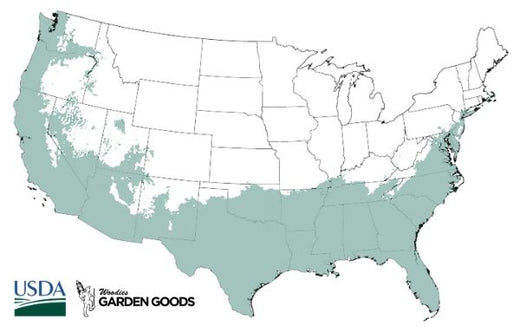
| Hardiness Zone: | 7-10 |
|---|---|
| Mature Height: | 6 to 12 Inches |
| Mature Width: | 18 to 36 Inches |
| Sunlight: | Full Sun |
| Soil | Average, dry to medium, well-drained soil; avoid wet, poorly drained soil |
| Water Requirements: | Water regularly after planting; drought tolerant once established; containers need more frequent watering |
| Bloom Time / Color | Spring to fall or frost; deep purple flower clusters |
| Ornamental Features | Rich purple blooms, long bloom season, spreading habit, trailing stems, container spiller value |
| Wildlife Value | Attracts butterflies, bees, and beneficial pollinators |
| Resistance | Heat tolerant; drought tolerant once established; often deer resistant; dislikes wet soil and poor drainage |
| Landscape Uses | Containers, hanging baskets, sunny borders, edging, slopes, rock gardens, groundcover plantings, retaining walls, pollinator gardens, annual color beds |
How to Care for Verbena Homestead Purple
Before you purchase your Homestead Purple Verbena, be sure to read the recommended care instructions to ensure your plant remains happy and healthy for years to come!
-v1781554365514.png?92x91)
How should I plant Homestead Purple Verbena?
Plant Homestead Purple Verbena in full sun with well-drained soil. Choose a location that receives at least 6 hours of direct sun each day and does not stay wet after rain. Raised beds, slopes, containers, hanging baskets, and sunny border edges are all good options. Dig a hole about as wide as the root ball and just as deep. Set the crown level with the surrounding soil, backfill gently, and water thoroughly. Space plants about 18–24 inches apart in the ground, or closer in containers for a fuller seasonal display.
-v1781554390433.png?89x84)
How often should I water Homestead Purple Verbena after planting?
Water Homestead Purple Verbena deeply after planting, then keep the soil lightly moist while roots establish. During the first growing season, water when the top few inches of soil feel dry, especially during hot or windy weather. Once established, Homestead Purple Verbena is drought tolerant in the ground, but it flowers best with moderate moisture. Containers and hanging baskets dry out faster, so check them often during summer heat and water as needed.
-v1781554404778.png?90x89)
When should I fertilize Homestead Purple Verbena?
Fertilize Homestead Purple Verbena lightly in spring when new growth begins. In the ground, a mild slow-release fertilizer or a thin layer of compost is usually enough. Container-grown plants may benefit from light, regular feeding during the growing season because nutrients wash out of pots more quickly. Avoid overfertilizing, which can encourage leafy growth at the expense of flowers.

When and how should I prune Homestead Purple Verbena?
Prune Homestead Purple Verbena lightly during the growing season if stems become stretched, tired, or less floriferous. A light trim can encourage branching and help refresh the plant. Remove spent flower clusters if needed, though many verbenas continue blooming with minimal deadheading. In warmer zones, cut back winter-damaged growth in spring after new growth begins. In colder regions, plants may be treated as annuals and replanted each year.